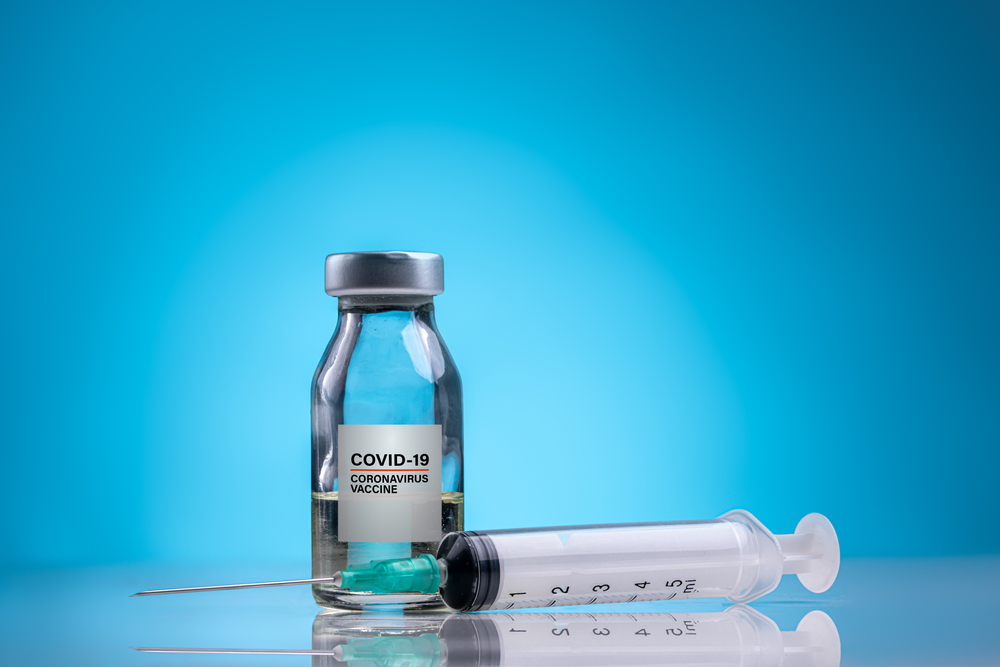
Cayman’s first tranche of COVID-19 vaccines is expected to arrive on a British Airways flight scheduled for Tuesday, 5 Jan., Chief Medical Officer Dr. John Lee confirmed.
The exact number of the two-dose vaccines contained in the first batch has yet to be announced.
However, Lee, appearing on the final 2020 episode of Cayman Compass’s The Resh Hour, said he is looking forward to the roll-out of the national vaccination plan and he expects a “good quantity of doses” in the first batch.
There will be “several thousand doses… so we’ll be able to have a good go at our priority groups,” Lee said, but added, “It is very likely we will not be able to reach everybody that we plan to reach… with that first tranche of vaccines, and we may have to do a cutoff as far as age is concerned.”
He explained that instead of vaccinating everybody over 60 years old, government initially may offer the vaccine to everybody over the age of 70, then the most vulnerable, as well as healthcare workers, port workers, and people in institutions and nursing homes.
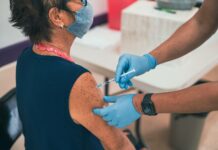
The vaccines, made by Pfizer/BioNTech, must be taken in two stages to build up immunity. Vaccinations are currently under way in the UK, which is providing Cayman’s inoculation supplies.
The Guardian newspaper reported on Tuesday that British government figures showed 616,933 people had received their first dose of the Pfizer/BioNTech COVID vaccine by 20 Dec. Those over the age of 80, residents and workers of care homes, and National Health Service staff were the first groups to receive the shot.
Lee said that when the vaccine touches down in Cayman next week that does not mean the injections will immediately begin, as local checks and familiarisation with the doses would first need to be completed.
Lee, together with local leaders including Premier Alden McLaughlin and Governor Martyn Roper, will be taking the jab as the first step in the phased vaccinations. It is expected that these vaccinations will take place publicly.
He said COVID-19 is something the world will have to live with, like other diseases and viruses that are kept at bay, but are still around.
“They still cause people to have serious consequences or to die as a result. So that’s a sobering message to have to share, but it’s one that’s realistic and needs to be shared so that people can prepare for that,” Lee said.
“The message would be that the wider you can spread the vaccination, the more likely it is to suppress [the virus] and the more that you can suppress the virus, the less chance it has to mutate.”
Even with the new strain of the virus that was reported in the UK and has since been found in other countries, Lee said, there will be no changes to Cayman’s plans to further reopen its borders, possibly by March, once significant numbers of the population have been vaccinated.
“Once we have protected our most vulnerable, which means the people in institutional care, in the nursing homes, healthcare workers, because they’re exposed to people coming in… presenting with symptoms all the time, the people around the ports, the elderly, then we can begin to relax and consider unlocking our borders, and that is how the stages work in the Cayman vaccination plan,” he said.
Lee said as more vaccines become available, Cayman’s supplies will be boosted for the vaccination roll-out.
This week, the Financial Times in the UK reported that country’s regulators are expected to approve the Oxford University/AstraZeneca vaccine “in the coming days”.
An announcement on the latest vaccine could be made as early as Tuesday evening, media reports suggested.
On Tuesday, the UK reported 53,135 COVID-19 cases and 414 deaths. The overall number of UK cases now stands at 2,382,865.
An update on Cayman’s COVID-19 numbers is expected later on Tuesday.
Related Videos