 In 2021 Cayman experienced, and is still in the midst of, its first true wave of community transmission of COVID-19.
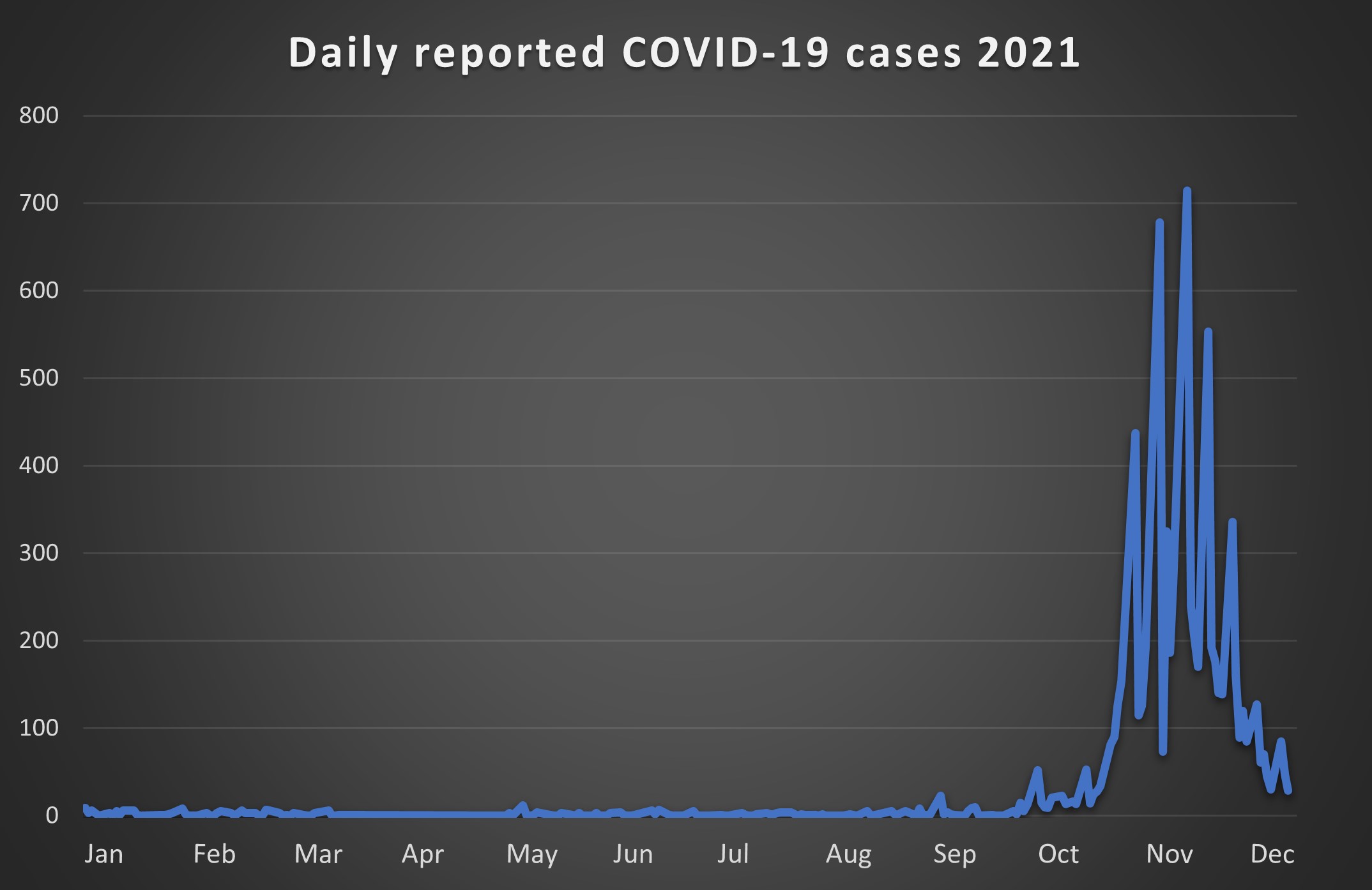
While a handful of cases had been regularly detected in quarantining travellers throughout the year, it took until 9 Sept. for the first two local community transmissions to be confirmed.
The exponential growth of infections that other countries had already experienced multiple times unfolded in the islands for the first time in October, when new daily positives started to surge.
Although community cases had been anticipated for some time, the situation demonstrated how easy it was for such an infectious virus to get into the community, said Chief Medical Officer Dr. John Lee, who is leaving his position at the end of the year.
Coinciding with the beginning of the school year, children, who either could not be vaccinated because of their age or who had lower vaccination rates because jabs were rolled out much later, accounted for about a third of the cases and initially pushed up the transmissions.
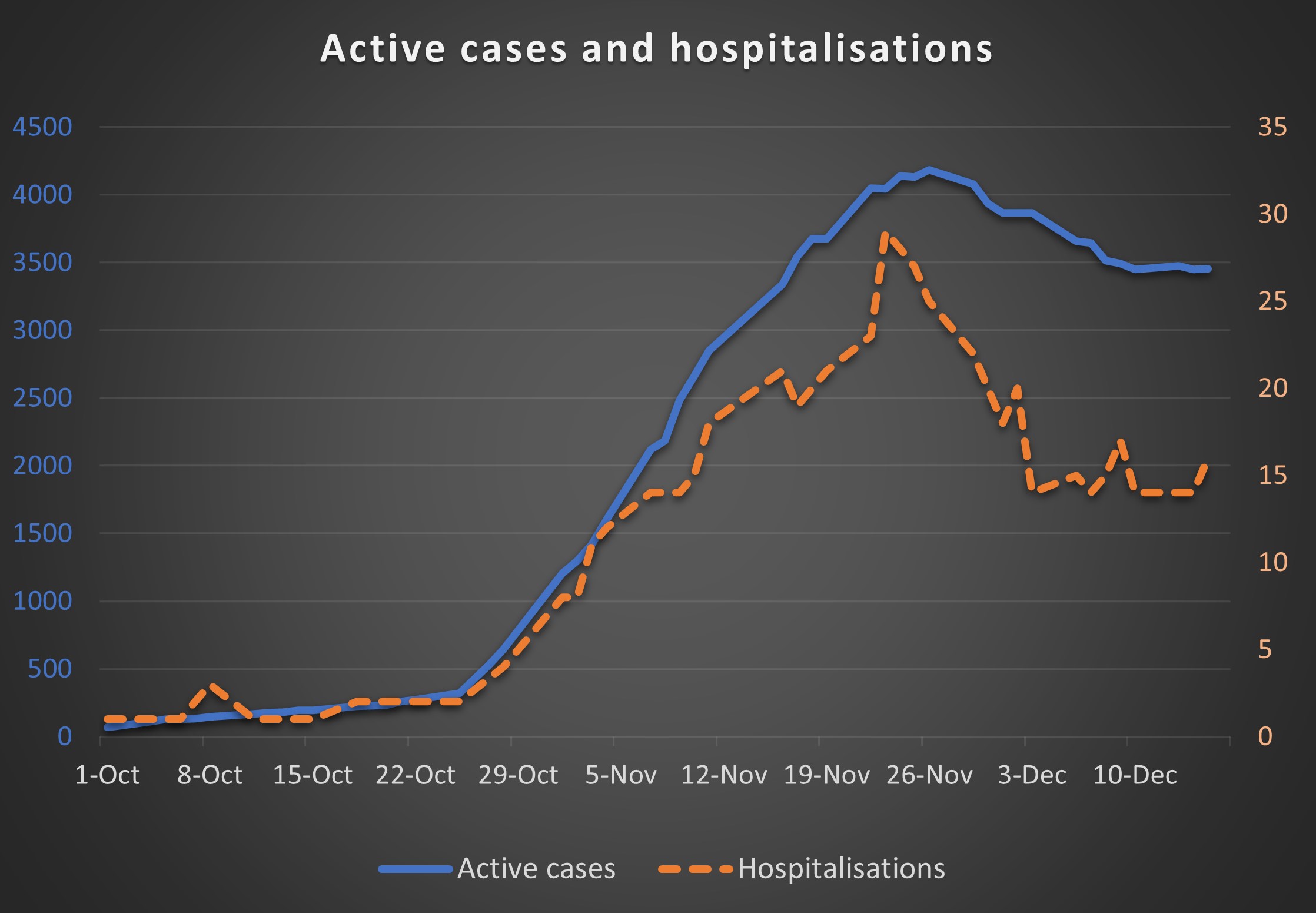
New cases peaked on 16 Nov. when 714 positive COVID tests were reported over a single weekend.
Hospitalisations low
As a result, the number of active cases shot up to 4,144 on 24 Nov. and the number of people who needed hospital treatment for COVID-19 climbed to 29 by 23 Nov.
Since then, daily reported cases and active cases, albeit more slowly, started to drop, while hospital patient numbers halved.
So far, the islands have suffered nine COVID-19-related deaths, seven of those in 2021, after registering more than 8,000 total cases.
However, as of 15 Dec, the number of deaths relative to the reported number of cases in Cayman is the lowest in the world, based on data reported by Worldometers.com, which aggregates statistics from 224 official national sources.
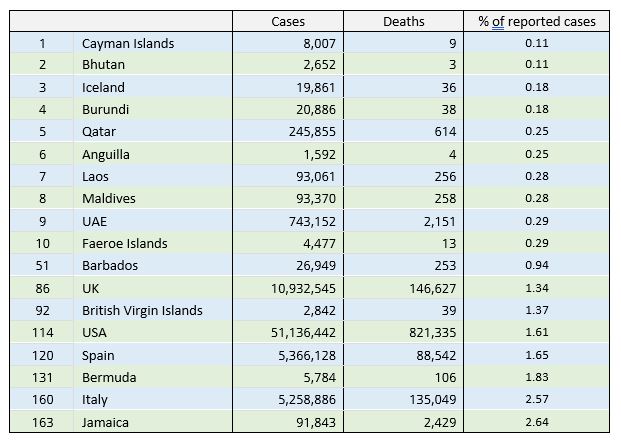
Note: The results will be skewed by the extent of a country’s testing regime. Only 12 countries and territories worldwide, including the Falkland Islands, the Marshall Islands Tonga and Samoa, have not had any COVID-related deaths.
High vaccination rates
This is largely because in Cayman the community spread of COVID-19 only occurred once the vaccination rate among the entire population was already very high.
In particular, among the over 50-year olds, the group that is the most vulnerable to hospitalisation and death, the vaccination rate is almost 100%.
All age groups over the age of 30 have vaccination rates in excess of 90% and more than 80% of teenagers and young adults are fully vaccinated.
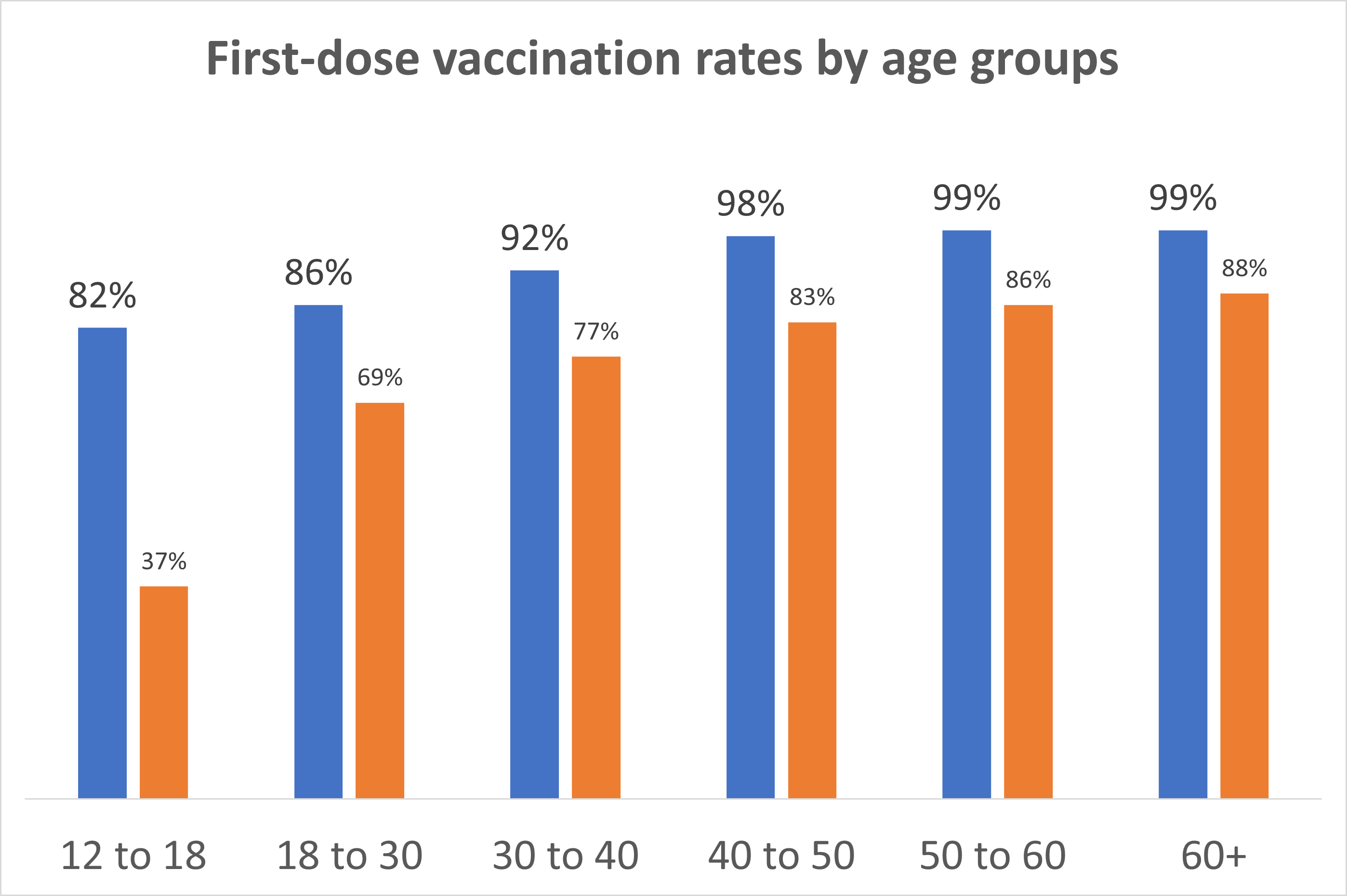 At the end of November, this left approximately 3,600 eligible people unvaccinated, according to government estimates. By mid-December another 500 people had come forward to receive their first shot.
The campaign started in January and reached government’s target of having 80% of the population fully vaccinated in December.
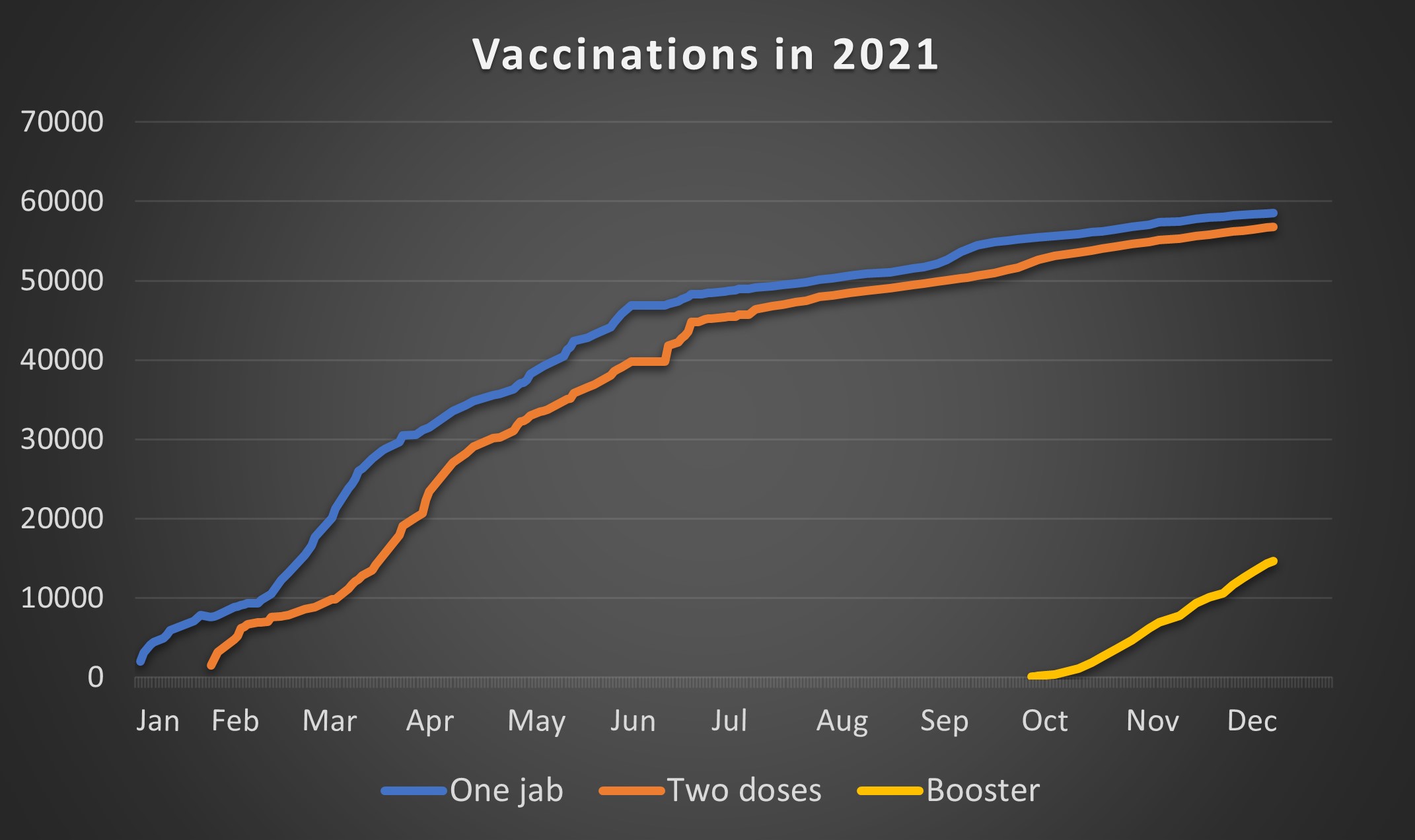 A third dose, or booster jab, was rolled out in October.
In response to the new Omicron variant, the booster programme was expanded in December to everyone over the age of 18 who had the second dose more than three months ago.
As of 15 Dec., 14,690 people have received their third shot.
During the COVID wave, two-thirds of all local cases were among the unvaccinated. Given the high vaccination rate in Cayman this means that unvaccinated residents are about eight times more likely to be infected.
The risk to be hospitalised is even higher for the unvaccinated, who made up between two thirds and 95% of COVID hospital patients in government’s weekly trends updates.
Related Videos