

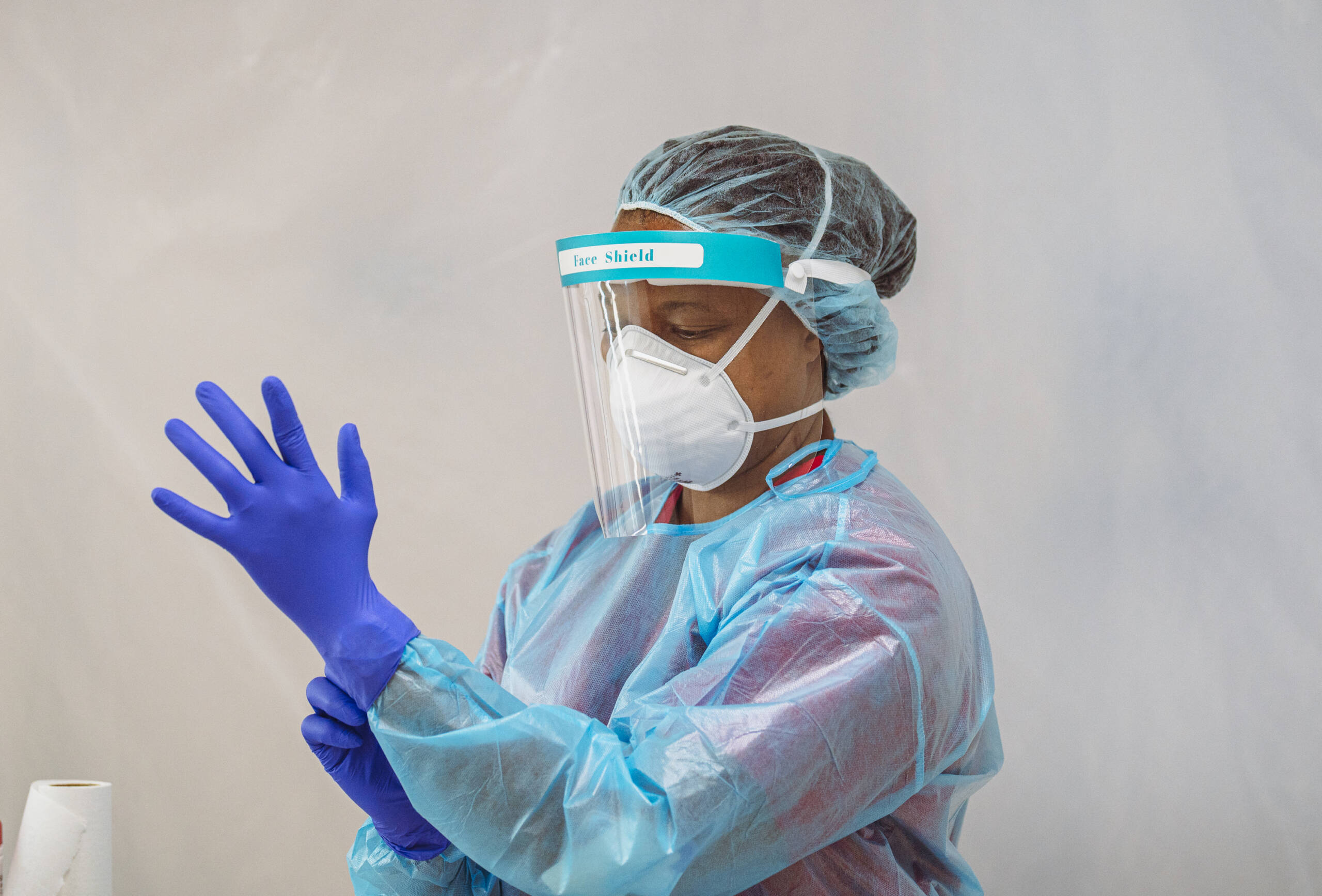
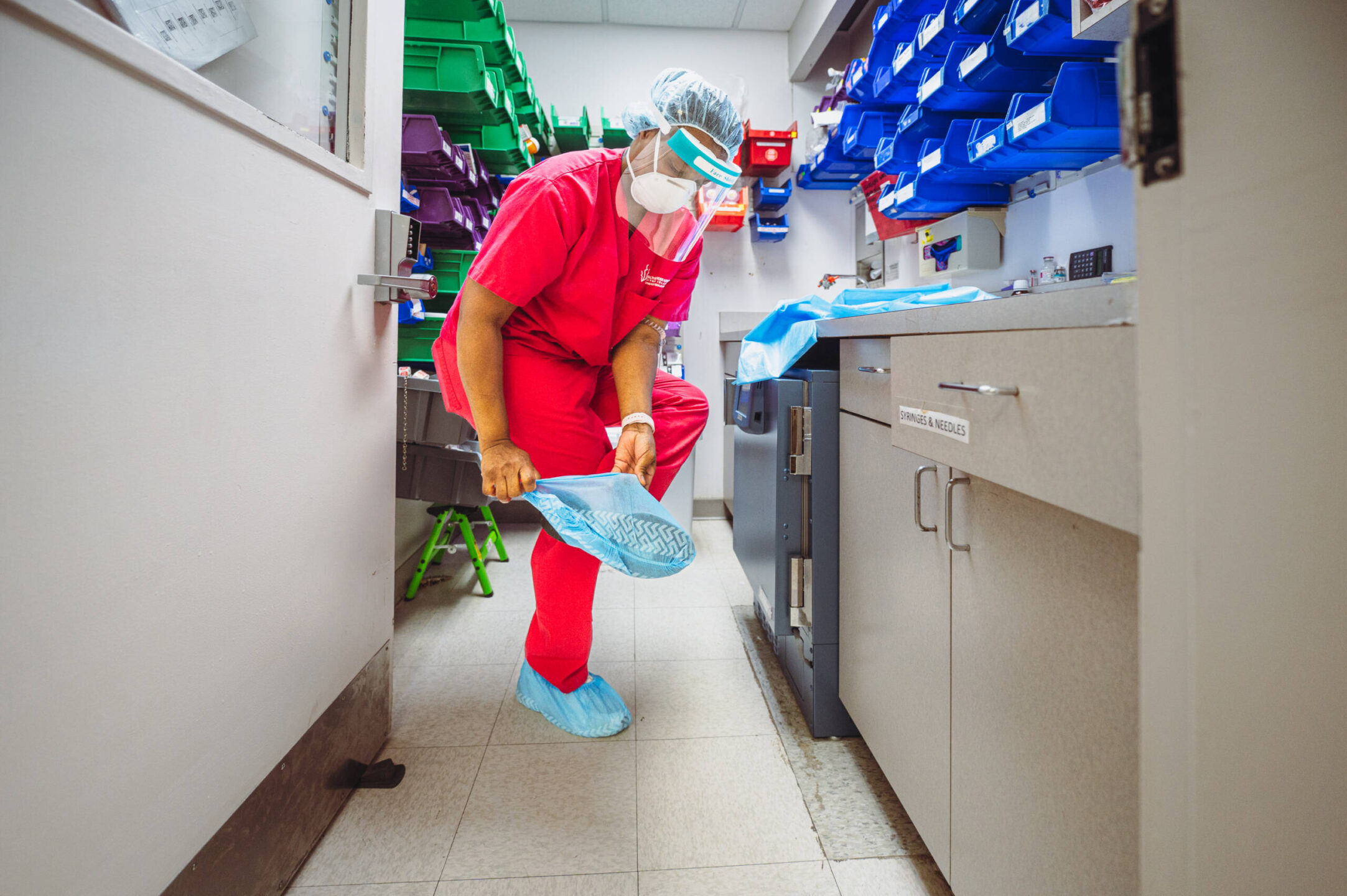
At the start of every shift, nurse Nadine Douglas pulls on her red scrubs – the colour code that signals maximum exposure to Cayman’s most vulnerable patients. Then she dons a full suit of personal protective equipment – thin blue surgical gown and hair net, chemical-resistant gloves and an N95 face mask covered again with a perspex visor. She looks like she is ready to go to war and in a way, she is.
As a senior clinician on Cayman’s COVID wards, Douglas is at ground-zero of the fight against the pandemic.
Staff at the Cayman Islands Hospital have been poised and ready for an outbreak since last spring. But the tide of cases that deluged hospitals across the world only really started to sweep through the island towards the end of last year.
It was the first real taste for Cayman’s frontline medical staff of the severe challenges faced by their counterparts all over the globe. And, for a while, it looked like they, too, might be overwhelmed.
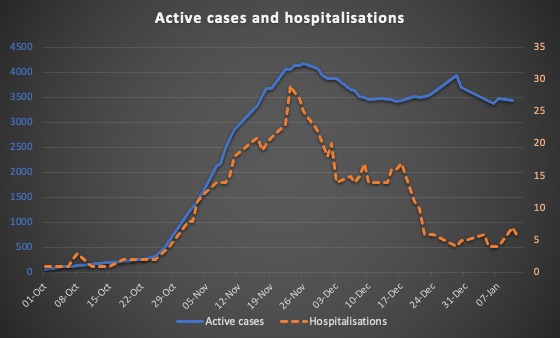
In mid-October, cases were rocketing and hospital beds were filling up. At the same time, an increasing number of staff were out sick or in isolation after contracting COVID themselves.
“There was a period when we were bracing ourselves and preparing to bring in additional support,” said Dr. Schade Stanton, one of the primary physicians caring for COVID patients in Cayman.
At the time, Chief Medical Officer Dr. John Lee warned that Cayman was at two-thirds of its capacity for dealing with COVID cases, and plans were made to reopen the emergency field hospital at the Family Life Centre.
Patient numbers recede
But the worst seems to have passed and, while COVID cases surged again over Christmas, the hospital has not seen the same level of impact from the new Omicron variant.
There were nine patients in hospital on 12 Jan., out of 3,585 reported active cases. In November, there were almost five times as many patients from a similar number of cases.
“As time goes by, the numbers have become more manageable,” said Douglas.
The experience on Cayman’s wards seems to support the hypothesis that Omicron is less deadly than earlier variations of the virus. But Dr. Stanton warns it can still be a severe disease, particularly for unvaccinated people and those with other conditions.
There has been at least one serious case, confirmed to be Omicron, at the hospital in the past few weeks. And while the influx of patients does not currently threaten healthcare capacity, any avoidable illness or death is a concern.
As the virus becomes a part of everyday life, complacency could be the biggest enemy.
“One of the unfortunate consequences of how prolonged this pandemic has been is there is a little bit of fatigue on the part of the public,” said Stanton.
Cayman has lost 14 people to COVID since September. Some had other complicating conditions, but several did not.
Both Stanton and Douglas have seen, up close, the impact that the virus can have and they warn it should not be taken lightly.
“As people on the frontline, who have seen how horrible this illness can be, we want to encourage people not to give up – to get vaccinated, to hand wash, to wear masks and social distance,” said Stanton.
“We won’t get rid of COVID but we need to keep it manageable.”
She is cautious, too, about reading too much into the proportionately lower number of hospital cases from Omicron. While healthcare workers everywhere are hopeful it could signal the beginning of the end of the acute phase of the pandemic, they are taking nothing for granted.
“I have personally found that, with COVID, it’s not so easy to predict the next step in the road,” she said.
“Because of how well vaccinated our population is in general, I am sure we will continue to do not so badly in terms of severe and critical cases, but we cannot be complacent.”
‘Ready for anything’
Fighting the virus takes its toll on healthcare workers, too.
Concerns for their patients mingle with questions about their own safety and security. There is more certainty now about what COVID is and how it spreads, but the relative newness of the virus and the capacity for it to mutate, has frontline workers watchful.
“We are prepared to handle this kind of situation, but that does not eliminate the stress entirely,” said Douglas.
“Those concerns never really leave your mind.”
Patients want information and reassurance too, and that hasn’t always been easy to deliver. Cayman has sufficient resources, oxygen supplies and treatment options to provide the best care possible. But COVID remains a life-threatening virus and, with visitors heavily restricted, those that come through the acute wards of the hospital are often suffering alone.
“They are in this strange environment with this strange condition that could potentially be very serious and they are on their own,” said Stanton.
The hospital staff do their best to provide reassurance, where possible, and help facilitate Zoom and iPad chats with family – something they say can be pivotal in helping patients pull through.
Continued uncertainty is one of the only certainties as the pandemic progresses, and Douglas and Stanton urge the public to do their part to slow the spread and keep severe illness and death as low as possible.
They are confident that the hospital is well prepared and that Cayman has everything it needs to meet the challenge
“We are not sure what the future holds, but we are ready for it,” said Douglas.
Related Videos









The frontline staff like Nurse Douglas are the true heroes of our epidemic, we never hear their names but they are at the highest possible level of risk, we all owe them a tremendous debt of gratitude.