


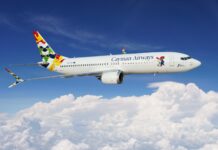
After a turbulent seven-year effort to modernise its fleet of passenger aircraft, Cayman Airways took possession of its fourth Boeing 737-8 plane on Thursday, 20 Jan.
The arrival of the new aircraft means CAL’s goal of having the most modern fleet in the Caribbean has finally been realised.
“Cayman Airways presently operates three B737-8 jet aircraft, which were delivered to the airline brand new, and the delivery of this new fourth B737-8 will help to provide the redundancy needed to deal with the unanticipated circumstances that often arise on the busiest days for travel,” said Cayman Airways president and CEO Fabian Whorms in a post on social media.
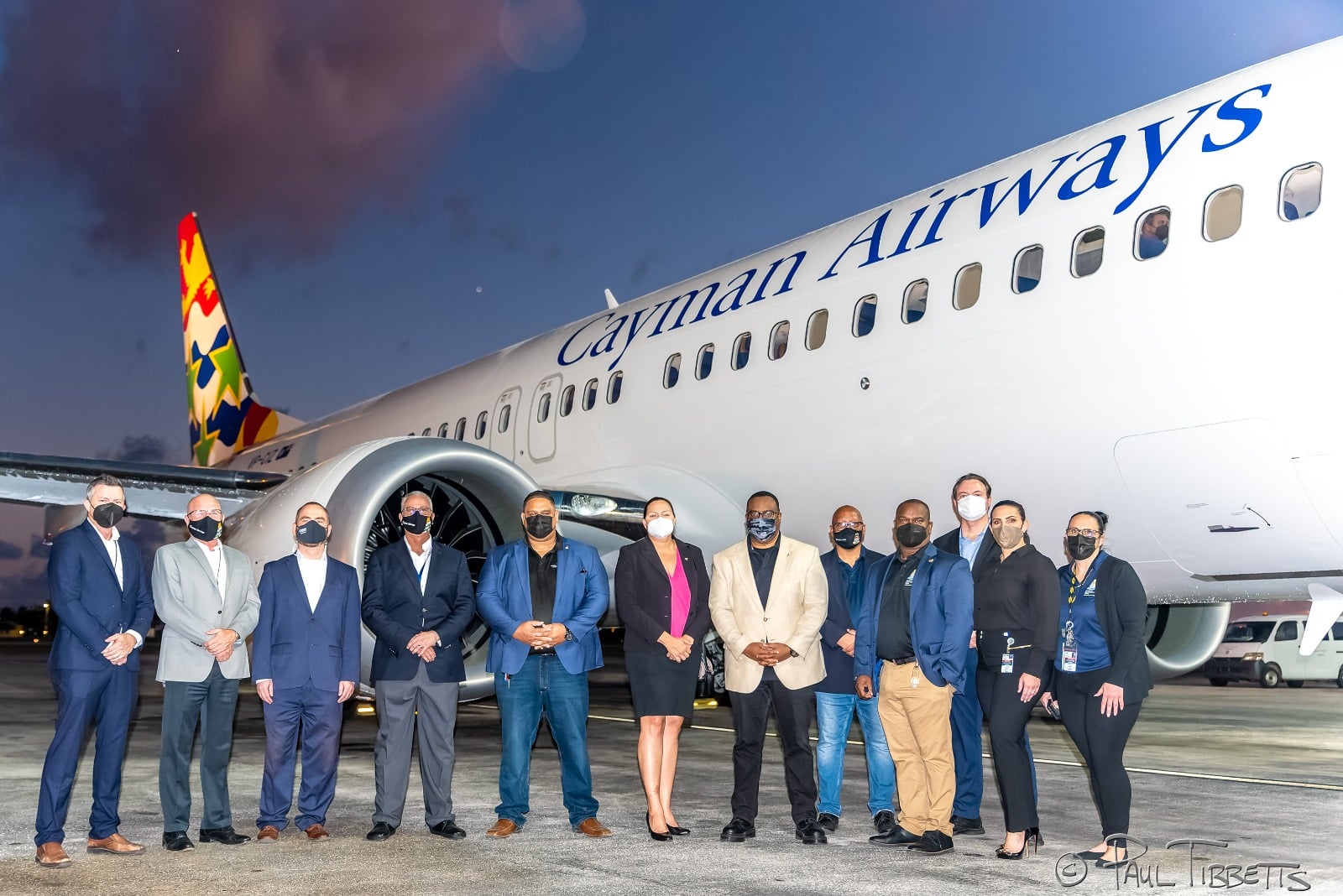
He added, “We are looking forward to offering improved service by being able to spread our current flying over a larger number of aircraft, which will provide greater scheduling flexibility and an increased level of redundancy when operational challenges arise.”
But the journey to modernise the fleet has not been without its challenges.
How it all started
In 2016, during a government press conference, the then Premier Alden McLaughlin, together with then Tourism Minister Moses Kirkconnell, Cayman Airways board chairman Philip Rankin and Cayman Airways CEO Fabian Whorms, announced the modernisation plan that was anticipated to take four years.
At the time, CAL’s fleet consisted of four Boeing 737-300 planes which were leased in 2014 and, at almost 20 years old, were nearing the end of their lifespan.
When presenting the plan, Whorms said the airline had selected the 737 Max 8 planes because they were able to carry 30% more people, while burning 20% less fuel, and would therefore open up gateways on the US west coast without the need to stop and refuel.
The first step in Cayman Airways’ fleet upgrade was to lease 737-800 aircraft to be operated from 2017 to 2020. The first Max 8 was expected to be delivered in 2017, which would trigger the phasing out of the 737-300 planes as each new Max-8 arrived.
In November 2018, CAL’s first Max 8 was delivered, right on time – making it the first such plane to be operated by a Caribbean airline. However, not long after, the fleet upgrade was derailed after two 737 Max 8 aircraft crashed in separate accidents, fewer than six months apart, claiming the lives of 346 people.
Global grounding
Following the second fatal crash, Cayman Airways voluntarily grounded its Max 8 in March 2019, and the Cayman Islands Aviation Authority banned the operation of Max 8 aircraft in Cayman airspace until the completion of an investigation into the fatal accidents by Boeing and the US Federal Aviation Authority.
Soon after CAL grounded its Max 8, the FAA and other such agencies around the world issued similar notices, which prompted a global grounding of the planes.
The findings
In the early stages of the investigation, it was revealed that the accidents were caused by issues with Boeing’s MCAS system, which is designed to prevent a plane from stalling when a take-off angle is too steep.
By January 2020, Boeing had resolved the issue and received approval from the FAA to begin mass repairs and upgrades to all existing planes. As part of the repairs, Boeing was required to rewire and upgrade the software on all affected planes. By this time, CAL had collected its second Max 8 plane, and a third one had been built and was being kept in a Boeing storage facility in the US.
In February 2020, CAL successfully completed a test flight on the first Max 8, after it had been sitting in a hanger at Owen Roberts International Airport for nearly a year.
While the planes remained grounded, the COVID-19 pandemic significantly collapsed air travel anyway, which in turn helped to reduce the demands on CAL’s operations.
The rebranding
Following the global outcry and public fear of the Max 8, Boeing rebranded its aircraft as a ‘737-8’, dropping ‘Max’ from the name.
Since the rebranding, countries have slowly begun to lift their bans on the aircraft.
In December 2020, CAL removed its self-imposed ban on the use of the 737-8 planes, a decision that was supported by the Cayman Islands Aviation Authority.
Following the reinstatement of the 737-8 aircraft into service, CAL restarted its modernisation plan.
Related Videos









We now may have the most modern fleet in the Caribbean, but also the most expensive. When will CAL reveal the cost of these jets and produce their financial statements to show the level of their latest subsidies since Covid arrived?.