

The Office of the Auditor General has lamented government’s lack of progress in implementing Public Accounts Committee (PAC) recommendations.
The office issued its second follow-up report, in a series of updates, focussing on major capital projects, customs and education.
A first report released in January concluded good progress on government’s use of consultants, temporary staff and outsourced services, and in fighting corruption, but some important issues, for instance in relation to procurements, which still have to be addressed.
The latest report found that, of the 54 recommendations made by the PAC and the auditor general in three reports, only 20 (37%) have been implemented. Half of the recommendations have seen some progress.
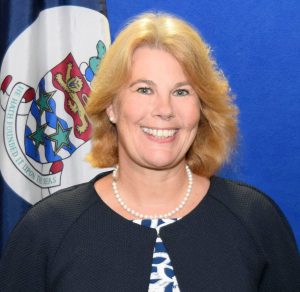
Auditor General Sue Winspear, said, “It is disappointing that, overall, limited progress has been made in implementing the recommendations made in the three reports covered. This is particularly disappointing as some recommendations date back to 2015.”
The auditor general noted different rates of adoption by government entities. While the Ministry of Education had made good progress, less than a quarter of recommendations regarding major capital projects have been implemented, four years after they were made.
“In 2017, we recommended that the Government should develop a long-term capital investment plan to help ensure that capital investment is affordable and the country’s long-term financial sustainability is maintained,” Winspear said.
“The Ministry of Finance has still not developed a long-term capital investment plan despite a number of major capital projects underway or in the pipeline and the intention to borrow to pay for many of these.”
The auditor general said her office also recommended that government should ensure that it has specialist expertise to properly manage contracts for public-private partnerships.
“In March 2021, the government signed a waste management contract worth over half a billion dollars without such expertise, threatening the likelihood of obtaining value for money from that contract,” she said.
A similar picture emerged in relation to OAG’s report on Customs. Only six of the 20 (30%) recommendations made have been implemented.
The auditor general said that, while Customs and Border Control had made some progress, it was disappointing that the recommendation to strengthen project management of the ongoing IT project had not been implemented.
“The latest estimated cost of the project is now $1.4 million against an original estimate of $277,000,” Winspear said.
Again, the auditor general had to point the finger at the Ministry of Finance.
“Since 2015, my Office has consistently recommended that the Government develops a formal, comprehensive concessions policy but the Government has still not developed one. As a result, concessions continue to be inconsistently awarded and the underlying conditions, for example, employing Caymanians, are not being monitored so it is unclear if they are being met.”
The Ministry of Education, in contrast, has responded by rectifying half of the issues identified in an OAG report on school education.
The ministry now records and monitors truancies, which has informed a policy to reduce truancy rates in public schools. It has also developed a policy for identification, assessment and additional support for students with special education needs, which places those students at the centre of the process and ensures that they have timely access to the support that they need, the auditor general noted.
But the ministry has yet to develop an overarching education strategy.
“A clear, overall strategic direction is key to better educational outcomes for students. I strongly encourage the Ministry to finalise this as soon as possible,” Winspear said.
Related Videos













While not surprising, the information written in the article is extremely disappointing.
Clearly, the Cayman Islands will continue to suffer under governments that are ill-equipped to responsibly manage the needs of these islands. What a sad state of affairs when Cayman has such potential to be a leader in responsive, reliable, and reputable government for the people.
I for one support the Auditor General, and suggest those in government who truly support the government characteristics listed above move to provide greater authority to the AG.