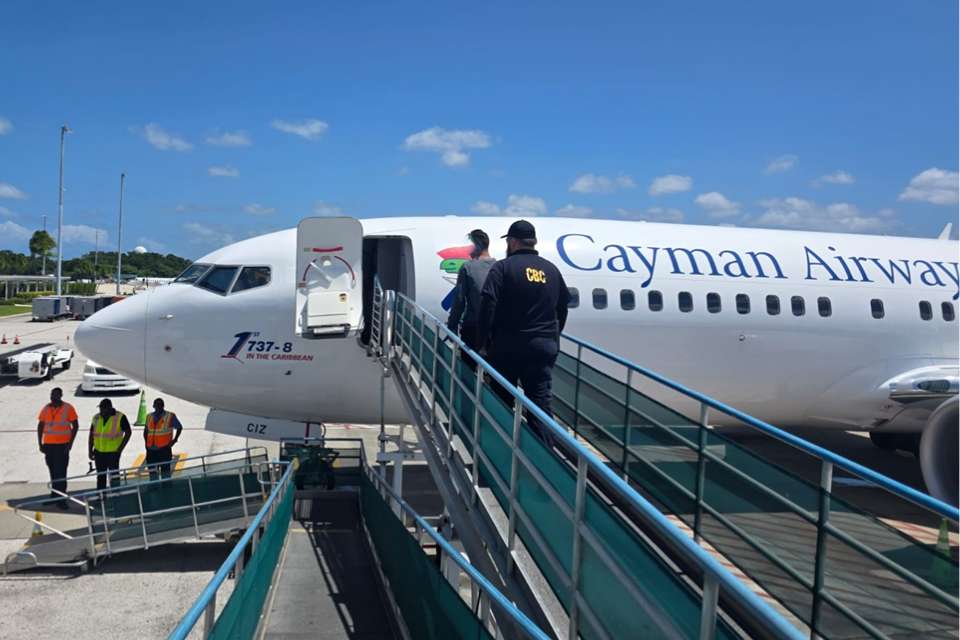
A total of eight irregular arrivals to Cayman from Cuba have been sent home, the Customs and Border Control service has said.
Officials said five men and three women were flown out on a scheduled Cayman Airways flight on Friday, 20 March.
The deportations brought the total number of people repatriated to Cuba since the start of the year to 26.
Bruce D. Smith, the CBC director, thanked partner agencies for their assistance in carrying out “another successful operation”.
The CBC said 17 other irregular arrivals from the Communist-controlled island remained in Cayman, but that “additional repatriation flights will be arranged as processing continues”.
Cuban crisis worsens
Cuba, Cayman’s closest neighbour, is in an economic and humanitarian crisis sparked by increasingly strict US sanctions.
Pressure on Cuba intensified after the US-led removal of Venezuelan President Nicolás Maduro in January, which cut off a major source of subsidised oil.
The move worsened fuel shortages and accelerated the energy crisis, which has led to widespread blackouts across the country.
The Cayman government set up a multi-agency Mass Migration Committee last month as a precaution against a potential influx of refugees.
Previous crises in Cuba have led to an exodus of people, with Cayman a popular destination, but the Compass reported on Wednesday, 25 March that a flood of irregular arrivals had not materialised.
Cayman’s government said the Mass Migration Committee was designed to ensure that all the agencies involved could provide “strategic direction” and that any response was “proportionate, legally compliant and aligned with national priorities”.
It added that the committee would also support Customs and Border Control officials if it had to implement already established procedures for large numbers of people fleeing Cuba, Cayman’s nearest neighbour.
The procedures prioritise identity verification, medical and health screening and security assessments, consistent with Cayman law and international standards.
Cayman preparations
A Ministry of District Administration and Home Affairs spokesperson said at the time that existing facilities such as the immigration detention centre at Fairbanks would continue to be used to house migrants.
She added, “Any activation would be short-term, phased and subject to strict operational controls, with utilisation determined solely by operational need and capacity at the relevant time.”
Cuba, once underwritten by the former Soviet Union, has relied heavily on Venezuelan oil for about 25 years.
But the deal between the two countries, based on subsidised fuel in exchange for Cuban security, intelligence and medical support, collapsed after Maduro was deposed, leading to major shortages of essential supplies.
Max Jones, a British Caymanian who has been married to a Cuban national for more than 30 years and who asked that his wife remain anonymous, said in February that he had travelled regularly between Cayman and Cuba for decades and that present conditions were the worst he had seen.
Jones said, “It has been difficult to watch family and friends in Cuba struggle with the effects of the country’s worst economic crisis in decades.
“From the Cuban population’s standpoint, this crisis has resulted in severe shortages of food, medicine, electricity, and just about everything else.”
Related Videos