Consumers in Cayman are facing widely fluctuating petrol prices this week as Esso stations have hiked the cost of regular fuel by more than $1 per gallon compared to just a week ago.
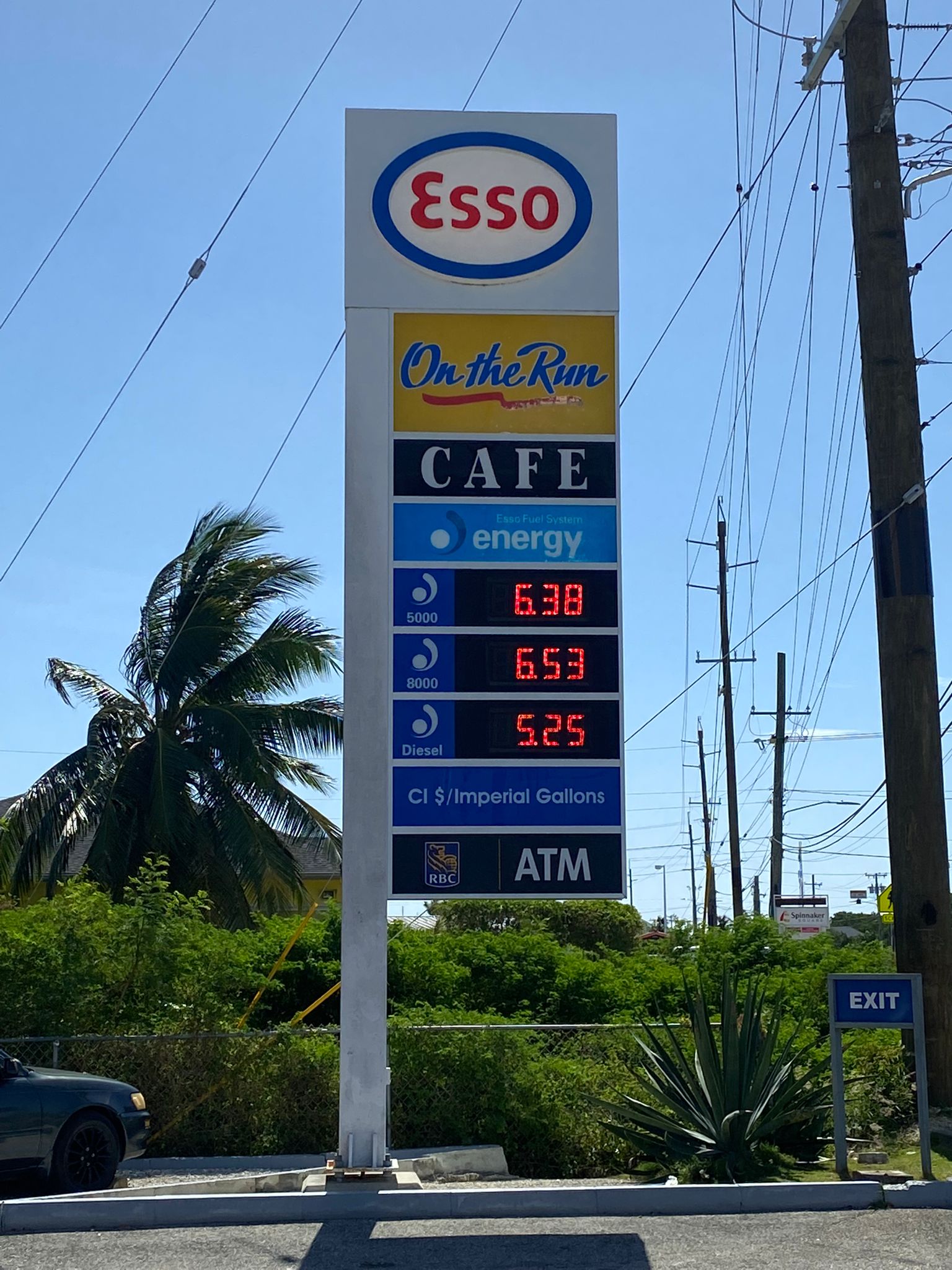
Esso stations in George Town were charging $6.38 for a gallon of regular and $6.53 per gallon of premium fuel on Monday.
According to the website of fuel regulator, the Utility Regulation and Competition Office, on 22 March, the same fuel at these gas stations was $1.02 and $0.83 per gallon cheaper, at $5.36 and $5.70, respectively.
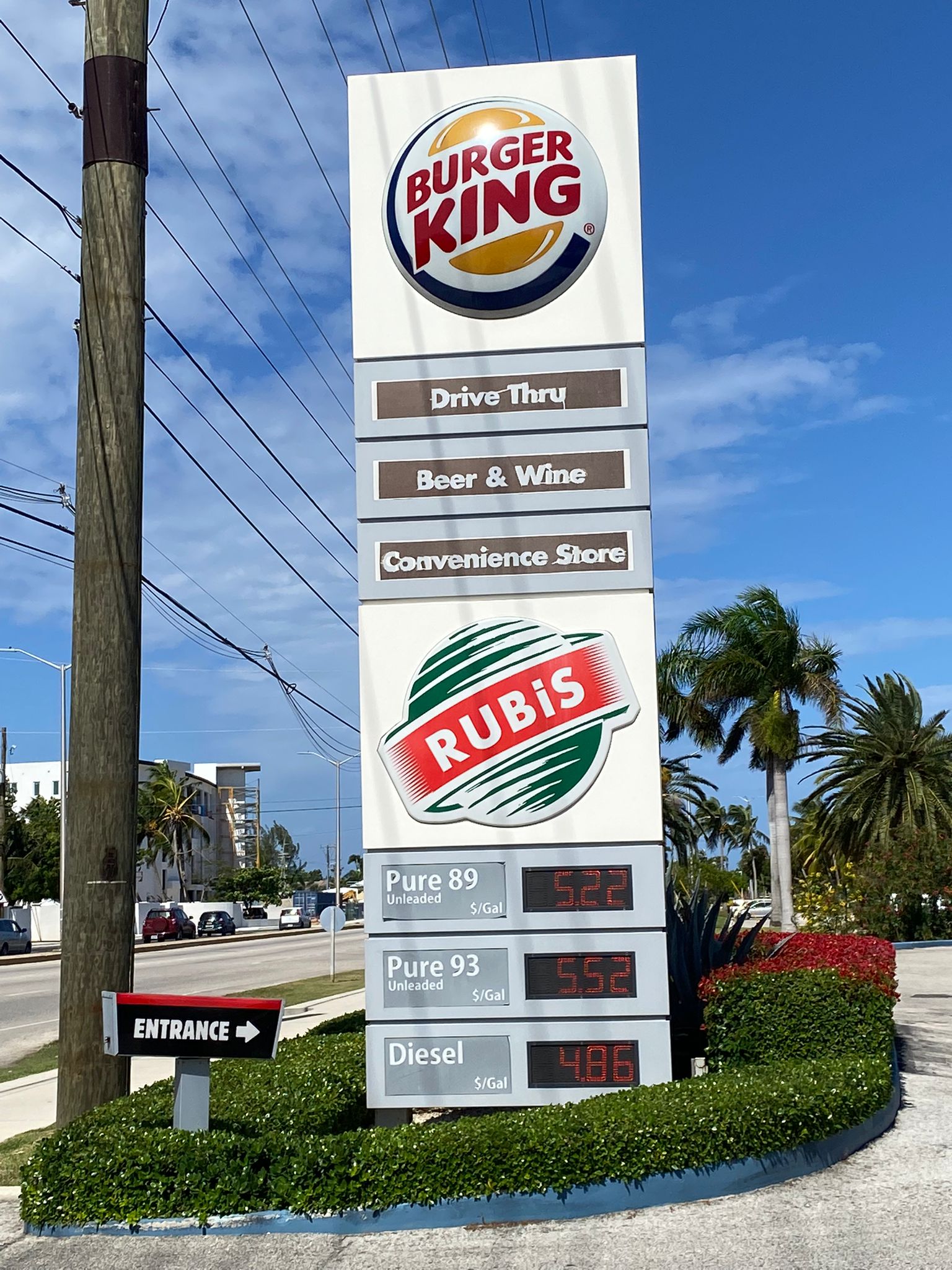
At the same time, Rubis stations had raised prices by only a few cents until Monday morning.
This led to extreme price differences between gas stations that are only a few metres apart. On Shamrock Road in Red Bay, the difference between Rubis and Esso stations was more than a dollar per gallon for regular and premium fuel and almost 40 cents for diesel.
The most likely reason is that Rubis stations continue to sell older fuel inventory bought at cheaper rates, whereas Esso stations had to restock in the more expensive current market environment and is passing this higher wholesale cost on to the consumer.
Some wholesalers use a ‘first in first out’ inventory costing method that sees older fuel sold first, while others use a blended cost approach.
By Monday afternoon, Rubis stations had followed suit with a 35 cents per gallon increase, narrowing the gap somewhat. However, local station operators expect further price increases to follow as fuel inventory is replenished.
Global energy reshuffle affects local prices
The price of fuel in Cayman has increased because the underlying cost of crude oil, which is used to make petrol and diesel, has gone up.
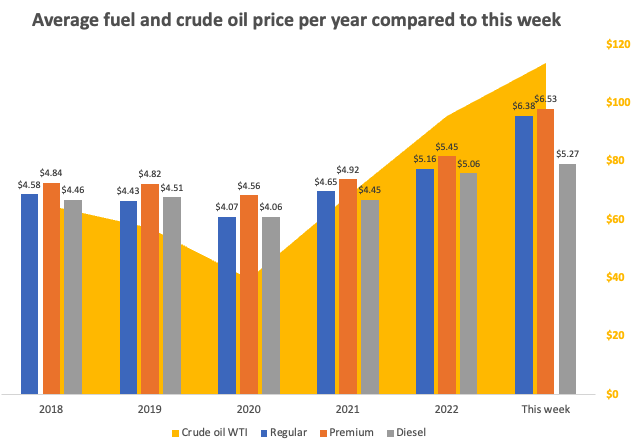
At the beginning of the pandemic, in April 2020, the oil price collapsed briefly below $20 a barrel. As economic activity and life in general gradually have returned to normal the demand for fuel along with its price has increased considerably.
On Friday, 25 March, the price was more than five times the amount from two years ago at $113.90 per barrel of West Texas Intermediate. This is the US crude oil version that is often converted into gasoline and diesel fuel.
In addition to more demand, the war in Ukraine has dented the supply of crude oil.
This is in part the direct result of western trade sanctions against Russia. The US has banned all oil imports from Russia, while the UK is starting to phase out its oil imports from the Eastern European country.
The European Union meanwhile is looking for ways to reduce its energy dependency on Russia, one of the biggest oil and natural gas exporters in the world.
The result is a worldwide reshuffle of energy supply routes.
Although the Cayman Islands buys its oil from the US, a net oil exporter, the global energy supply issues still affect prices locally.
The per barrel cost of WTI crude has increased from an average of $40 in 2020 and $68 in 2021 to an average of $96 this year to date.
Fuel prices are a worldwide concern
Given the global context, Cayman is no exception when it comes to high fuel prices. Even in the US, petrol prices have been steadily rising.
Converted into imperial gallons and Cayman dollars, gas prices in the US are averaging CI$4.23 per gallon, up from $3.53 a month ago and $2.63 at the beginning of 2020.
In the UK, where about half of the price at the pump represents duty, value added tax and other environmental taxes and fees, motorists this week pay on average CI$8.06 for an imperial gallon of regular fuel. This has increased from $7.07 at the start of this year and $5.72 in early 2021, according to UK government figures.
Meanwhile, in Jamaica, petrol is selling for an imperial gallon equivalent of CI$5.55, a similar rate to Cayman’s.
Regulator warned of higher prices
OfReg warned earlier this month that the war in Ukraine could affect local fuel prices. In particular, US sanctions restricting oil imports from Russia had the potential for price inflation.
Peter Gough, interim CEO at OfReg, said on 11 March, “With the United States halting trade with Russia following the recent military action against Ukraine, it is imperative we prepare ourselves for the prospect that fuel prices may increase.”
He said the Cayman market could face similar cost increases as seen in other parts of the world, but OfReg was working to mitigate the effect as much as possible.
Duke Munroe, chief fuel inspector at OfReg, said that regardless of geographical location, global events and prices affect prices locally.
“While we can exert little to no moderation on prices offered at the overseas refineries, local operators will not be allowed to shift prices based on speculation,” he said.
This means that local operators can pass on the price increases they have faced to bring fuel to the islands. But they are not allowed to raise prices in anticipation of further rising oil prices.
Local gas station operators have to notify the regulator OfReg of any price increases.
The regulator continuously monitors local wholesale and retail fuel prices and regularly receives information on fuel imports, margins and the different costs that make up the fuel price.
More than just crude oil
Although the cost of crude oil is one of the main factors making petrol prices so volatile, it is not the only element that determines the price of fuel.
Local fuel duties add 75 cents to the price of gasoline per gallon and 85 cents per gallon of diesel.
In addition to these duties, along with the cost of crude and converting oil into gasoline, there are freight and insurance costs, trader margins, wharfage and port fees, pipeline fees, charges for fuel blending, wholesale margins and retail margins.
This is the reason why a 50% oil price decline does not mean petrol prices are cut in half and why the more recent fivefold increase in the price of crude has not resulted in $20 per gallon prices at the pumps.
There are other factors, such as high operating costs in Cayman and the lack of larger fuel storage facilities, that make fuel more expensive in Cayman than elsewhere.
When Parliament’s Public Accounts Committee investigated in 2020 why Cayman’s fuel prices were so high, wholesalers defended themselves saying they have a high-volume and low-margin business.
They said they were unable to take full advantage of very low prices at the beginning of the pandemic in April 2020, because Cayman only has limited fuel storage facilities and as a result ensuring fuel-supply security – having sufficient fuel at all times – was more important than just price.
Transporting fuel to the islands’ retailers on ships also takes longer and is more expensive than in many other places.
The generally high cost of living in Cayman further contributes to local operating costs. This is the cost of making fuel available to the end-consumer on island and comes on top of the landing cost of buying fuel and bringing it here.
Related Videos