

For more than two years, since the COVID-19 pandemic first swept across the globe, leaving a trail of unemployment in its wake, government has been paying stipends of $1,500-a-month to thousands of impacted Caymanians.
As the economy bounces back and that programme winds down, its legacy may be a creative new approach to unemployment and training on the islands.
In a pilot partnership between the Department of Labour, Workforce Opportunities and Residency Cayman, and the Inspire Cayman Training school, 10 people are being paid the same monthly allowance – equivalent to a salary of around $8-an-hour – to train for new careers.
“They are not getting a stipend, they are getting a performance bonus,” said Michael Myles, founder of the school.
The 10 participants – many of them entering their first formal training programme since leaving school at 16 – must meet certain standards to qualify for the payment.

They have to show up on time, dressed for work; complete their course work; read at least one book a month; and carry out 10 hours of community service. In return, government will fully fund their training and the monthly payments will help cover their living costs.
The programme lasts just three months but everyone who completes the course will receive a trade certification and most, if not all, will be placed with employers..
“When we pull this off, it will be really revolutionary for this country,” said Myles.
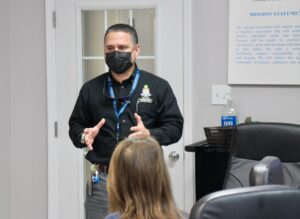
Deputy Premier Chris Saunders was at the Grand Harbour facility for the induction of the 10 participants on Monday, 9 May.
Saunders, who is also labour minister, said it was a priority for government to support vocational training. The tourism stipend, which continues for now, had been a necessary reaction to the hardship of COVID, but was coming towards a “natural end”, he added.

The partnership with Inspire, though small in scale at this point, could be a template to use benefits in a more targeted way, giving people the opportunity to receive the necessary career development to find sustainable employment.
From jobs to careers
For the students themselves, it promises to be life-changing.
Maurice Jackson, 29, didn’t finish high school. He got in with a “bad crowd” and got involved in “too many fights”, he said.
It wasn’t until he was a little older, and had three sons of his own, that a steady job and a decent income became important to him. He’s turned his life around since those teenage days, but finding satisfying, well-paid work is challenging, and arranging time to retrain with three mouths to feed has been impossible until now.

He will complete certification as a heavy equipment operator through the school, and hopes eventually to work on trucks and machinery that load containers at the port.
Ryan Manderson, 32, is stepping back into the classroom for the first time since school. He said he was nervous and excited at the same time.
Manderson has been working construction jobs “to get by” but is interested in boating and fishing. He will train initially for the International Yacht Training boat operator’s certification.
“I don’t have a trade, I don’t have anything really,” he said.
“I couldn’t do it on my own so I thank God these people are supporting me and giving me this opportunity.”
For 20-year-old Angelina Brown, a Miss Cayman contestant this year, the course is the first big step on the career ladder. She is training to be a teaching assistant.
Brown has never had trouble getting jobs. She’s worked on the checkout at Foster’s and as a youth leader for the YMCA.
But being paid to train, she said, gives her the chance to work towards a career she is passionate about.
“I really love working with kids and I would like to work in any school in Cayman. I’ve been through it so I know the dos and don’ts, and students need people that can relate to them and show interest in them.”
Alexandre Brown, 24, has developed plenty of skills in his years working on a family fishing charter boat and as a line cook in various restaurants.
But he hasn’t had the formal training needed to rise up the career ladder.
“People often say, ‘You are an excellent chef – where are your qualifications?’” he said.
Without the proper documentation, he hasn’t been able to break through into bigger and better jobs. Now he’s studying for his boat operator and heavy equipment licences, as well as courses in entrepreneurship.
Ultimately, he hopes to combine his love of fishing, boating and cooking into a business.
As well as practical training for specific career-based certifications, the course involves soft skills, personal financial-management modules and one-on-one sessions with a careers counsellor with experience in breaking down employability barriers. There are also direct links with some of Cayman’s biggest employers.
Changing times
Myles said Cayman has changed over the decades, leaving many young people behind. Those without advanced academic qualifications often flounder post-high school and end up on a treadmill of low-skilled, low-paid jobs.
Even when they pick up skills along the way, they lack the formal qualifications to build a career in modern Cayman, where certifications are far more important than they were for past generations.
Myles said his programmes, which involve practical training and job placements, as well as mentorship from multiple businesses which helped inform the school’s course offerings, are specifically designed to break down the barriers to employment that are holding back so many people.
The support of government – both in funding the training and providing economic support to the participants – is considered the final piece of the jigsaw because it allows the people who need it most to access the training.
It enables single mothers to pay for childcare or minimum wage workers to take a break from their job to focus on developing the skills they need to build a career.
“In the past, people have struggled to get through the programme because they had to work full time to pay rent or because they had children to look after,” said Myles.
He has been calling for some time for government to use the stipend funds as an investment in training for those that need it, rather than simply paying people to stay home.
“We have taken the stipend and transformed it into an earned programme,” he said.
There’s a bonus structure attached to attendance, performance and other metrics within the course; how much a student is paid at the end of the month depends on how committed they are to the course.
Beauty school
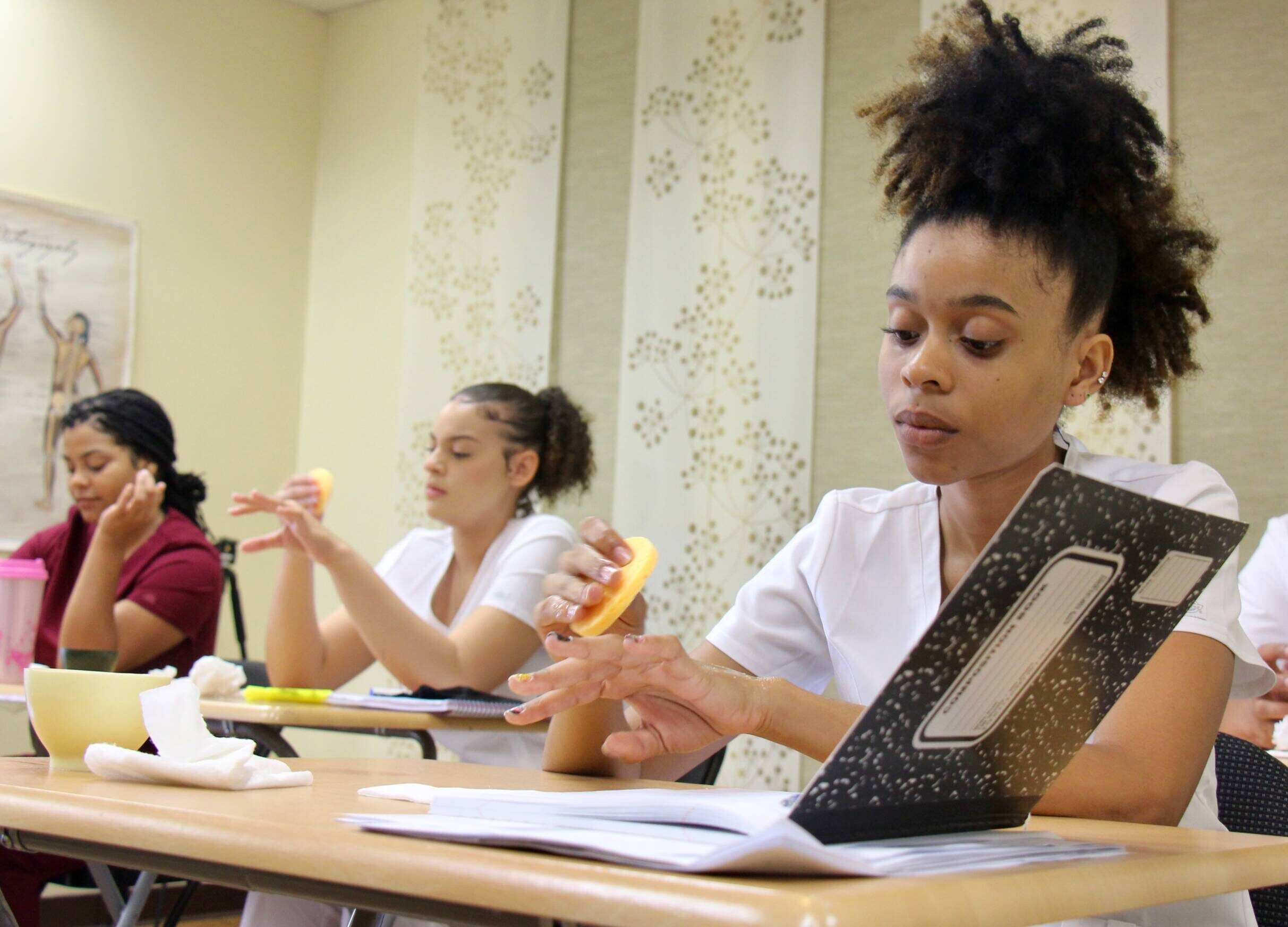
A few miles away, at the Cayman Career Academy, similar strides are being made. WORC has funded a new cohort of six women to take the first step towards a career in the beauty industry.
For now, it is just the first three months of training that are covered, but senior lecturer Hannah Taylor, who was recently running the class through the first of many practical sessions, said this is a big step in the right direction.
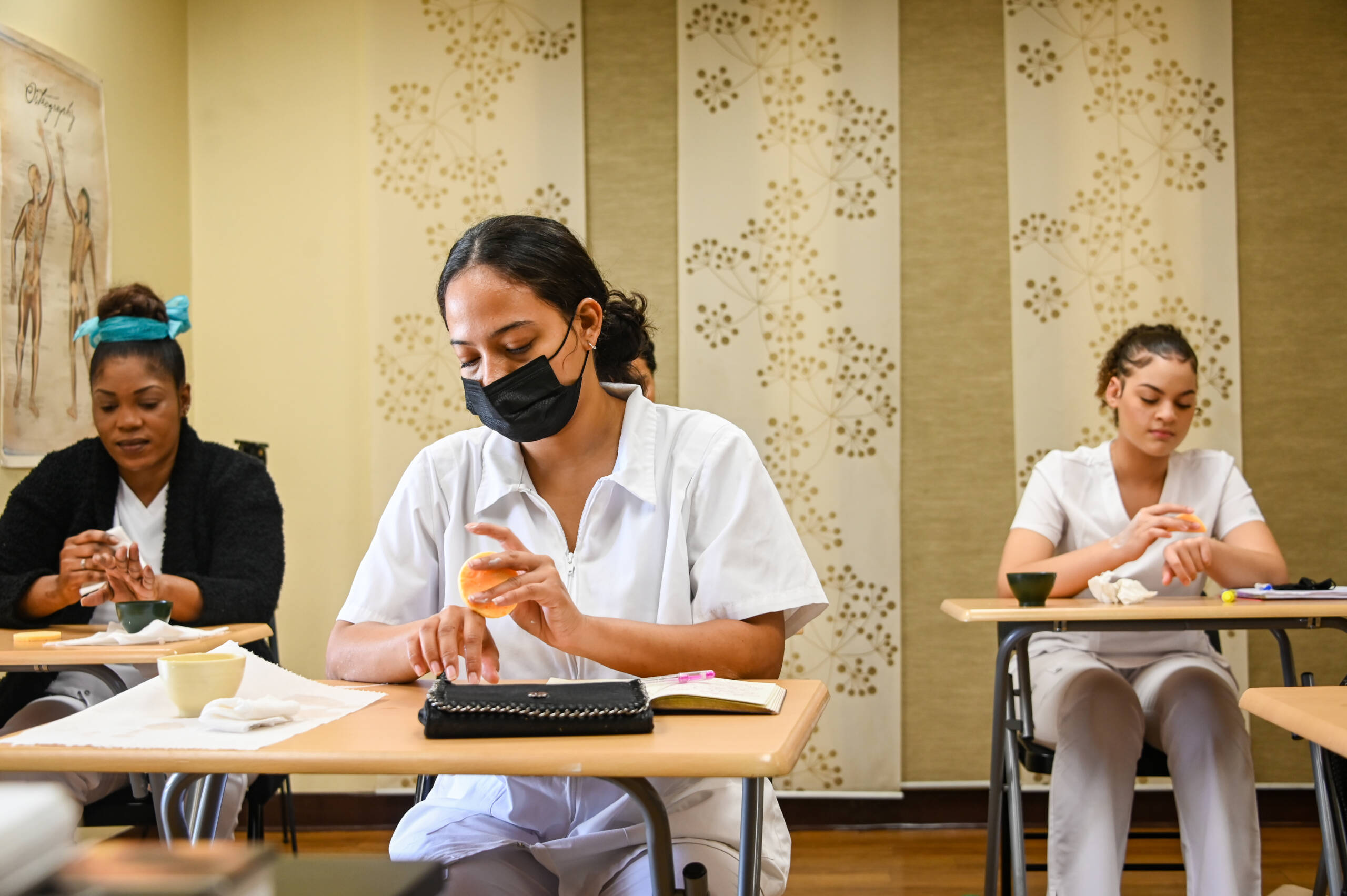
The course will qualify the students to work in a spa or to go on to do further training.
Among the students learning the basics about foundations, cleansers and exfoliators on Tuesday, 10 May, was 16-year-old Cadence Harris.
“I was always into make-up,” she said, “but I didn’t realise it could be a career.”
Without the scholarship support, she said, she wouldn’t have been able to step through the door.
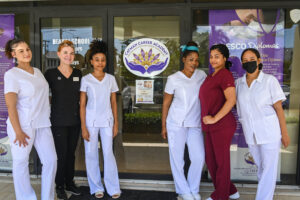
Gabriela Anglin, 28, has spent the last few years working as a line cook. Apart from the Passport2Success programme, she’s not been involved in any training since high school. But the chance to turn her passion for beauty into a career was too good to pass up.
Not everyone realises the lucrative careers that exist in Cayman, said Taylor. There are hundreds of well-paying jobs and businesses in the beauty sector alone.
“There are a lot of beauty therapists on island. There are 720 work permits in this field, and that is everything from the big hotels to the small salons and nail bars,” she said.
More can be done
Both Myles and Taylor said they are grateful that government, through the labour department and through WORC, is beginning to put funding behind career training.
They believe more could be done.
Myles said expanding the “bonus programme” beyond these 10 students could be the next big step.
He would also like to see education scholarships – currently not available for on-island TVET courses – opened up for centres like his and the Cayman Career Academy.
He said short courses directly aimed at making people employable had the capacity to change workforce development for Cayman.
“The private sector can do the bulk of the training,” he said.
“They want people that have some qualifications, yes, but they need people that show up on time, dress properly, have the right attitude to work, and all those soft skills. They can do the rest.”
Targeted spending
Jeremy Scott, acting director of WORC, insists the department is becoming more data-driven as it seeks to identify courses to develop and support.
“We are paying very close attention to the demands in the market,” he said.
“We want to drive our money exactly where the demands are.”
He said this would mean better outcomes in the job market for the students it supports.
The courses at Inspire Cayman and the Cayman Career Academy may be a small step – collectively covering just 16 students – but Saunders, who is also minister of finance, said they were a sign that government’s approach was changing.
“We have literally lost a generation by not having training and vocational programmes,” he said.
Prior to the inception of Inspire in 2018, which Myles started with his own money, Saunders said the only trade school in Cayman had been at the prison.
He said government would be committing more support for programmes like this, that helped develop people.
“We’re here to make sure that this programme is a success and, more importantly, that the people in the programme succeed,” Saunders told the students at the induction for the 10 participants.
Career demand in Cayman
Data from WORC points to some of the most in-demand careers, based on work-permit requests, in Cayman. The data is being used to help inform training programmes. While some of the jobs are relatively low paid, others can be quite lucrative, say experts.
Jobs |
Number of work permits |
|---|---|
| Domestic helper | 3,605 |
| Janitor | 1,673 |
| Mason | 1,329 |
| Waiter/waitress (food and beverage server) | 1,189 |
| Gardener | 1,015 |
| Carpenter | 1,006 |
| Kitchen helper | 634 |
| Cook | 353 |
| Auto mechanic | 255 |
| Farmer, livestock | 240 |
| Bartender | 235 |
| Car cleaner | 210 |
| Hairdresser | 176 |
| Massage therapist | 168 |
| Nail specialist (manicurist) | 150 |
| Heavy machine operator | 135 |
| Air-conditioning technician | 116 |
| Barber | 116 |
| Heavy machine mechanic | 113 |
Related Videos












Has WORC ever asked the unemployed what jobs they’d like to work in? and then helped them navigate training or apprenticing? The list in the article is informative but doesn’t show how many permits are issued in jobs in Government, Banks, Law Offices, Accounting firms etc. Provide the full list.
How do people on these permits make it work in Cayman? They travel from foreign countries to work jobs that unemployed citizens don’t want because they don’t want that job, it doesn’t pay enough or perhaps they are not skilled at the job. Why not understand the barriers? If a foreign worker can live here on the pay, why are they able to?