A team of risk assessors from the UK is drawing up a list of the biggest threats the Cayman Islands face from rising temperatures and sea levels, which Premier Wayne Panton says will help the government create a climate change policy by the end of the year.
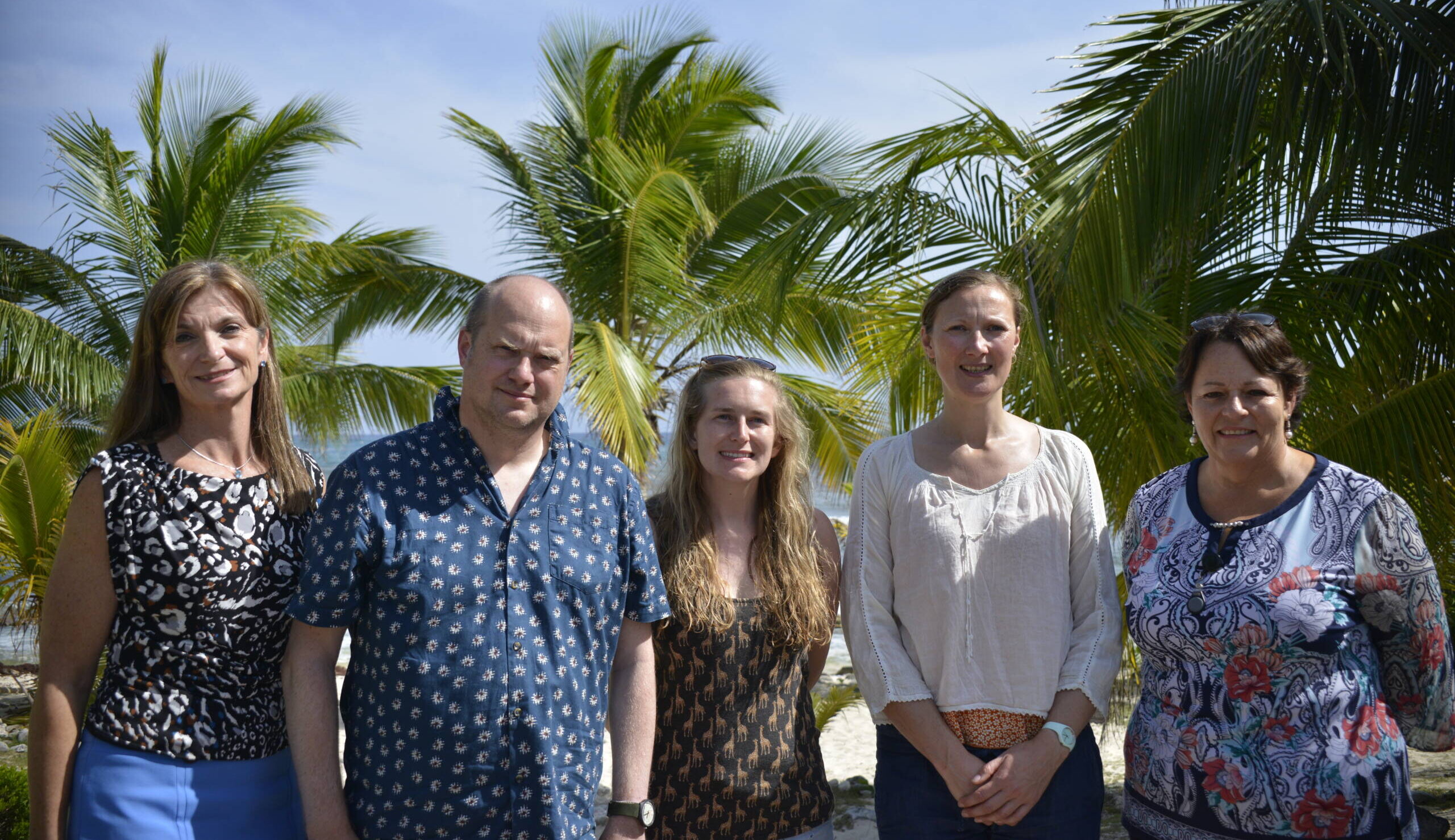
John Pinnegar and Bryony Townhill of the UK’s Centre of Environment, Fisheries and Aquaculture Science (CEFAS) and Alice Fitch of the Centre for Ecology and Hydrology (CEH) are in Cayman this week to meet with local experts and the public to get their input on the risks the islands face from climate change.
Before they arrived on Monday night, the team already had a list of 52 issues relating to climate change, garnered from a draft climate change policy the Cayman Islands government drew up in 2011 but never enacted, as well as from other reports, media articles and scientific papers.
On the team’s first full day on island on Tuesday, they told the Cayman Compass they had added one more item to that list – a “positive” one, Pinnegar said. “In the long term, as it gets drier, you may get less mosquitos,” he explained.
Starting with a ‘long list’
But they acknowledge that this list is far from final and will change, based on feedback from technical workshops with NGOs, government officials and representatives of various industries on Wednesday and Thursday. Those participants are helping to determine the urgency and seriousness of the threats on the list.
“The list of risks is going to change quite a lot in the next two days. Some of the items will merge, some will split, some of them will be reworked,” Pinnegar said on Tuesday.
CEFAS and CEH have previously worked on a similar risk assessment projects on countries surrounding the Arabian Gulf, one of the hottest places on Earth. They have also carried out three climate change risk assessments in the UK, which has legislation requiring that such assessments be done every five years.
Pinnegar explained that the assessment being carried out in Cayman is modelled on the first UK assessment they carried out, “so we’re following the same procedures that we did in the UK.”
“This is why we start with a very long list of risks because even the things we don’t know very much about… can be quite threatening in terms of climate change,” he said.
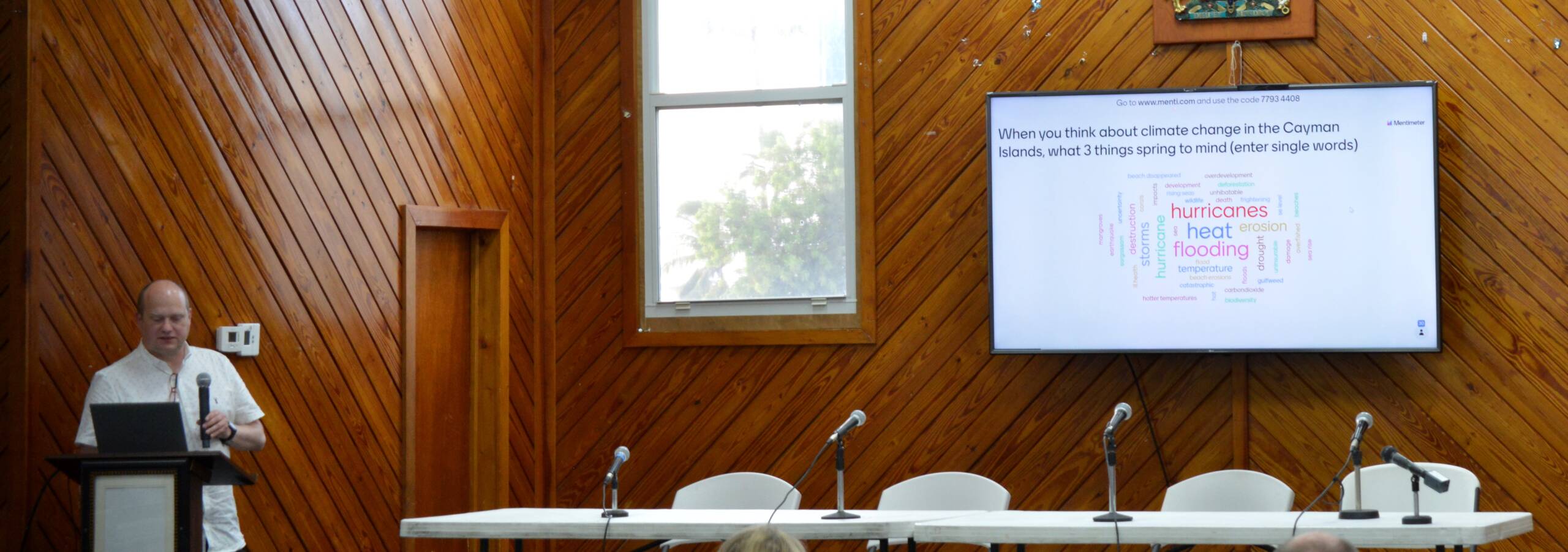
By Wednesday evening, when the team led a public meeting at Constitution Hall in George Town, after the first workshop – dealing with the impacts on species and biodiversity – the list had already been amended based on feedback earlier in the day. A second workshop on impacts to the economy and society is scheduled to be held today, Thursday.
At the townhall meeting, the team said it was likely the original list of 52 risks and opportunities would probably be whittled down to a ‘top 10’ list, based on the most serious and immediate threats facing the islands.
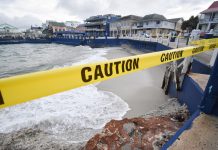
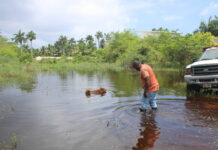
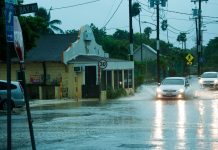
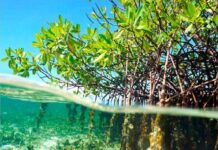
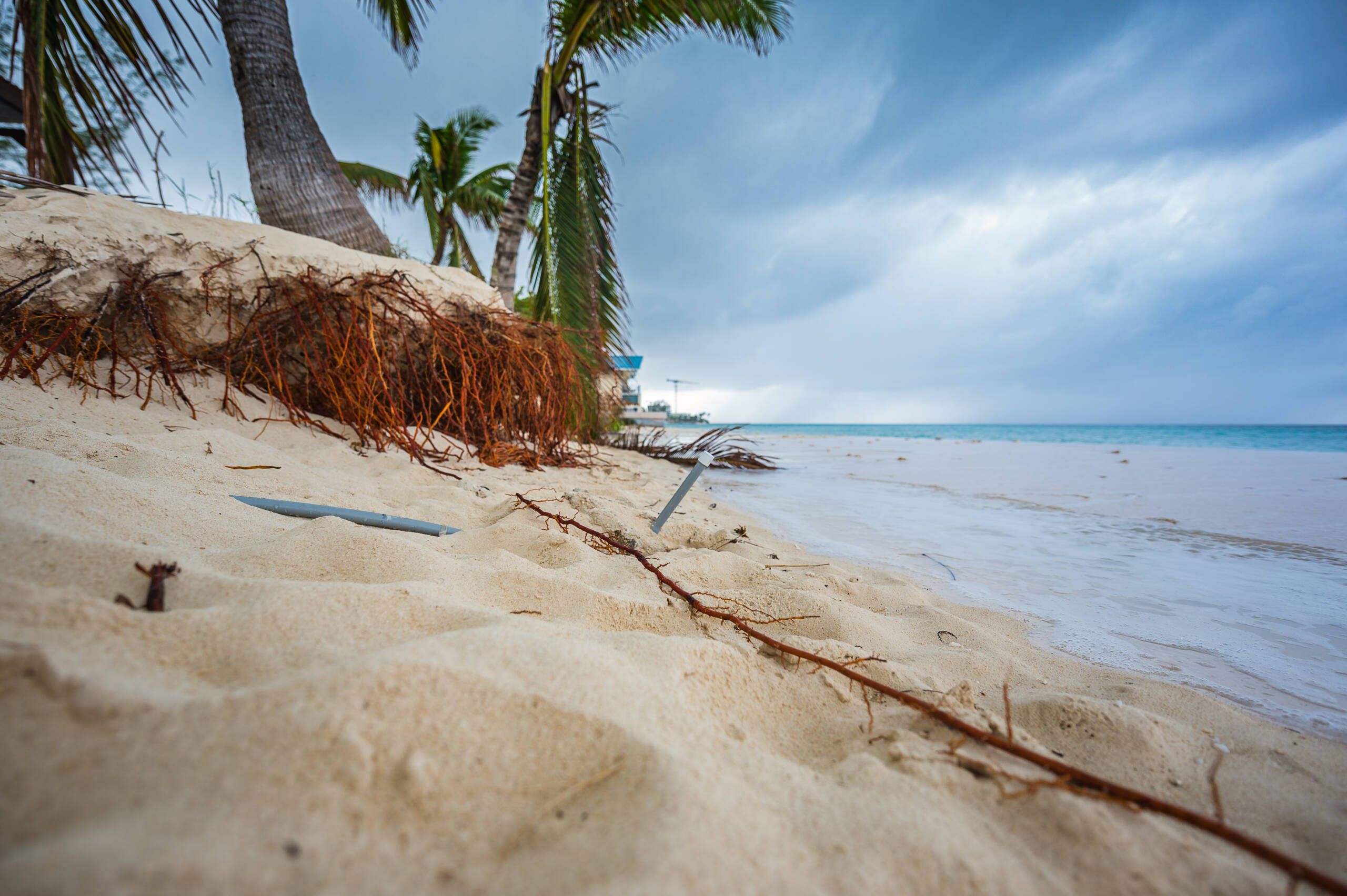
Townhill and Fitch outlined to the audience of about 75 people at the meeting, as well as those listening over the radio where it was broadcast live, some of the threats from the current list, which included beach erosion, over-development, flooding, coral reef bleaching and diseases, invasive species, decline in fish and turtle populations, loss of mangroves, challenges to agriculture and food security, and health issues relating to rising temperatures.
Scoring the threats
Pinnegar told the Compass Tuesday, “Over the next two days, we’re going to ask the shareholder participants at the workshops to score each of the risks in terms of what we’re calling proximity – or urgency – and then magnitude – or seriousness.”
Those scores will then determine how the various risks are ranked in the final list and report, he explained.
“So, the things that will come out at the top are things that are happening already that are really quite urgent, that are going to affect a lot of people, a big area or cause a lot of damage which costs a lot of money,” he said.
The risks that top the list are typically the ones that the countries that are subject to the assessment exercise want to address first, Townhill explained, adding “That’s when you actually look at the adaptation options which might be possible to address those risks.”
The team stressed that their final report is not a document that is meant to lie on a shelf somewhere gathering dust. “They’re designed to be followed through, right through to the adaptations,” Fitch said.
This was echoed by Panton, who addressed Wednesday night’s meeting, saying the final report from the assessment team, which is expected in September, will quickly be used to inform the government’s policy.
He insisted that this policy, unlike the one drawn up in 2011, would not sit gathering dust on a shelf, but would be quickly enacted. He said he planned to have the new climate policy in place by the end of this year.
In a question and answer session at the meeting, one of the attendees, Loxley Banks, asked if the team was also getting input from Cayman’s older generation, who could inform them of the types of changes they’d seen on the islands throughout their lives and who had oral histories from their own parents and grandparents.
Jennifer Ahearn, chief officer in the Ministry of Sustainability and Climate Resiliency, responded that the meetings this week were effectively a starting point for feedback from the public and there would be ample opportunity for the public to give its input at future district meetings and through an online survey.
The survey can be found at https://www.surveymonkey.com/r/caymanclimaterisk.
Related Videos