The Stowe Group, which runs three non-profit private schools in the United Kingdom, is gauging interest in building a new independent school in Grand Cayman.
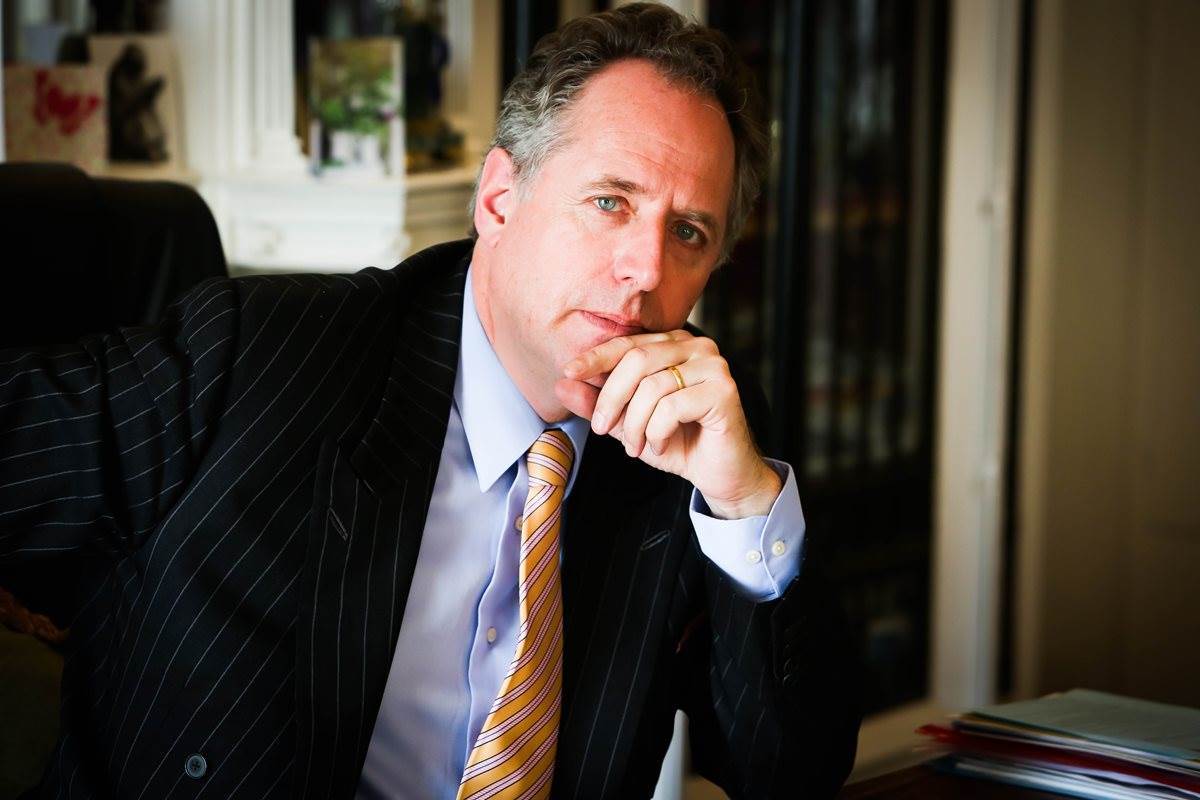
Anthony Wallersteiner, headmaster of Stowe School, will lead a presentation about the proposed new school at the Camana Bay Cinema this evening, 6 July, where he will outline the principles, teaching methods, philosophy and ethos of the Stowe Group schools.
He is also meeting with government ministers, Education Council members and potential investors, as well as with parents of prospective students, to determine if there is an appetite on island for the school, which would include a primary and high school, catering to Caymanian and non-Caymanian children ages 3 to 18.
“This is an island where you have this social division of wealth,” he told the Compass in an interview on Tuesday. “There is scope to create an elite school without it being elitist, where talent is prized and burnished, without regard to background, race, religion or financial circumstances.”
The Stowe Group engaged KPMG to carry out a feasibility study on the proposed school, which would cater to 600-800 students.
Asking why Cayman had come on his radar as a potential location for a new Stowe school, Wallersteiner explained a Stowe School parent, Philip Paschalides, a partner at Walkers law firm, had invited him to Cayman, where the headmaster believes Stowe can fill a gap in the education field.
With Cayman’s growing population, and the increasing numbers of residential and hotel developments on island bringing more employees to the island, there is likely to be a hike in demand for school places in coming years.
Wallersteiner said the plan is to have a school that caters to all elements of the community – from the children of affluent parents who would pay school fees, to students from less privileged backgrounds who would receive scholarships to attend.
He points out that the COVID-19 pandemic had also starkly brought home to families whose children attend boarding schools overseas that having an educational facility on their doorstep that meets the needs of their children – educationally, intellectually and socially – is a preferred option.
He explained that at Stowe School, a three-tier payment system exists, where students at the top end of the economic scale pay full fees to attend boarding school; day students pay a less expensive fee; and means-tested families receive scholarships or bursaries that cover a percentage of the fees relative to what they can afford.
Stowe is currently engaged in a fundraising effort for a programme called Change 100, which aims to raise £100 million, to enable 100 pupils to attend the schools for free. “This is targetted at children who would otherwise not have the opportunity to attend an independent school,” Wallersteiner said.
The group has already raised £15 million, he said, and, through working with three charities to identify children, most from ethnic minority backgrounds, who could benefit from this programme, the first 10 Change 100 students took up places last September.
Stowe School, the first of three schools in the group’s stable, has been in existence since 1923 – the high school in Buckinghamshire will celebrate its 100th anniversary next year. Two primary schools – Winchester House in Northamptonshire and Swanbourne House in Buckinghamshire – joined the Stowe Group in 2021.
Alumni of the Stowe School include entrepreneur Richard Branson; Nicholas Winton who organised the rescue of 669 Czech children, mostly Jewish, from Nazi-occupied Czechoslovakia in 1939; former RAF pilot and humanitarian Leonard Cheshire whose charity supports more than 240 services for disabled people and their families in 50 countries; and the late acclaimed British actor David Niven.
Change Makers
Wallersteiner said Stowe is aiming to create generations of ‘Change Makers’, using progressive teaching approaches. These include one based on the ‘growth mindset’ research work of US educational psychologist Carol Dweck.
The concept of growth mindset is that skills or talents in certain areas, such as mathematics or art, are not innate but can be improved through effort, thereby boosting a student’s performance and motivation.
The schools also utilise ‘marginal gain theory’, a method that helped the UK cycling team win eight gold medals in the 2012 London Olympic Games and which involves making small incremental changes to improve efficiency and performance.
Wallersteiner says Stowe ultimately aims to “future proof” its students in the UK, and potentially here, and prepare them for “jobs that don’t yet exist, using technology which hasn’t yet been invented, to solve problems which we haven’t yet thought about”.
Why Cayman?
Asked why the Stowe Group is considering Cayman as a location for a new school, Wallersteiner said he believes there is a demand among people working in the fields of financial services, legal, insurance, cryptocurrency and fintech for their children to attend an independent elite school here.
He believes there also may be a desire among those individuals to invest in the future of education on island “to reflect Cayman’s ambition to produce the new leaders, the entrepreneurs, the people solving global problems”.
Cayman already has a number of private schools, including Cayman International School, Cayman Prep and High School, Triple C and St. Ignatius, but Wallersteiner says he believes that, as the island’s population grows, so will the demand for another school.
If the plan for the school goes ahead, he said, it would aim to be the island’s first zero carbon school, which would use renewable energy, sustainable building materials, and captured rain water in cisterns.
It’s too early, Wallersteiner said, to identify a site for the school, but he’s hoping he can get feedback from the public, government officials and others on the best district to build it in.
Like the Stowe School, the plan also entails making the campus available to the public outside school hours and during school holidays, when it could also be used to display local art through a partnership with the National Gallery, for example, or a venue for music and theatre.
“We want to engage the community,” Wallersteiner said.
The presentation will be held at 6pm at the Camana Bay Cinema this evening.
Related Videos