


Almost half of Cayman Islands residents currently own their own home, a dynamic which poses challenges for policymakers seeking to address access to affordable housing.
Census data shows a roughly even split between owners and renters in Cayman.
But property experts warn of a generational divide in home ownership which is likely to increase over time. Massive recent inflation in the market has reduced the opportunities for young people to buy.
And government has acknowledged that policy interventions to curtail price increases risk impacting the relatively large number of Caymanians already on the property ladder.
Government also generates around a tenth of its revenue from taxes generated every time a property is sold.
The impasse – demonstrated in census data showing 45% of Cayman Islands residents as owners versus 51% as renters – makes it challenging to address the needs of one group without impacting the other.
Premier Wayne Panton has ruled out a Canadian-style policy restricting foreign ownership, suggesting this has not been effective in other places where it has been tried. His deputy, Chris Saunders, also indicated a reluctance to apply any restrictions on Cayman’s open housing market, warning that government had to tread carefully to avoid solutions that created new problems.
Caymanians are on both sides of the housing equation, Saunders insisted. While many want lower prices, some need to sell their homes to the highest bidder to help pay for medical bills or other expenses.
“There are the people who want to buy the land and people who want to sell the land; where do we find the balance?” he asked.
Generation gap
The lack of any significant action on housing and development, among other touchstone issues, is frustrating for those on the wrong side of the equation.
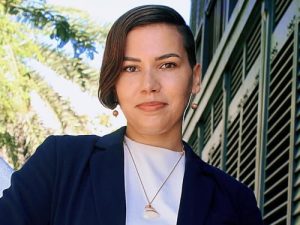
As someone who has gone from renting a two-bedroom home in the Seven Mile Beach corridor for $1,400 a month to paying almost the same for a single room in a shared condo, Emily DeCou said she had hoped for more.
As one of the leaders of non-profit Amplify Cayman, she is concerned at the level of inaction she sees on key issues, including housing.
She cited delays on the development plan – now not expected to materialise before the next election – and the lack of a policy on duty concessions for developers as particular cause for concern.
“People need action, not talk,” she added.
A properly thought-out development plan could create zones for affordable housing. A concessions policy could incentivise developers to build lower cost properties.
There are ‘quick wins’ too, DeCou says, that government could implement swiftly. Many of the politicians currently in government pledged to raise the threshold at which Caymanian first-time buyers qualify for stamp-duty exemptions, but there has been no change to that policy as yet, with the current cap of $400,000 still in place.
Government has partnered with the Development Bank to offer low-interest loans of up to $600,000 to Caymanians – but there is currently only $15 million in borrowing available, enough to help 25 people if all were to borrow the full amount.
Finding the money for a down payment and as much as $30,000-$40,000 extra in tax for a small property is too much for many, says DeCou. And saving year after year becomes dispiriting when the price of entry into the housing market keeps getting higher.
DeCou, who ran for office in the last election, has emerged as a spokesperson for a younger generation that sees itself increasingly cut off from the opportunity of home ownership.
For people under 30, she says, getting on the housing ladder would be impossible without family support. The emergency pension withdrawal – designed as a relief payment amid the impacts of COVID – was used instead by many younger people to purchase property.
“I wish there was better social support so they didn’t have to do that, but they are doing the best they can with the hand they have been dealt,” she said.
‘We can’t stand still’
As someone who makes a living selling real estate, Michael Joseph of Property Cayman believes the issue is complex. He said it is vital that the wheels that drive the economy continue to turn.

He acknowledges that increasing house prices are prohibitive to first-time buyers and low-income households globally, but argues that inhibiting free market movement in a competitive environment is not the answer to resolving these issues.
“Ways must be found to allow the increase in house prices in a free market, while also protecting the interests of lower-income and first-time buyers,” he said.
In 2020, the real estate firm set up the non-profit Property Cayman Cares, with staff contributing a percentage of their commissions and salaries to the entity. Funds will be used to benefit lower-income Caymanians on their “property journey”, he said.
Discussions are ongoing about how best to harness the cash accumulated, and Joseph would like other agents and developers to contribute to the project – both with funds and ideas.
He agrees that sudden and sweeping policy interventions, like restricting foreign ownership, would not be good for many Caymanians, both those who own property and those who make a living from the trade. The census data shows it is more than a select few that benefit from rising house prices and a brisk property trade.
Ways must be found to allow the increase in house prices in a free market, while also protecting the interests of lower-income and first-time buyers.
“We can’t just stand still and yet expect prosperity to improve,” Joseph said. “I appreciate this is debatable, yet I believe we must continue to grow, sustainably, in order to maintain our high standard of living.”
He recognises there is a flip side to the economic successes that developers, agents and homeowners have enjoyed.
“We want to work with government and with developers and others in the industry to find long-term fixes for these issues; otherwise it will only get worse,” he said.
There’s a range of ideas to tackle the affordable housing issue, Joseph said. One proposal could be for all developers to contribute a small token of their profits; another for government to permit duty-free materials for construction on projects which include lower-cost housing.
“If we all do just a little bit, it will make a big and long-lasting difference,” he said.
“We don’t have all the answers, but collectively if all industries and stakeholders participate in a small way, we can reverse the current trend and have a positive impact. Our long-term vision is increasing the number of participants and supporting a community effort to fix this issue together.”
Small decline in home ownership over last decade
The statistics suggest a small decline in home ownership among Caymanian residents, of around 3% over the past decade.
That could be due in part to a larger increase in the expatriate population, which grew by just over 9,000, compared with 7,000 Caymanians.

RE/MAX agent Kim Lund said the transient expat population contained a higher percentage of renters. He also believes that many Caymanians bought into new developments, like Harbour Walk and Davenport’s most recent project Bahia, at pre-construction pricing, potentially elevating the local ownership numbers further.
“There were a lot of good deals around and a lot of first-time buyers got in on those projects, so I think that slight decrease would correct itself fairly quickly,” Lund said.
While he acknowledged there are affordability challenges, he said many Caymanians can and do own their own homes and benefit from a strong market.
Poverty persists
One, perhaps surprising, statistic is that one in five people living in Cayman own their own homes without a mortgage.
While, on one side, this may indicate the wealth that exists in parts of the island, it is also true, says Tara Nielsen, of charity ARK, that many people are living in poverty, despite owning their property free and clear.
The charity’s Cayman CASA programme helps people rebuild run-down family properties. ARK has a long waiting list of families living in unsafe and unfit conditions, who have often inherited land and property that was built in the 1930s or ‘40s and has fallen into disrepair.
“For some, that is the only asset they have and we focus on helping them make it habitable, so they can avoid that expense of paying rent on top of everything else,” Nielsen said.
Related Videos










Young and old, Residents and caymanian.
Only who can afford to get a loan or are bless to get a bank approval can buy a home these past years, pluss the down payment is high.
A lot are force to keep paying rent, when they could be paying for a home. This is something government need to be looking into.
Also some times because of you status type some places that have the affordable homes, when you ask what you need to apply tge answer is because you are spouse of caymanian you will need to apply along with your spouse.
What if that person alone can afford to pay the loan why the needs of both to apply together. It’s a lot to look into. Hope one day we as Residents , spouse of caymanian that have plans and dreams we can get the opportunity to make it real and invest more in the island.. a home a family and a business.