Could the Cayman Islands be headed for a surge of new coronavirus cases as families return to the island following a ‘summer exodus’?
It’s a question that is on the minds of medical professionals across Cayman.
On Monday, the Health Services Authority announced a further COVID-related death, following two others at the end of last week.
Thousands of people left the islands this summer to vacation or visit family around the world, taking advantage of the first opportunity to travel more-or-less freely, since 2019.
Experts say it is likely that many will have brought back bugs – but the question is whether that includes variants of the coronavirus.

Dr. Sara Watkin, of Integra Healthcare, said the return of children to school over the past few weeks would inevitably see infections spread, as this is normal as summertime finishes. However, this year saw a greater volume of families travelling on holiday or to visit relatives.
“There is always a spike in illness when the kids go back to school in September,” she said.
“There has been a mass exodus from the island this summer and we will likely see a glut of common childhood infections as the children get back together at school. We need to keep an eye open to see if that includes COVID-19 infections, including the newer variants.”

Dr. Francisco Martinez, who leads Integra’s primary care division, added, “Cayman has suffered less than other countries through the pandemic, but that means it is easy to become a bit complacent. Now we have to be mindful of waning immunity from vaccines, given that the majority of the population has not been boosted and so their vaccinations were a long time ago.”
The latest Omicron variants, BA.4 and BA.5, are believed to be the most prevalent forms of the virus circulating in the islands right now, driven by their dominance in the United States, Cayman’s primary tourism market.
They appear to spread much more easily and it remains unclear as to their severity, except that those suffering are not reporting it to be as mild as earlier Omicron.
“The most significant threat, particularly for elderly and vulnerable people, is the surge of a new variant at a time when immunity from the initial round of vaccines could be declining. We have waning immunity at a time when everyone has gone around the world potentially collecting variants,” said Martinez.
Anyone vaccinated with the initial Pfizer-BioNTech jabs is still likely to have some remaining immunity, which for most people means they will have capacity to create enough antibodies to fight off serious infection.
Targeted boosters
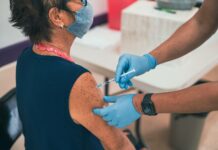
With new variants bringing the potential re-emergence of more severe illness, boosters, so far taken up by only 37% of Cayman’s population, are recommended by the medical establishment.
Professor Andrew Shaw, CEO and chief scientist of Attomarker Ltd in the UK, which partnered with Integra to bring an immunity test to Cayman, said results suggested that vaccines were less effective against newer variants than the ‘wild’ virus and that higher levels of antibodies were necessary to avoid infection.
“The vaccine works well against the original variant but now the target has changed,” he said.
The new Moderna vaccine, which targets later variants, and which will soon be available in Cayman, would boost antibodies and offer a more complete protection against new variants, Shaw added.
He argues that antibody testing can be used to help people understand their antibody levels as the data starts to indicate what level appears necessary to maintain immunity.
“Some people will find themselves sufficiently covered but many will find themselves likely under-protected from newer variants, and boosting would be important,” he said.
He added people react differently to vaccination and that reaction, combined with whether or not they have had a natural COVID infection, impacts the strength of their antibody reaction.
“It’s time for us to recognise that more normal life and back-to-normal travel comes with the necessity to manage our personal risk by understanding our own protection and ensuring we are boosted appropriately,” he added.
Complacency a threat
While Cayman appears to have got off lightly – in global terms – with 32 deaths associated with COVID as of Monday, many of those were attributed primarily to other causes. Public health leaders internationally are increasingly warning that COVID complacency is a new threat. Shaw said being adequately vaccinated was still the best precaution any individual could take.
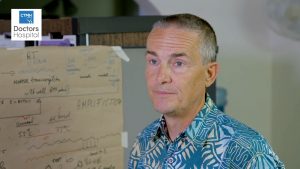
Dr. Frank Koentgen, who designed Doctors Hospital’s COVID-testing system, said Cayman had taken appropriate measures to check the spread of the virus.
“The shutdown was to prevent a general healthcare meltdown not just a slowdown of COVID itself.”
He added that the success of the vaccines meant the world could now safely move on.
“Vaccines have saved humanity many, many times. They may not always prevent infection but do prevent morbidity and mortality.”
Related Videos