The Cayman Islands government is facing potential legal challenges over what appears to be a Caymanian Status and Permanent Residency Board-imposed moratorium on processing permanent residency applications.
Local law firm HSM has formally written to government, warning of looming ligation and flagging the possibility of mass permanent residency grants as a consequence of the delays, and requested a response by the end of this week.

When contacted for comment, the firm declined to say anything on the matter.
Speaking with the Compass Friday, Deputy Premier Chris Saunders – under whose remit the Caymanian Status and Permanent Residency (CSPR) Board falls – said he had not seen the letter, but that was a matter for the Attorney General’s Office.
He denied that there was a moratorium on granting of PR applications.
He said the delays were a result of scrutiny of applications.
“The board is actually doing their jobs in the sense of fact checking, vetting applications and making sure that everything is correct and, at the end of the day, that is what we’re looking for. I think what has happened is in the past where these things were pretty much rubber-stamped through, people got used to these things being done very quickly,” he said.
However, he said countries like the US and UK take even longer, and in some cases the process lasts years.
“It is only in Cayman on where people come down here and expect these things to be done in a matter of months. There’s a lot of security checks that are going on in the background, and there are a lot of different issues that are not being considered,” he added.
Saunders said he has full confidence in the chairman and the board and the work they are doing.
HSM attorney Nick Joseph, in a letter issued to clients awaiting the processing of their applications – a copy of which was obtained by the Compass – pointed out that, in over a year, no applications have been approved by the board.
In that letter, Joseph expressed concern over the developing situation. He said it not only impacts applicants, but it also directly affects Caymanians and their ability to access jobs held by expatriate workers tied up in the processing queue, who may not meet the criteria but have applied for permanent residency anyway.
Permanent residency extends the right to remain in the Cayman Islands to non-Caymanians who have been continuously resident here for at least eight years, if their applications are approved.
PR delays rears head, again
The issue of the PR backlog and legal challenge, as a result of delays, is not a new one. In 2017, the government, under then-Premier Alden McLaughlin, faced heat as the backlog of those applications grew to nearly 1,000.
McLaughlin, who was also the immigration minister at the time, commissioned a report from the Ritch and Connolly law firm to review the PR points system; that report was never made public.
However, coming out of that exercise, McLaughlin’s administration, in the face of at least 24 lawsuits over delays, later amended the PR points system, giving everyone applying full points for their occupation. The earlier system had awarded different points for different occupations.
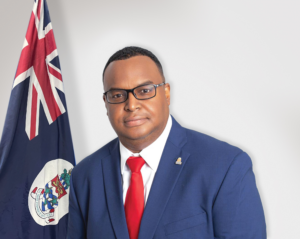
Saunders has appointed a committee to review the existing PR points system, under which applicants are currently required to receive at least 110 points to get permanent residency. That review exercise is being led by the CSPR Board chairman Steve McField.
Saunders said the review process is progressing well; however, while the deadline for the committee’s report is 31 Dec. “this isn’t something that we want to rush.”
He added, “We want to make sure we get it right because these are life-changing decisions”.
Joseph, in his letter, said, based on freedom of information data provided on 23 Sept. to HSM and having “reviewed a years’ worth of minutes”, his team determined that the last PR application made pursuant to the points system and in which they considered the points, was determined by the board on 30 Sept. 2021.
“It accordingly appears clear that the new CSPR Board have not made a determination with regard to consideration of the award of points to a single Points-System application, since its appointment,” Joseph said in his near seven-page analysis issued to clients.
He said the firm considers the board’s position as being “too restrictive and we are hopeful for some relaxation, particularly where delays are [affecting] the rights of children”.
Though there has been no official word that the board has halted processing applications, Joseph, in his emailed update to clients, advised that based on an HSM review of documents it has received, the firm has concluded that a “moratorium” has been placed on processing applications.
‘Unlawful’ moratoriums
Moratoriums of a similar nature have been held to be unlawful in the past, Joseph said, adding, “A previous Moratorium with regard to PR applications was only lifted after challenges were brought by us, in the Grand Court. It is, to say the least, regrettable, that we must once again face the issue.”
Joseph, in his letter, said numerous applications have been listed for hearing on dates on which the authorities knew there would be no meeting, such as 25 Dec. Calling those dates “dummy agenda”, he said they are “effectively place holders to park your applications in the system for the time being”.
The attorney contended that PR applications taking more than 12 months to be processed raise a further concern that such a long delay “may, in and of itself, amount to unlawful conduct”.
In particular cases, delays may become unlawful even before any delay in processing reaches 12 months, he added.
“We fundamentally do not understand the basis for most of the ongoing delays,” he said. “The reality is, a trained administrator could fully assess a properly formulated PR application within an hour.”
Six-month timeframe
“In any event,” he added, “the PR points system was always designed and intended to make determinations within 6 months of application as (in part) evidenced by the fact that PCW’s (Permission to Continue to Work) are only available in 6 month increments, and no refunds of fees are available.”
Joseph said the Workforce Opportunities and Residency Cayman director, who has equal authority as the CSPR Board to determine applications, most recently determined one application, more than six months ago on 1 April.
Acknowledging it was unclear if “the apparent Moratorium is deliberate”, he added the law firm did not understand the reason for it being put in place. While the delay might relate to the review of the system, he added, “that is not a sufficient reason”.
Joseph, through his correspondence, pointed to the importance of an effective PR and term-limit system.
“An effective, efficient, and equally applied term limits and PR system is the only lawful and sustainable mechanism (that we know of) for the Caymanian people to maintain control over who can permanently settle amongst us, and on what terms. Like the Caymanian people it was designed to serve, it is deserving of protection,” he said.
The immigration system, he said, “is unduly complicated and has long been ripe for considerable simplification – whilst maintaining and even increasing the in-built mechanisms to protect the Caymanian people”.
“‘Fixing’ many of the defects in the PR points system, while much better than doing nothing, will fall well short of the potential gains achievable from an overhaul,” Joseph argued.
No chance to compete for jobs
Caymanians, he argued, are frequently deprived of any opportunity to compete for positions undertaken by applicants for PR and, of course, no promotion or re-designation is possible during the extensive delays in processing.
Joseph also highlighted cases where some clients have been accused of “overstaying”, been instructed to “regularise” permissions, and been forced to purchase airline tickets they neither wanted nor needed.
“Others are being hampered in their ability to get visas, including student visas. The delays are accordingly having undesirable (and inappropriate) legal and technical effects far beyond mere inconvenience,” he said.
Joseph said those dealing with the issue are aware of the impact it has on a successful applicant’s ability to apply for Naturalisation as a British Overseas Territories Citizen (and where applicable, on the ability of children to apply for registration).
“If delays are to continue, anticipate asking the Governor and Deputy Governor to waive aspects of the applicable processes so that you are not further unduly prejudiced in consequence of delays outside of your control,” he advised in his letter to clients.
Unintended consequence
Allowing individuals without permanent residency to be here for longer than 10 years, “an important circumstance which the entire system was conceived and implemented to prevent, risks government losing control of immigration restrictions which it may otherwise wish to place on expatriates”, Joseph said.
He pointed to an apparent lack of understanding of the need for term limits, and potentially ongoing unequal and inconsistent application of them, in particular to civil servants, that was leading to further untenable situations.
“Large (and growing) numbers of anchor babies, children (and through them, potentially their parents) are gaining Permanent Residence… without any application to (or say from) the Department of WORC or the relevant Boards,” he said.
A result of this, Joseph said, is while Cayman’s leaders may be busy working at closing the “proverbial barn door in the laudable effort to protect these Islands and in particular, Caymanians, no one seems to have noticed that, just out of sight, an entire opposite wall of the barn is absent, and whole categories of expatriates from overseas continue to gain the right to remain here forever, comparatively un-vetted, unnoticed, and unregulated”.
This, he said, is happening with no points system or investment required.
“It is Orwellian. All expatriates are equal but some expatriates, it seems, continue to be more equal than others,” he added.
Joseph welcomed the PR points review that is under way, but said a wider scope may be necessary.
He urged “all concerned to avoid the errors of past administrations and to recognize and understand the interplay between everything from Trade & Business licensing to Health, Pensions, and Employment legislation. All play an essential role (with immigration legislation) in striking the required balance.”
Related Videos