

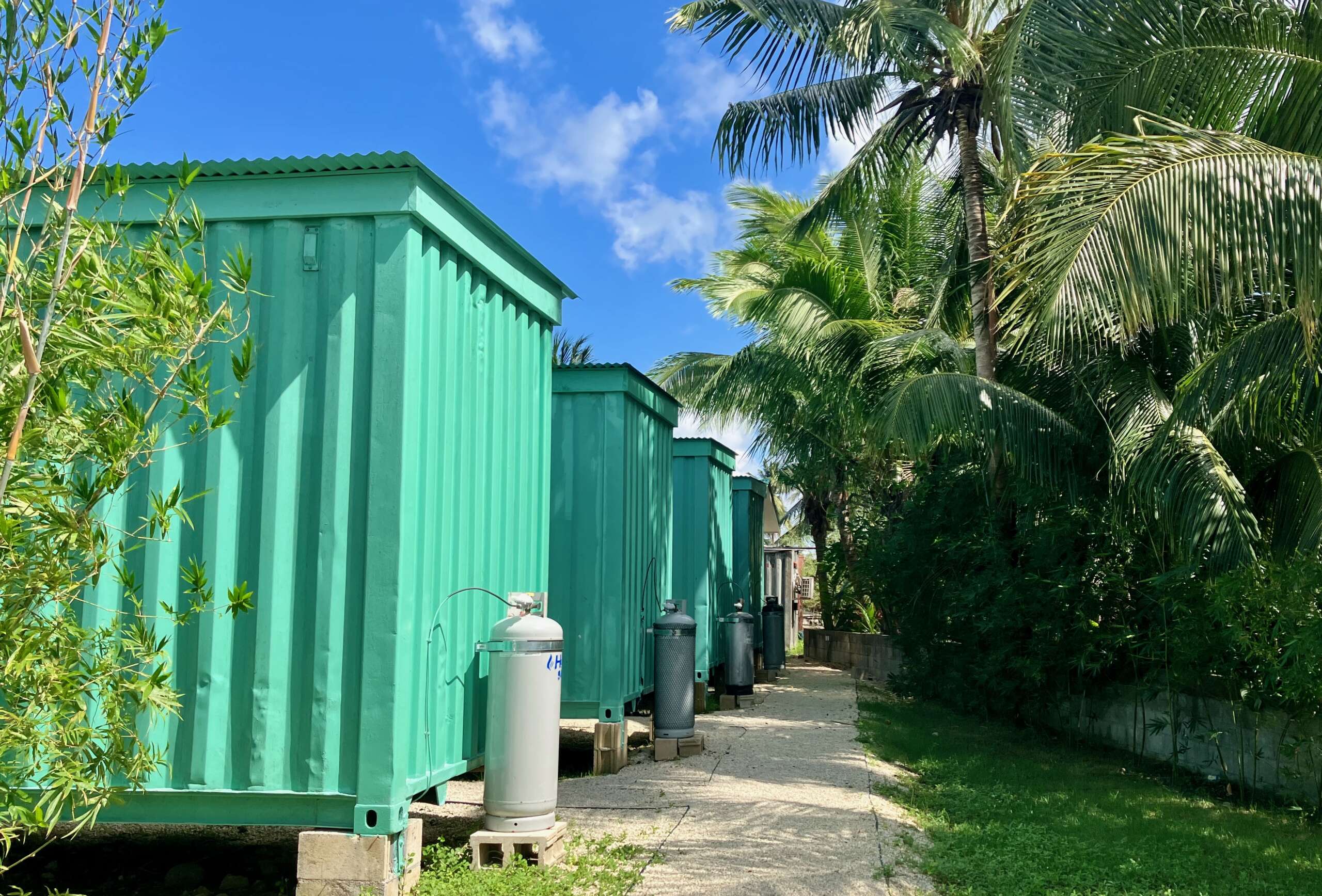
The row of aqua shipping containers doesn’t look especially out of place in the otherwise empty lot outside of a George Town warehouse.
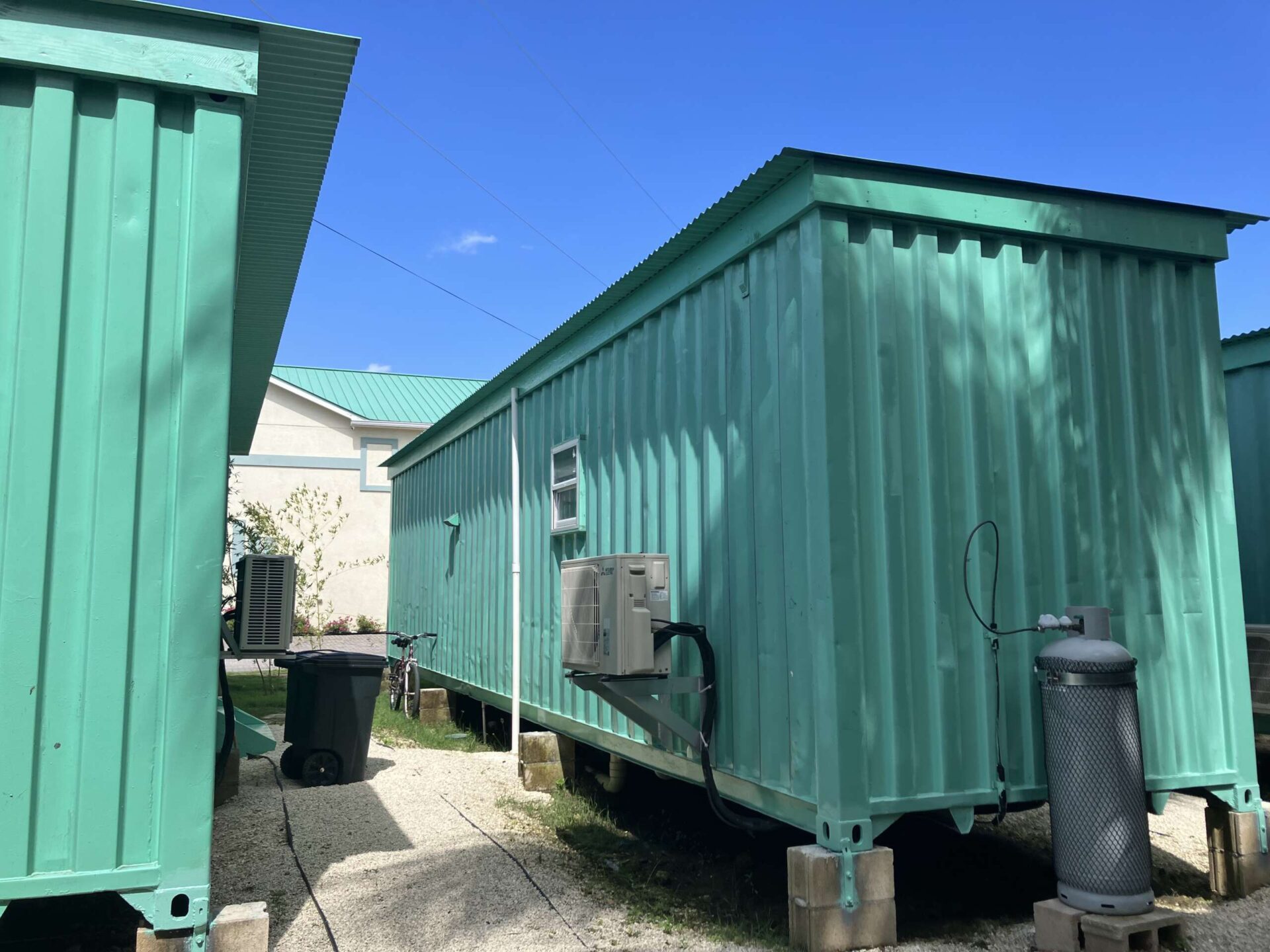
That is until you notice the gas connection and the air conditioning unit attached to the outside.
A bicycle and a wheelie bin are propped against the outside of one container. The sound of a television soap opera and the scent of frying chicken drifts through the small open window of another.
The empty containers, it is clear, have been converted into miniature homes in the middle of the capital’s industrial area.
Residents, living two-to-a-container, told the Cayman Compass they are paying $650 each – or $1,300 per container. That gets them a small bedroom, a shared cooker and somewhere to sit and watch television or eat a meal.
There are four containers in total, housing eight residents.
For some observers, the presence of a miniature trailer park in the heart of George Town may be an alarming sign of the times.
For others, it is an innovative solution to Cayman’s housing challenges.
“It is a little small,” one resident told us, stretching their arms wide to touch both walls, demonstrating the size of the room.
“It is ok though, it is comfortable and it is all I can afford.”
Low-wage workers have few options
The containers have been fitted out with hardwood floors. There’s a small television, with cable, and the bills are covered.
“I have lived in a lot worse places,” another said.
All of the residents we spoke to were single people on low wages. They said they just needed somewhere cheap to lay their head or were attracted by the option of having their own room – however small – after sharing apartments to cut costs.
The Compass tracked down the owner of the land, who agreed to speak with us on condition that we don’t print his name in this article.
He said he had initially converted the shipping containers as low-cost housing for his own workers.
During COVID, he said, landlords began converting their properties into short-term rentals for quarantine and prices rocketed.
“Some of my staff said they were going to have to leave because their rent had doubled.”
With the construction industry thriving on the back of post pandemic incentives, he said his workforce was being poached by other businesses.
He said it took around six-weeks to outfit the unused storage containers at his property and offer them to his workers as low-cost housing.
The business owner acknowledged he didn’t get planning permission for the novel renovation.
“I did it out of desperation, really, to save my business,” he said.
He has now applied for after-the-fact permission and insists everything was built to appropriate code. It will be up to the Central Planning Authority to decide if the four containers can continue to be used as houses.
Options for future
The landlord told us he has no plans to expand the container home project, which now houses a mix of his own staff and other low-income workers.
But he sees the potential for such renovations as a solution to some of the housing challenges facing Cayman.
“A lot of people in Cayman are only making $400 or $500 a week. Where are they supposed to live?
“This gives them their own room and a little living space. It is tiny, but it is their own space.”
Shipping containers have been used on occasion for temporary housing and charities like ARK do use them in renovations for the most needy families.
The aesthetics and the stigma of ‘trailer parks’ might be out of sync with Cayman’s image, the business owner acknowledged. But he said they do provide a sturdy, hurricane-safe shell that can be quickly outfitted for low cost accommodation.
“It wouldn’t work everywhere, but for industrial park or those type of areas, it could be part of the solution,” he said.
Other business owners have highlighted challenges recruiting staff because of the high cost of housing in Cayman.
Some are considering building accommodation for their employees as an incentive.
Grand Old House aims to build dormitory-style accommodation to allow its staff to live on site. Davenport Development is looking at similar options to source land to provide subsidised staff housing.
Compass series: Cayman’s housing crisis
Related Videos













Innovative, yes. But I would not agree that they are ‘hurricane safe’. (The shell might be, the home not so much without better foundations.) Nor is any ‘trailer park’ design. Which is a problem. They might be as good as the comparables on the market, but we need to raise the quality/safety of that section of the market even as we solve the problem of their cost. (Container or better yet pre-fab construction may be part of that solution, so I do not knock this businessman his innovation. Which looks clean and neat and suitable for the purpose and as storm safe as others in that market.)
Do they have plumbing/ bathrooms??