

The rapid growth of Airbnb and vacation rentals has compounded Cayman’s housing crisis by removing more than 1,000 residential units from the long-term market, according to a new report.
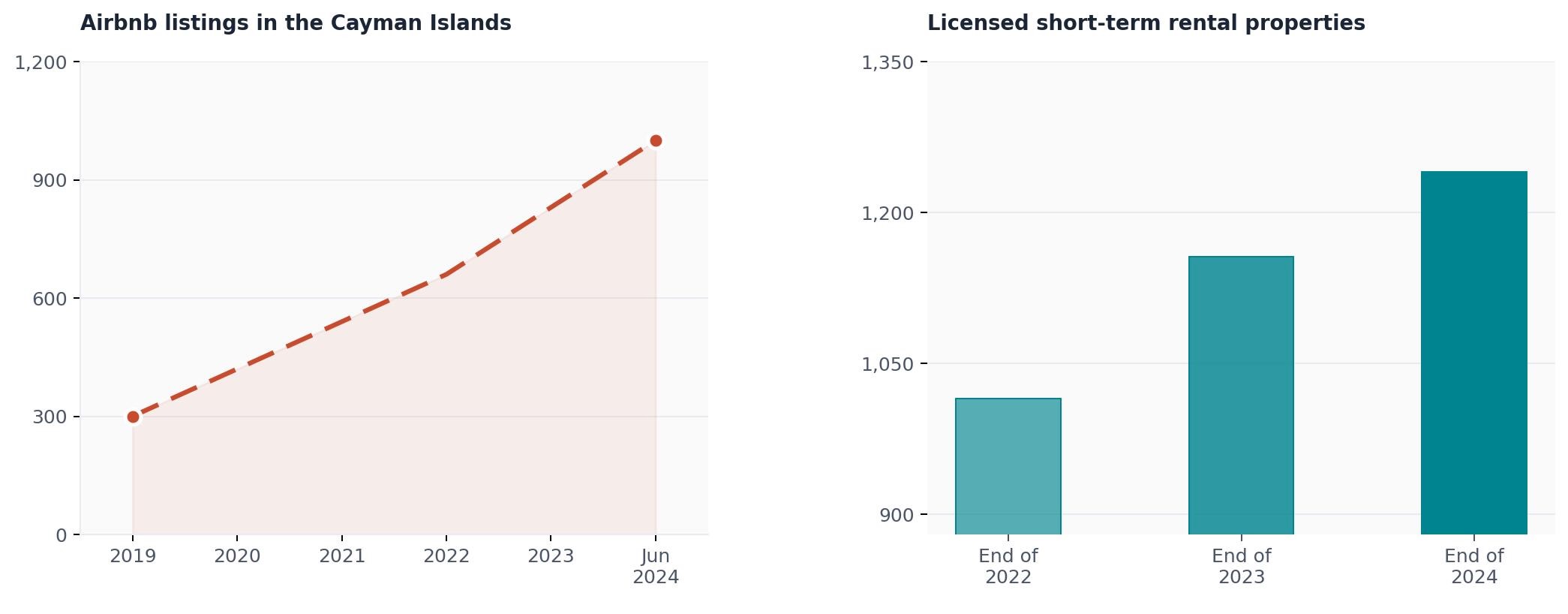
The number of units in the short-term rental pool has more than tripled from just over 300 in 2019 to upwards of 1,000 by June 2024, according to the Public and Affordable Housing Policy and 10-Year Strategic Plan tabled in Parliament earlier this month.
Separate data obtained by the Compass through FOI shows that trend mirrored across all platforms.
Licensed short-term rental properties had grown from 1,015 properties at the end of 2022 to 1,240 by the end of 2024. That is a 22% increase in two years as the islands rebounded from the COVID lockdown, according to the data from the Hotel Licensing Board.
And established vacation rental businesses report a parallel increase in unlicensed and unregulated vacation rentals across the islands.
The housing report floats the idea of capping short-term rentals at 7% of the islands’ housing stock.
It also included potential policy suggestions ranging from limiting ownership of such properties by foreign corporate entities to a potential moratorium on new licences in locations where vacation rentals are demonstrably reducing housing availability.
Currently, government does not record the nationality or place of residence of owners and does not have a baseline count of residential units island wide. The report recommends that the Economics and Statistics Office collaborate with the Lands and Survey Department to establish that baseline before any cap can be calculated or enforced.
The Department of Tourism emphasised in written answers to Compass questions that the measures in the report, including the 7% threshold, were policy suggestions that had not yet been adopted by Cabinet.
Government has tabled the report but has not indicated which, if any, of its 98 recommendations it intends to implement or on what timeline.
The suggestions come amid the headline finding that Cayman needs to triple affordable housing construction and build up to 5,000 new homes in the next 15 years just to keep up with a growing population’s demand.
With the average price of a two-bedroom apartment now reaching $740,000, the consultants said home ownership is “out of reach for the average Caymanian”.
More profit in short-term rentals?
The loss of units to vacation rentals is reducing options further.
The report states, “Homeowners have found it increasingly profitable to rent their properties out via Airbnb, which has shifted upwards of 1,000 units out of the local housing market to the visitor market, from just over 300 in 2019.
“Significant increases in rental rates not only strengthen this incentive but also increase the prices in the overall rental market.”
Short-term rentals now make up about half of all visitor accommodations in the islands, the report states.
There are significantly more than 1,000 hotel rooms in the market, but the potential for multiple occupancy of villas and condo rentals may explain how the consultants arrived at that assessment.
The report’s key finding on the issue is that “The proliferation of short-term rentals, particularly through platforms like Airbnb, has significantly reduced the availability of long-term rental properties, exacerbating the housing crisis.”
Government currently has no incentive to limit that trend, given that it applies a 13% Tourist Accommodation Tax on licensed short-term rental properties, which generated $22 million in 2022, the consultants note.
For individual property owners, the returns from short-term rentals significantly outstrip what long-term tenants can pay.
Kim Lund of RE/MAX says the increase in licensed short-term rentals is likely linked to major Seven Mile Beach properties that have put new rooms in the market.
“Seismic increases in the short-term rental market occur when a new hotel [with residences] opens,” he said.
Realtors across Cayman do increasingly advertise return-on-investment projections for both short- and long-term rentals to prospective buyers.
Nonetheless, Lund believes Seven Mile Beach and the surrounding areas still dominate that market, and infiltration into residential areas, in his view, is limited.
“We are seeing a slow movement into traditional residential areas, but this is a very limited market with low demand,” he said. “There is no infrastructure in place to attract short-term vacation rentals, like nearby restaurants, bars, shopping, entertainment and good beach access.”
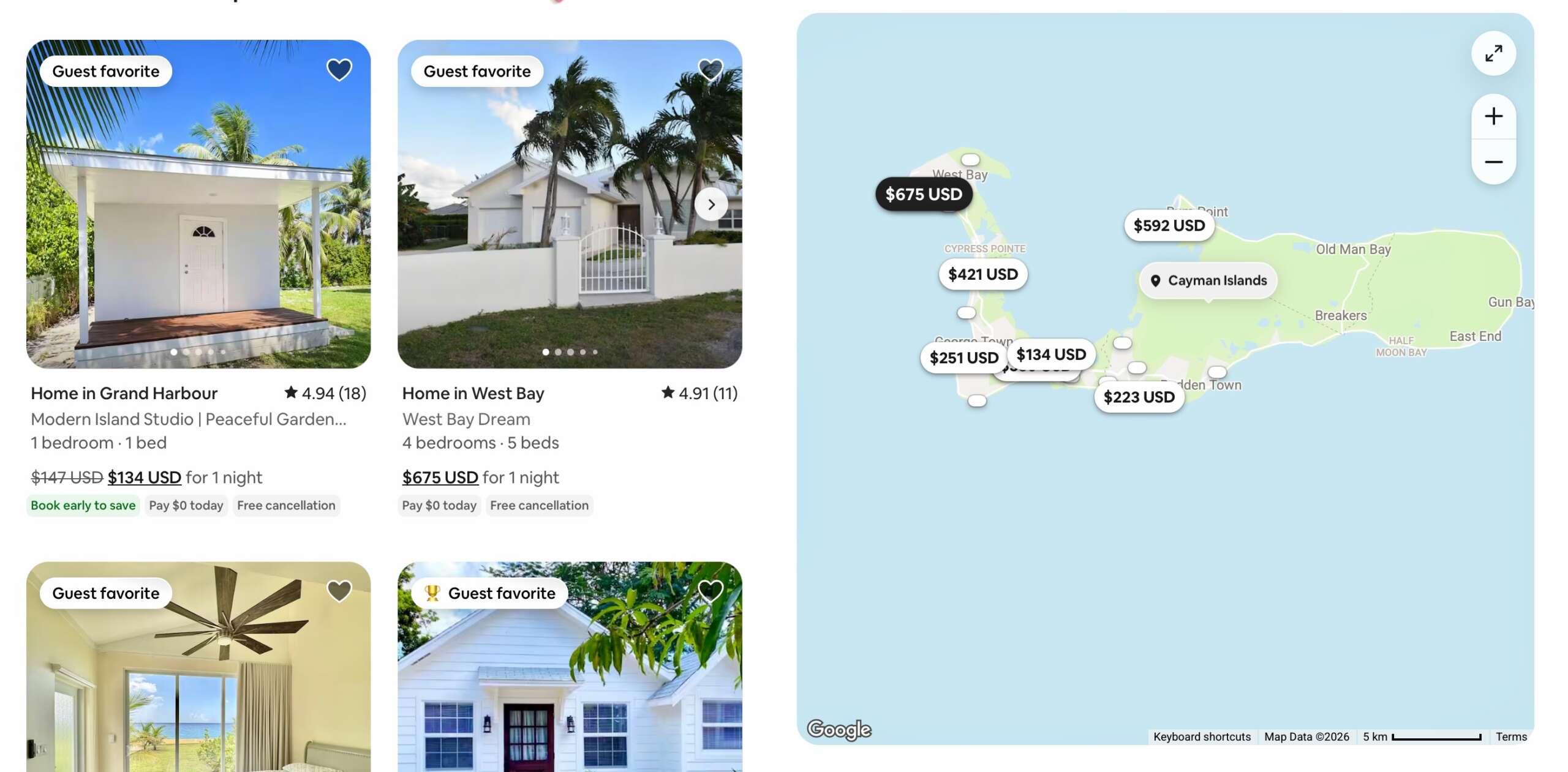
A quick scan of popular listings sites shows that while many of the top-rated short-term rentals are in well-established condominium developments along the Seven Mile stretch, there are scores of listings in residential areas.
Properties are listed in Grand Harbour, in Savannah, along Birch Tree Hill Road in West Bay, among others. While some attracted low reviews for lack of amenities or proximity to the beach, other travellers were happy to find a cheaper option outside of the main tourist areas.
Unlicensed renting
The official figures on the licensed short-term rental pool may not cover the full number of properties being leased to tourists.
Juliet Cumber-Forget, managing director of Cayman Villas, one of Grand Cayman’s longest-established vacation rental agencies, says the unlicensed market is significant. And she sees it across the island – not just on the Seven Mile strip.
”I know there are properties on Airbnb that are not licensed – there’s absolutely no way, when you see some of the properties on that site, that they are under the strict regulations that we have to undergo with our inspections,” she said.
She says the problem spans the full range of the market. “You’ve got the slum ones renting with no licence, up to the higher end. I know of penthouses on Seven Mile Beach making hundreds of thousands of dollars a year that are not licensed.”
The Department of Tourism received zero complaints about unlicensed short-term rentals in 2023 and just one in 2024, according to its FOI response. No proactive inspection programme for unlicensed properties is described in the response.
Cumber-Forget says the disparity between licensed and unlicensed operators creates an uneven playing field between those who pay and those who avoid “licensing costs, inspections, taxes and compliance obligations”.
She estimates the lost revenue to government, from missed room taxes, is substantial enough to fund a proactive inspection regime that actively seeks to clamp down on black-market listings.
The Department of Tourism said in a statement that Airbnb listings are reviewed “as part of our regular industry-wide scans to identify properties operating without the required licence”.
In a statement to the Compass, it said, where unlicensed operators are found, “the inspections unit engages directly with property owners”.
However, the department declined to say how many unlicensed properties it estimates are currently operating or what revenue is lost through uncollected Tourist Accommodation Tax.
Cities that tackled the problem
Cities around the world have introduced measures to limit the impact of Airbnb-style platforms on housing. London and New York have put strict limitations in place while Barcelona has moved to ban short-term rentals entirely by 2028.
New Orleans has taken a different approach, banning corporate entities from owning short-term rentals entirely while allowing ordinary homeowners to hold one permit, a model closer to what Cayman’s housing consultants are proposing.
No inspections for long-term rentals
Despite a significant licensing and taxation structure around short-term rentals, nothing similar exists in the domestic rental market. There is no inspection or licensing process for long-term rental units.
Officials from the Department of Financial Assistance told the report’s consultants that low-income guest workers “are currently in an informal housing economy that is often substandard”.
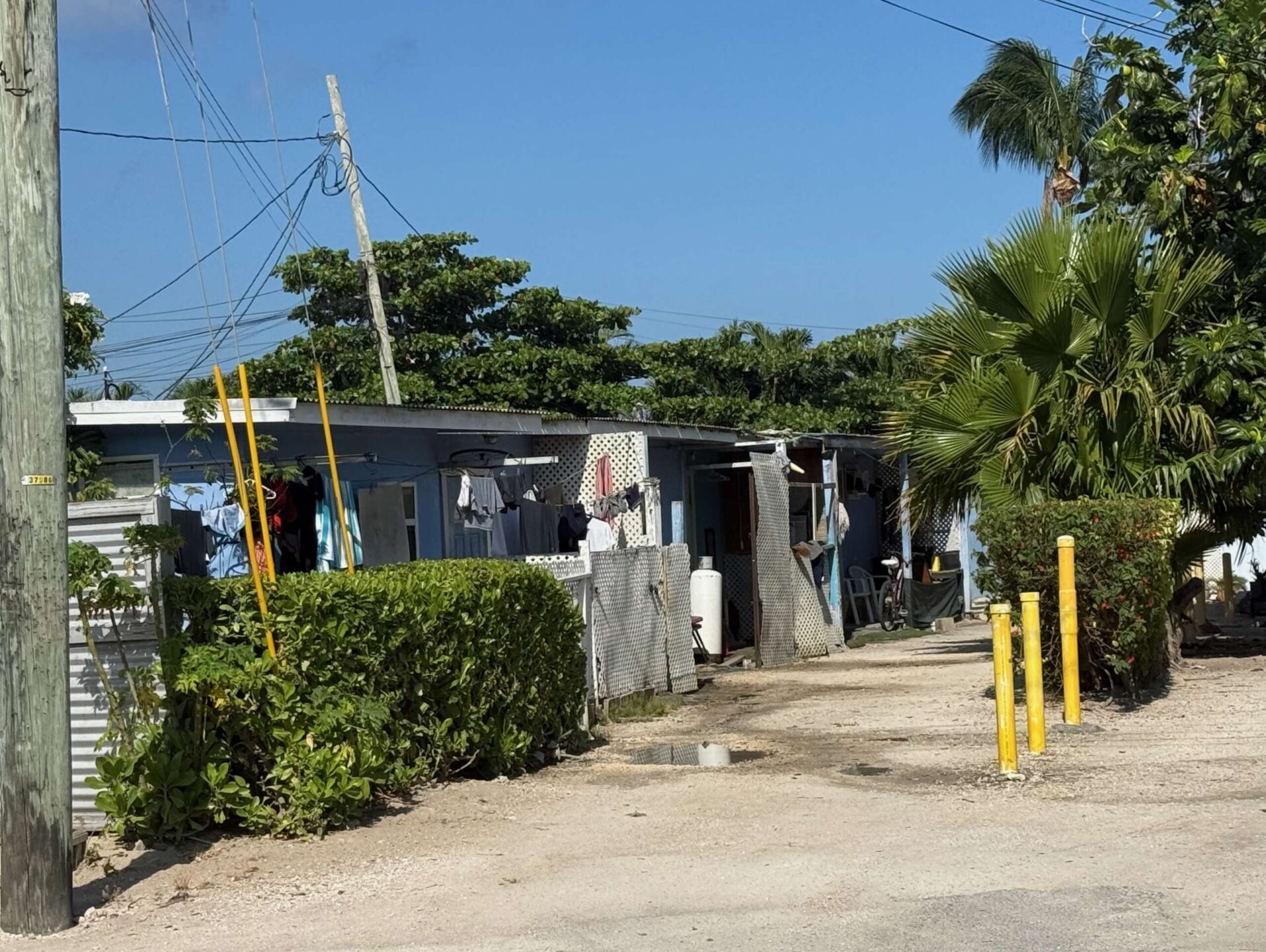
The proposed remedies offered in the report are enforceable minimum housing standards and a requirement that large employers construct and maintain “safe and decent dormitory-style living environments for their workers”.
Current planning regulations do not permit dormitory-style housing. The report recommends that changes.
The legal obligation to check worker housing already exists.
The Immigration Act requires the Work Permit Board to consider “the location, type and suitability of the accommodation available for the worker” before approving a permit.
But the report finds the requirement is not being enforced, recommending the government change the law to make adequate housing mandatory for work permit approvals and enforce it properly.
Related Videos












Some areas are zoned: Hotel, Tourism.
These can legally be allowed for short-term rental; subject to being inspected and licensed.
Those in areas zoned commercial, community residential are not correctly zoned for residential and such use should be stopped.
No developer should advertise their property as suitable for short-term rental if not correctly zoned.
Heavy fines will stop unlicensed operators.
If the person quoted in this article knows of high end condos being rented without government approval why doesn’t she tell someone