Prosecutors are calling for sentences of up to 14 years and seven years, respectively, for former Cayman Islands Football Association and CONCACAF executives Canover Watson and Bruce Blake, for defrauding the local and regional governing football bodies between 2013 and 2014.
Watson, 50, had been found guilty on all counts of making secret commissions, transferring criminal property, entering an arrangement and false accounting. The charges stem from sending false invoices valued at US$1.54 million to CONCACAF and then laundering the stolen funds.
“He wasn’t providing a service to CONCACAF or CIFA, he was defrauding them,” said lead Crown counsel Eloise Marshall, KC, during a sentencing hearing before Chief Justice Margaret Ramsay-Hale on Thursday, 16 March.
“It is only because of the positions and high significant degree of trust granted to him as an auditor for CIFA that he was able to commit this fraud against the public and the nonprofits,” said Marshall.
The charges that Watson was convicted of – transferring criminal property and entering an arrangement – both carry a maximum sentence of 14 years.
Marshall told Ramsay-Hale that the sentence for Watson should be towards the higher end, if not the maximum, due to several aggravating factors.
“These factors include the abuse of position of power and trust, the significant planning involved in the commission of these offences, the offences happened across different jurisdictions, the damage done to CONCACAF’s reputation and the significant financial loss to the nonprofit,” said Marshall, who then noted Watson’s previous convictions of a similar nature.
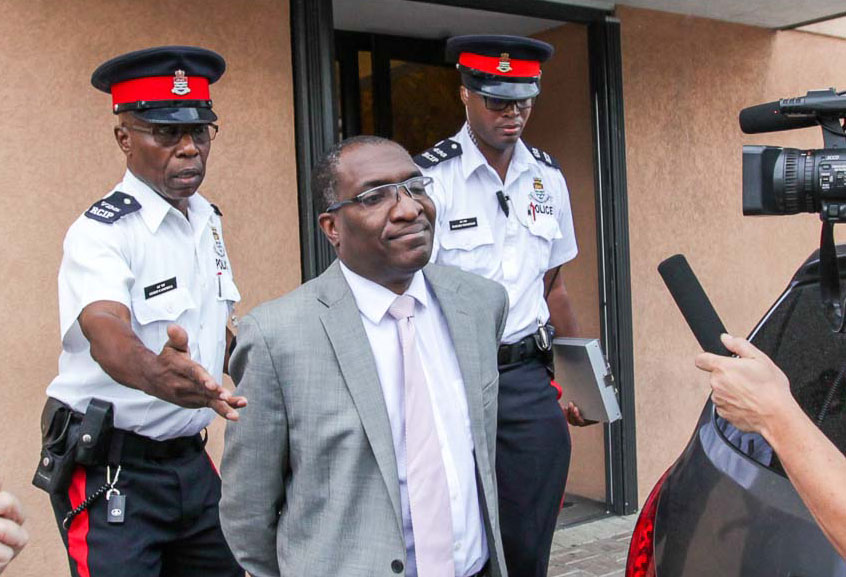
In 2016, Watson was convicted in a government CarePay scheme for which he was charged with two counts of conspiracy to commit fraud; and one count each of conflict of interest, fraud on the government and breach of trust, for which he was sentenced to seven years.
Although the FIFA and CarePay frauds occurred at or around the same time, Marshall argued that the CarePay case should be viewed as an aggravating factor because Watson would have been aware that police were investigating him but was not deterred from continuing this fraudulent scheme.
In addition to the seven-year sentence for the CarePay scheme, a confiscation order was implemented for Watson’s assets, which were valued at over US$5 million.
“These funds were never paid over to authorities,” said Marshall, before turning her attention to Watson’s co-defendant Blake.
Blake, 53, was acquitted of the money-laundering charges but found guilty on two counts of false accounting in relation to two bulk payments of US$600,000. The false accounting charges carry a maximum sentence of seven years in prison.
“Blake’s offending is indeed to a lesser extent; however, he still does not accept his wrongdoing even in the face of the guilty verdicts by the jury, as is clear in the social inquiry report,” said Marshall. “We accept that he is of previous good character, unlike Watson, but apart from that there are no other mitigating circumstances.”
Calls for suspended sentences or community service
When responding to Marshall’s submissions, Dapinder Singh, KC, who represents Watson, told the court that he was a “broken man who found the strength to carry on” and could no longer re-offend and was no danger to the community.
“He has lost his reputation, his occupation, and his assets,” said Singh. “Most would have deteriorated and their life would have spiralled out of control, but even after having gone to prison he has found the strength to rebuild himself.
“His ability to maintain his home, work and a crime-free life is clear, the evidence is there,” said Singh, who called on the chief justice to apply a balanced and proportionate sentence.
According to Singh, the court would be wrong to view the prosecution’s submissions of ‘significant planning’ and reputational damage to the jurisdiction as aggravating factors.
“The world can see what happens when you wrong the Cayman Islands,” said Singh.
Blake’s attorney, Cairns Nelson, KC, expressed similar sentiments when calling for the judge to consider no jail time for his client.
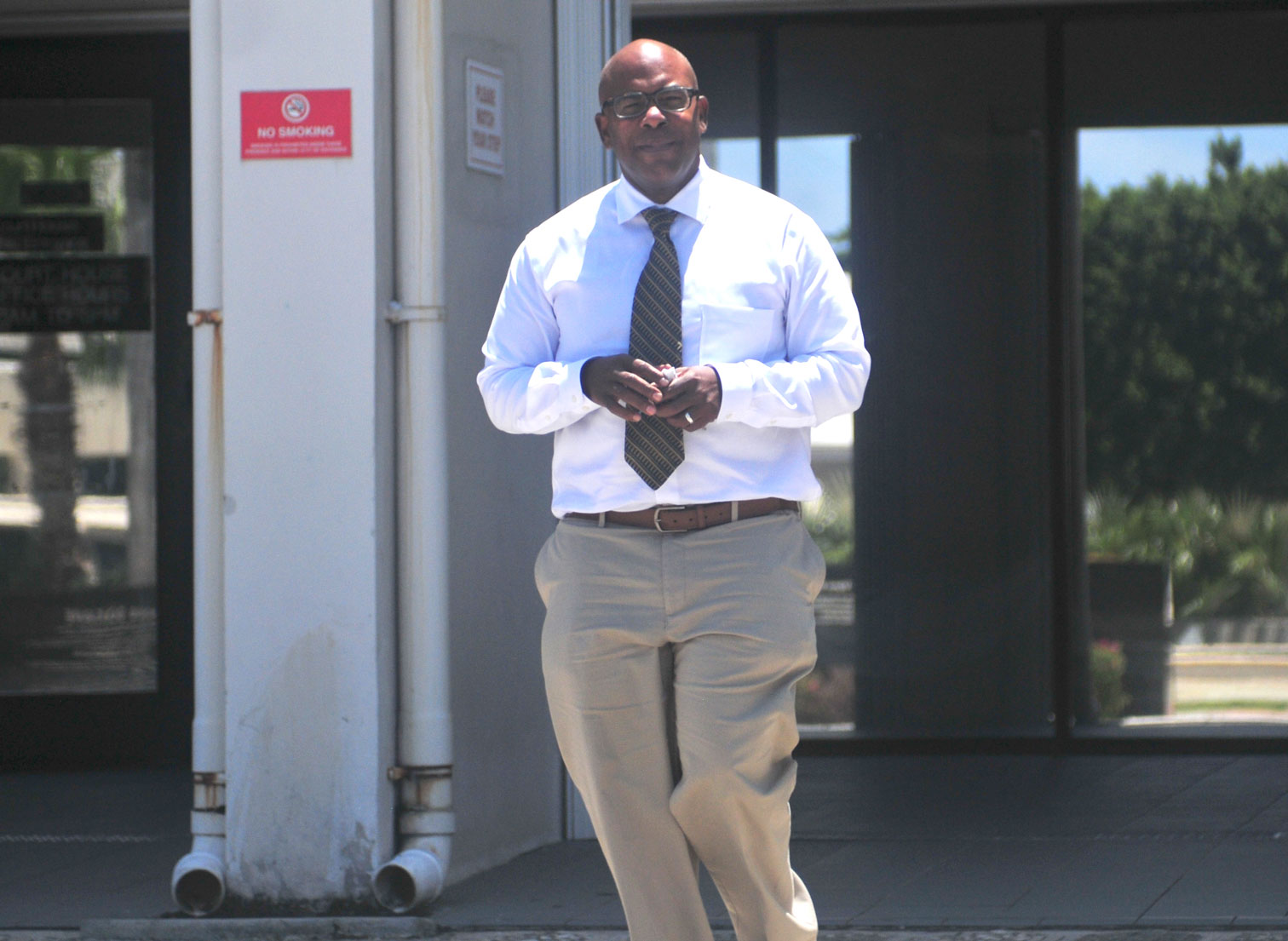
“The extraordinary, unusual and rare circumstances in his case takes this into the suspended-sentence territory,” said Nelson. “As of April 2016, he had funded CIFA $470,000. The lights were kept on, the staff and bills paid because CIFA had his credit card.”
Nelson argued that Blake’s offending was not for personal or financial gain, and not only was Blake out of pocket because of CIFA, he chose to walk away from his career as a lawyer to continue his efforts to assist the local football organisation.
“He was the one putting up the goal nets, organising the football matches, and referees,” said Nelson. “It is a personal tragedy that it should come to this for this devoted family man.”
When wrapping up, Nelson also highlighted the significant delays that Blake had to endure between his arrest and charge in 2016, and conviction in late 2022.
“The delicate balance that this court must strike during this sentencing exercise can be achieved by way of suspended sentence,” the attorney said.
Ramsay-Hale extended both men’s bail until Thursday, 23 March, but cautioned she could not be sure that she would be able to pass sentence at that time.
Toyin Salako represents the Crown as junior counsel. Jonathon Hughes serves as junior counsel for Blake, and Amelia Fosuhene serves as junior counsel for Watson.
Related Videos