


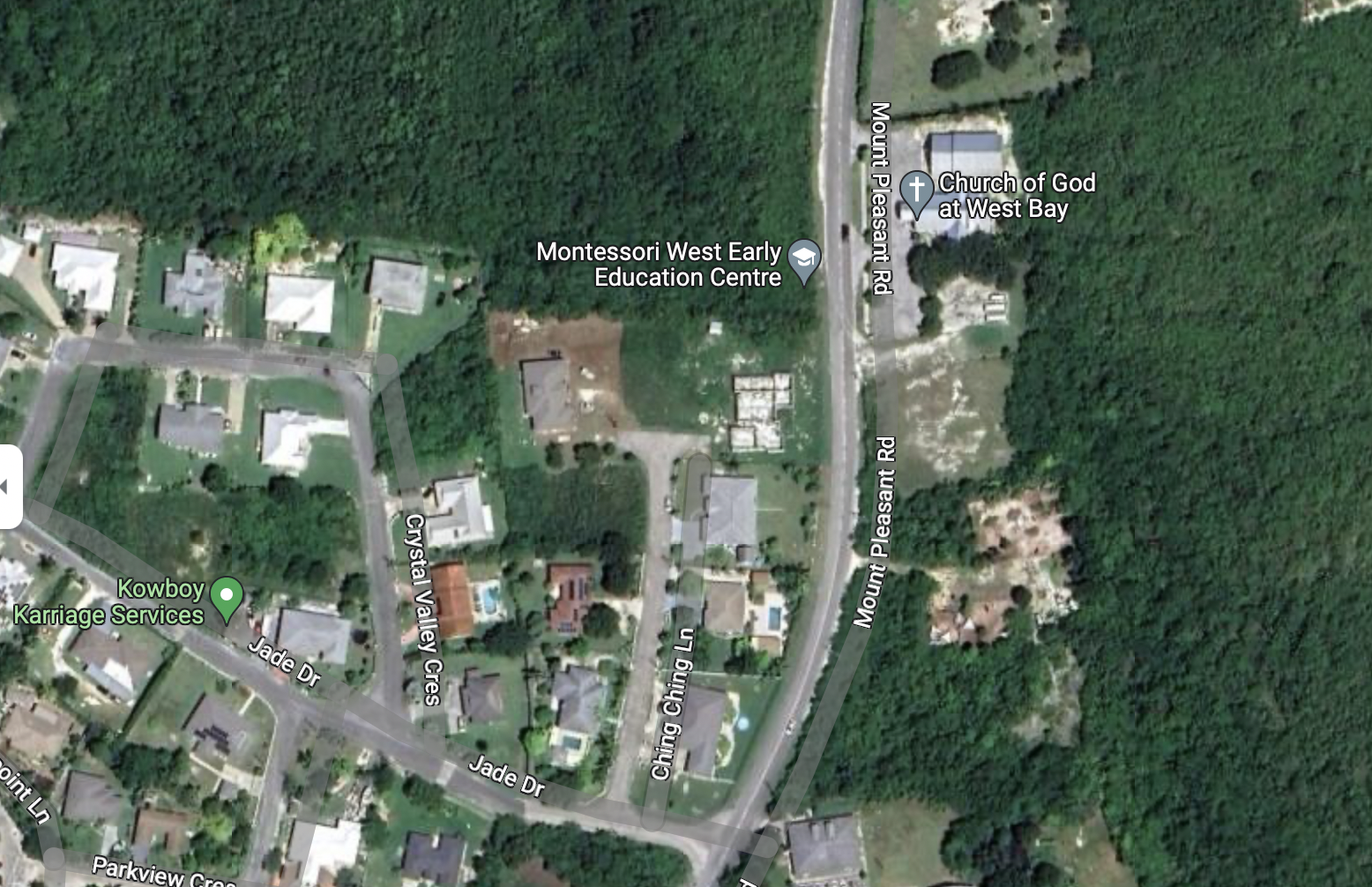
Plans for a new $1.1 million four-classroom preschool in West Bay have been submitted to the Central Planning Authority for approval.
The facility, on a 5.25-acre plot on Captain Reginald Parsons Drive will cater to children from 18 months to 6 years old living in West Bay and along Seven Mile Beach corridor.
If approved, the Montessori West preschool will be built in two stages to meet demand, and will include 24 parking spaces, a long drop-off lane and a petting area with small animals.
Educators will use the Montessori method, which rejects formal teaching techniques and instead allows children to follow their natural interests with a focus on hands-on learning.
The plans were published in the planning authority’s agenda for its 12 April meeting and have received no public objections.
Close consultation
The preschool will be one of just four in West Bay and the only one in the immediate area, according to a letter from Montessori West’s board of directors included as part of their submission.
“Parents in the area will not have to travel south to Seven Mile Beach or even George Town to drop their infants at school,” they said, adding it may help to alleviate traffic congestion.
The preschool was designed in close consultation with the Ministry of Education’s early childhood experts with a focus on the children, the environment and the surroundings, according to the application.
The 6,000-square-foot building will front the road and fit in context and scale to its surroundings, the letter said, while classrooms on the north will take advantage of the soft northern light and breezes.
“As a result, we anticipate the children being able to play in a cool, shaded outdoor play area,” the board of directors said in the letter.
Animal interaction
A small sensory interaction zone by the play area, which will house four rabbits and two weaned baby goats, is part of the plans.
“We are currently working with a nearby local farmer to have use of the goats, rotating them out frequently to maintain appeal and safety,” the letter said.
“In addition, the animals will be collected by the primary owners and relocated back to the farm intermittently on weekends, but also in an emergency such as a hurricane.”
The animals will be housed in separate but adjacent, lockable pens, partly covered to protect from the elements and minimise unwanted interaction.
The preschool’s maintenance employees will be responsible for collecting waste and recycling it as fertiliser for the primary farm.
Plans show parking on the southern side will be used as a buffer to adjoining lots, along with a long drop-off lane to mitigate congestion on the main road.
Meanwhile, the sidewalk is set behind the landscape verge which will act as a shield between pedestrians and traffic along the drive.
The board of directors’ letter said the facility will focus on sustainability to minimise its footprint, both during construction and through its lifecycle.
It will do this by leaving local, mature trees and vegetation in place and by maximising energy efficiency and minimising consumption through reuse of products and materials.
And the area will be within a six-foot aluminium outer fence, a landscape buffer and security.
Reviews
The Department of Environment, in its review of the plans, said scientific research has shown that children benefit from spending time in nature, in terms of mental and physical health.
“Teaching wildlife conservation through fun and interactive education can be an amazing experience for children,” it added.
“Done correctly, it can foster an awareness of sustainability and highlight how to mitigate damage to native species and how to care for the environment.”
The department noted the applicant’s suggested sensory component to the housing of the farm animals on site, and encouraged a stronger focus on native species.
“We are not encouraging that native animal species be kept in captivity but rather that the applicant could include native plant species in the landscaping scheme,” it said.
The DoE added that the retention of any mature native vegetation could provide immediate shade for the school.
“Landscaping with native vegetation also provides habitat and food for native fauna such as birds and butterflies, promoting biodiversity and providing valuable ecosystem services.”
The DoE recommended that the Department of Agriculture be consulted on the plans, particularly the housing of animals, and should vet them at an early stage.
It also suggested that, wherever possible, sustainable design features and energy-efficiency measures, such as solar panels and rainwater collection, be included in the project.
Other concerns contained in the agenda include the National Roads Authority requesting plans be amended to create adequate space for cars to turn within the development, and the Water Authority calling for an onsite wastewater treatment proposal that meets certain requirements.
Related Videos









Sounds great