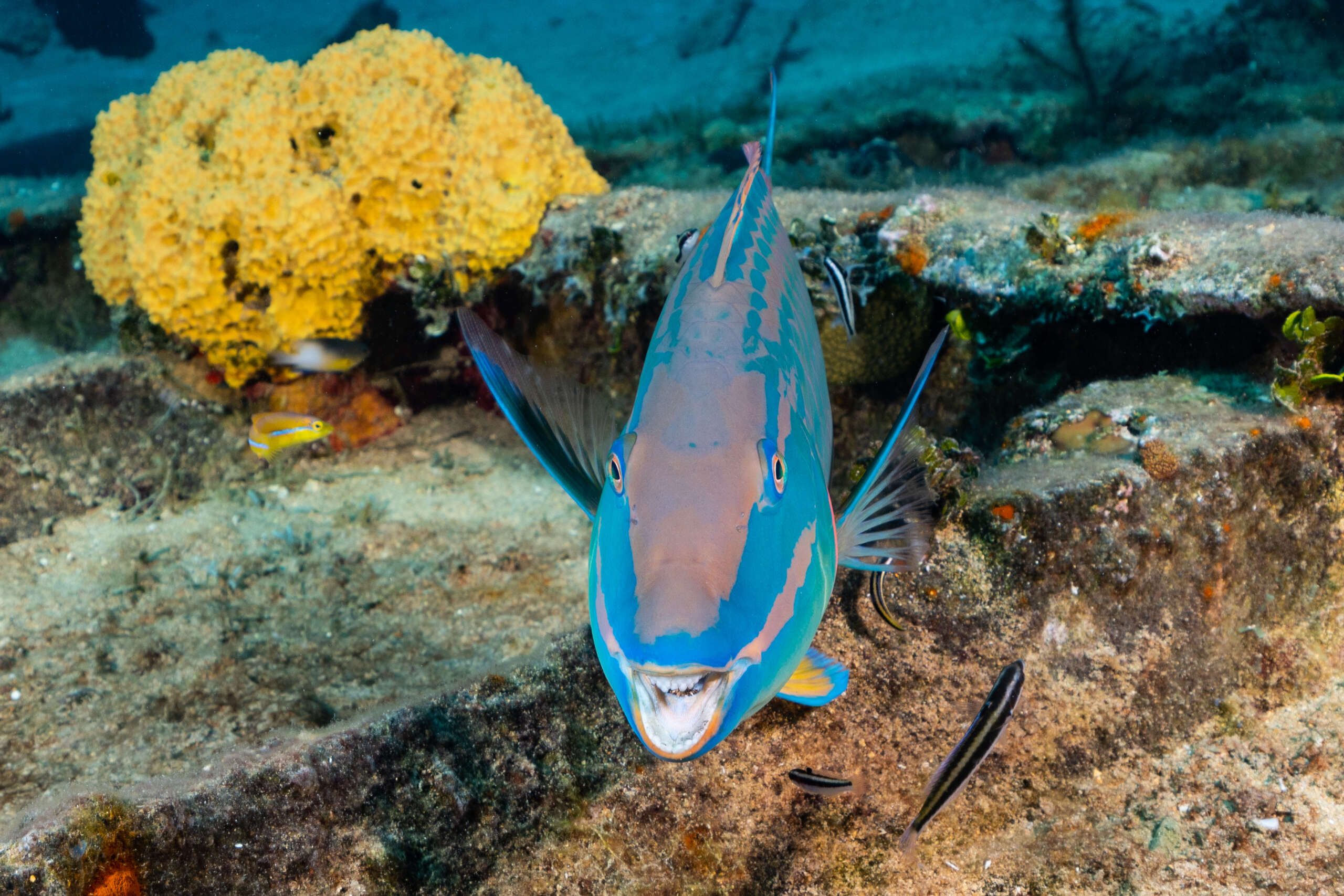
Parrotfish and Nassau groupers are returning in growing numbers to the reefs of Little Cayman, according to the latest underwater survey to gauge the health of the islands’ coral reefs and the size of its fish population.
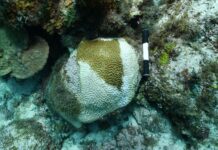
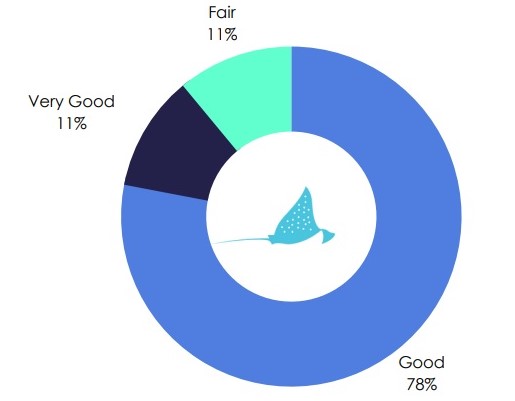
The Central Caribbean Marine Institute’s 2022 ‘Little Cayman Reef Report Card’, released last week, shows that 89% of the reefs on the island are considered to be in ‘good’ or ‘very good’ health, and that coral coverage is currently at 22%, which is significantly higher than the regional average of 5%.
CCMI director Gretchen Goodbody-Gringley, in a presentation on the study’s findings last week, noted that there has been a resurgence in the parrotfish population on Little Cayman, which is a good sign, as these fish clear macro algae off the reef. And, as a consequence, there has a been a corresponding drop in the amount of macro algae choking the coral.
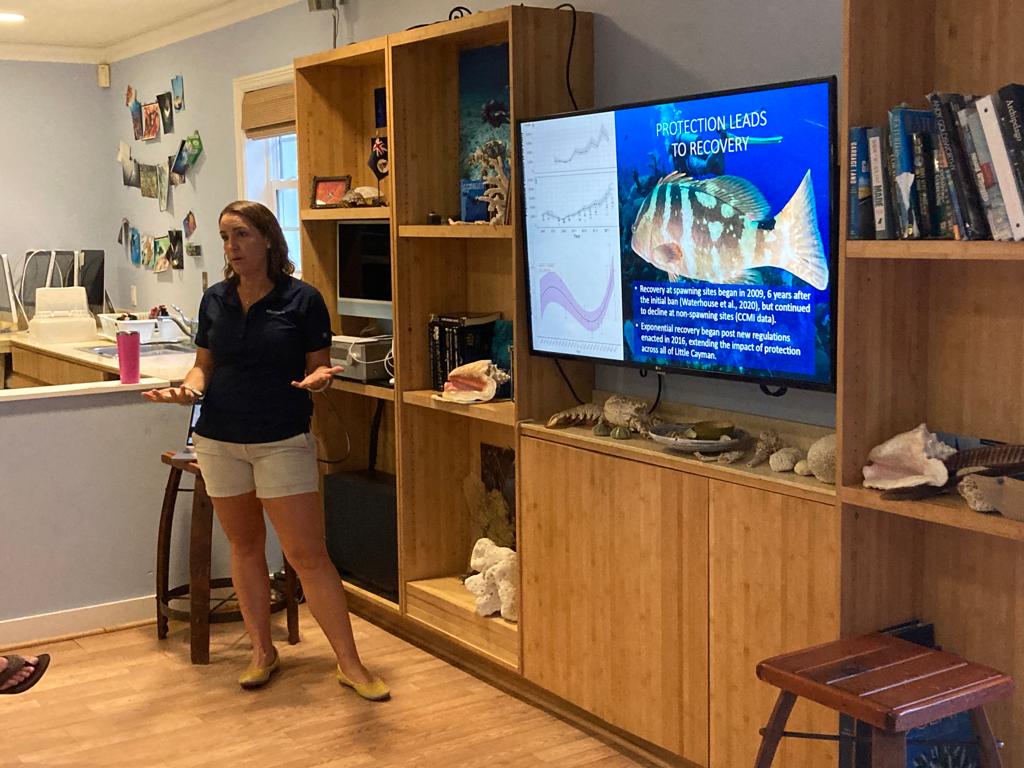
Since about 2017, she said, the size of the population of fish on the island has grown year by year, but while in earlier years it was mostly fish of the smaller variety that were being seen, now larger fish, especially parrotfish and the Nassau grouper were being seen more often.
According to the ‘Little Cayman Reef Report Card’ – a summary of the survey findings – there are nearly double the number of fish surveyed in 2022 than there were in 1999, and roughly three times the total biomass, indicating that there are more fish and larger fish on the reefs surveyed.
“This means that we are seeing more fish, larger fish, and a greater diversity of species than in previous years,” the report noted.
It said major increases in 2020 and 2021 may have been further influenced by COVID-19 and reduced overall activity on the reef.
The expansion of the Marine Protected Areas in 2021 has also had an impact on the health of the reefs, Goodbody-Gringley said, as nearly 75% of Little Cayman’s surrounding reefs are now marine protected areas.
“We’re finding a resurgence of parrot fish, which is great,” she said. “Parrot fish are really important for the maintenance of the coral reef. They’re the dominant herbivore on coral reef systems. And particularly since we’ve lost the long-spined sea urchin in the 1980s, parrotfish are really responsible at this point for keeping our reef clean.”
She said parrotfish of all species and sizes are being seen on the reefs now.
“What’s really great is that we’re seeing, in tandem, this decline in macro algae. Parrot fish are known to eat macro algae off the reef, they have these big beaks, they can go and scrape large chunks of algae and turf algae and make room for baby corals to settle.”
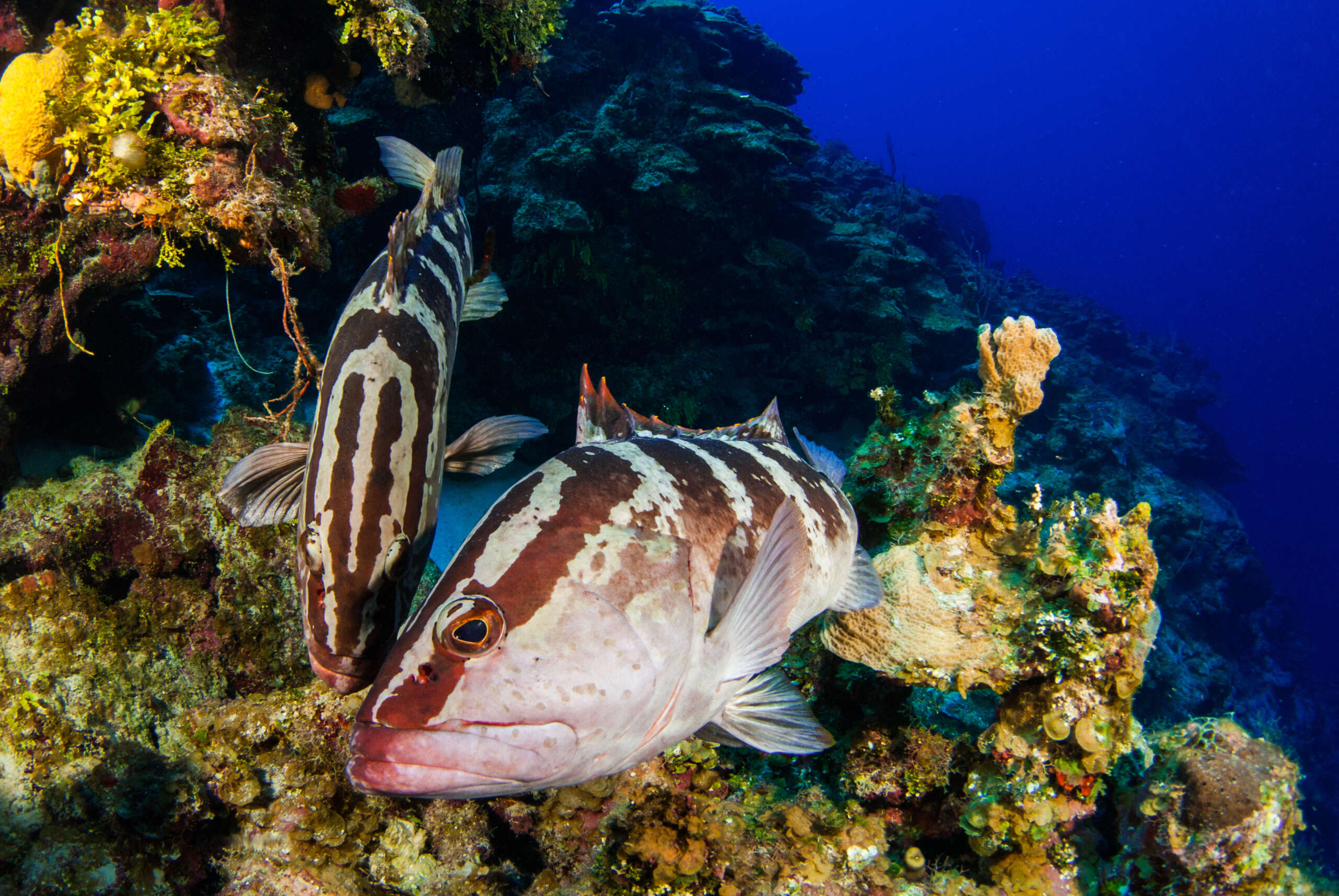
Meanwhile, a ban on fishing of Nassau grouper during their spawning season has led to a major increase in the numbers of those fish in Little Cayman, where divers see them on every dive.
Overfishing of Nassau groupers during their annual spawning aggregations at sites on all three islands over several decades led to a huge decline in the population. Various restrictions to combat the overfishing were introduced over the years, but it was only after 2016, when Little Cayman introduced size and catch limits and broadened a fishing ban to between December and April, that there was a noticeable reversal in the decline of the species.
Goodbody-Gringley says the data from Little Cayman shows an exact correlation between the introduction of the fishing ban in 2016 and the increasing population numbers.
“To see this exponential increase coinciding with these really strict laws, I think, is a clear sign of the impact that these regulations have had on the grouper.”
Coral coverage
While the amount of coral coverage on the island is higher than in many places across the Caribbean, that does not mean it has not been affected by the challenges faced in other places, Goodbody-Gringley said.
She pointed out that researchers had seen a shift from big boulder-like corals that act as the foundation of the reefs to more ‘weedy’-type corals that can grow and reproduce far quicker than the larger corals, which could affect the resiliency of the reefs in the future.
“The fact that we are seeing this shift in species composition means that, despite the fact that our overall coral cover is remaining high, we’re still not completely immune to these impacts of global climate change and human impacts on our reef because there is a change that’s happening. And we just have to continue to protect that reef to make sure that we don’t see any further declines.”
The successful protection of its marine environment has led Little Cayman to being named a ‘Hope Spot’ by marine conservation non-profit Mission Blue in 2020, and being shortlisted earlier this year for UNESCO World Heritage status.
Related Videos