


Government officials said proposed sexual harassment legislation will lead to safer work environments in Cayman, at a meeting to kick off the latest round of public consultations into the draft bill.
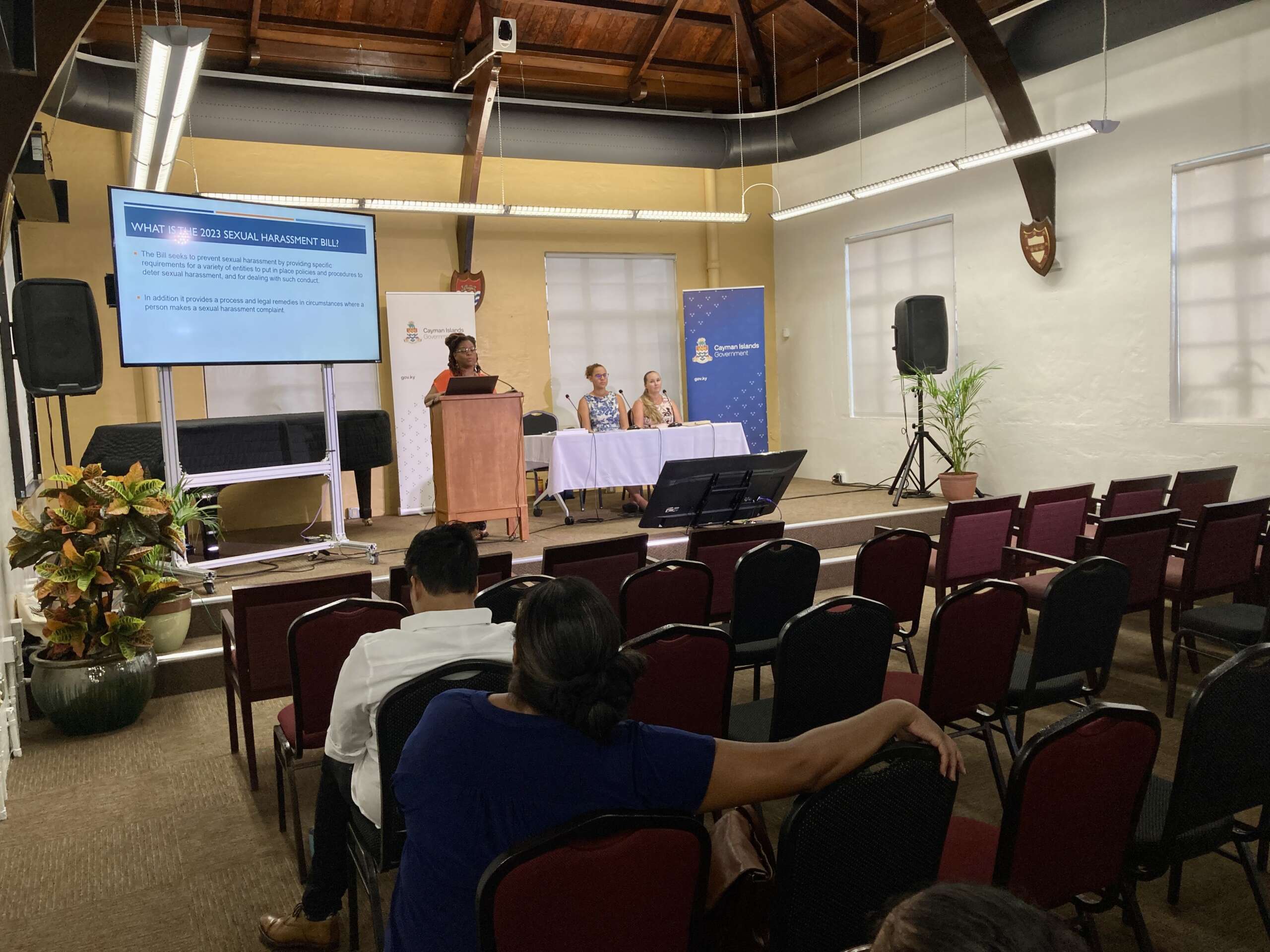
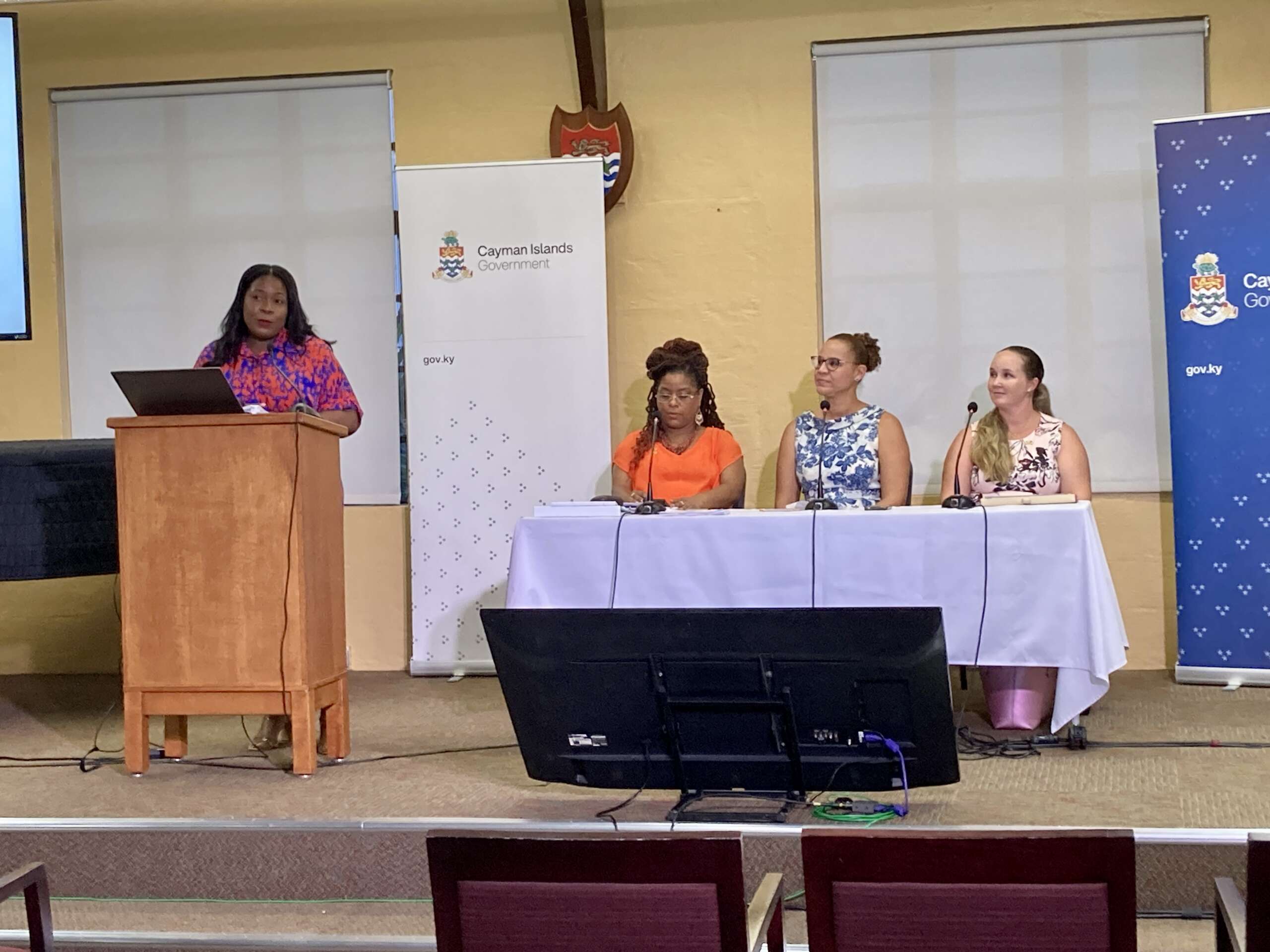
The town hall meeting at the George Town Library on Tuesday, 15 Aug. featured a panel of experts who spoke in detail about the content and importance of the bill, and answered questions from attendees and viewers of the live online broadcast.
Karlene Bramwell, senior policy analyst in the Gender Affairs Unit, said the bill seeks to protect people by creating safe workspaces and places offering services to the public.
“There are other pieces of legislation which include sexual harassment, but the distinction is, that this particular bill is only about sexual harassment,” she told attendees.
Under consideration
Premier Wayne Panton finally delivered the draft legislative document to Cayman’s Business and Professional Women’s Club in February. Members had campaigned for it for 16 years.
In March, the government issued a white paper and launched the first six-week public consultation period, with more than 300 individuals and organisations offering their views.
During a comprehensive presentation of the draft bill at this week’s town hall meeting, Bramwell disclosed some of the feedback the unit had already received.
“Under consideration at the moment are minor amendments to definitions, to add clarity,” she said.
These include “removal of educational institutions from the bill, because we believe that some of this might be covered in anti-bullying legislation, which is also being formulated”.
She said there are a number of clauses that the unit may amend based on the feedback that has been received.
“And a penalty has been added for non-compliance, with the requirement for all entities to have a sexual harassment policy, and not just for employers,” Bramwell said.
Following this second consultation period, which ends on 8 Sept., the bill will be redrafted with any relevant input and resubmitted to Cabinet.
It will then be sent to Parliament for debate and passed into law.
Driving change
Alexandra Bodden, a psychologist and member of the Business and Professional Women’s Club, said the bill is “near and dear to my heart”.
She said a survey of about 900 people in the Cayman Islands in 2006 found that about 42% had experienced some level of sexual harassment.
“So that gave evidence that this is something that’s here and definitely something that needs to be looked at within the community,” she said.
Bodden said the legislation is an important first step and may lead to social changes, and, ultimately, a much safer and more respectful community for everyone.
“This is often how change comes about within especially diverse societies,” she told attendees.
“It starts with codified laws and ways of preventing the negative discriminatory behaviours from happening and compels us to change.”
Bodden stressed, “We need to see if we can make this as effective and practical for everyone as we can, so I encourage everyone to have a look through it.”
No joke
Also speaking at the meeting was Lauren Knight, deputy chief officer in the Portfolio of the Civil Service, who detailed the government’s sexual harassment policy.
The Anti-bullying, Harassment and Discrimination Policy was launched in 2020 and covers all public workers across the Cayman Islands.
The meeting concluded with a short question-and-answer and comments session.
One attendee expressed concerns about the employer’s liability for their employees’ conduct, the time taken for sexual harassment matters to be addressed, and resources.
Bramwell said all of these points will be considered in the rewriting of the bill.
Others asked for clarification on the inclusion of education institutions, repercussions for false claims, and the writing of company policies.
One online viewer asked how they would know if a joke could be considered sexual harassment.
“If there is even the remote possibility that this is seeming offensive to somebody – that’s the time to stop,” Bramwell said.
More information and ways to submit feedback on the proposed legislation, can be found at www.gov.ky/pch/sexualharassmentbill.
Main elements of the Sexual Harassment Bill
The bill provides a definition, and examples of conduct and circumstances which would constitute sexual harassment.
It requires every employer, regardless of the size of the company, to formulate a policy statement about sexual harassment in the workplace.
It prohibits employers and employees from committing acts of sexual harassment.
It outlines the employer and employee obligations and duty.
It imposes sexual harassment liability on an employer under certain circumstances.
It requires institutions to have a policy to protect, employees, students, children, residents or clients.
It prohibits sexual harassment in the provision of accommodations, goods, services or facilities, including landlord-and-tenant transactions.
It requires qualifying bodies, organisations, employment agencies, and professional and civic associations to have a sexual harassment policy.
It provides a procedure to make complaints of sexual harassment to the Gender Equality Tribunal, and for the hearing and resolution of such complaints, including orders and costs that may be imposed.
It prohibits victimisation of a person as a result of making a complaint.
It provides for confidentiality and a limitation on publication of details pertaining to cases appearing before the Gender Equality Tribunal.
It provides a sample sexual harassment policy which an entity may adopt or modify as appropriate for use.
Related Videos












While “harassment” in its original sense is a serious thing, attempts to tweak or widen its definition will have very unfortunate consequences. This definition must be absolutely crystal clear (and short, othewise the clarity will be lost) and must come first, before any thought of any legislation. Legislating without a very clear definition would cause much more harm than not legislating anything at all – we have seen this many times before, worldwide.