


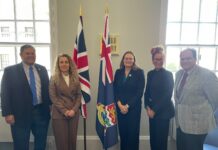
Divisions over policy, process and professionalism were the catalyst for four MPs, including the deputy premier and two Cabinet ministers, to resign from government this week.
It is understood that the former UPM caucus was split on a number of key issues, including a controversial plan to amend the National Conservation Act.
There were also concerns about the lack of critical discussion over the escalating costs of a planned new high school in Cayman Brac, lack of urgency in dealing with beach erosion and perceived lack of transparency in major financial transactions such as the ReGen project, the Compass has learned.
The long-delayed Sexual Harassment Bill, which the four members had hoped could be brought to the next session of Parliament, was another point of conflict in the discussions that led to the resignations Wednesday.
Those issues were confirmed as triggers for the split in a Facebook post by former deputy premier Andre Ebanks, Friday evening, encouraging people to stay tuned for more information and public meetings.
The conflict was as much about the manner of doing business as about the policy divisions themselves.
Ebanks, speaking at a press conference following the resignations Thursday, indicated that conduct and professionalism were key concerns.
“To a degree [it’s about] policy, but more importantly, our principles and manner of conduct and behaviour are just not consistent with certain portions of the existing government, which makes our positions untenable,” he said.
“We risk professional and reputational damage, and in our judgment, the country faces potential exposure of unnecessary risk.”
He declined to elaborate on what exactly he was referring to at this point, but the landfill deal and the conservation law amendments are understood to have been key areas of conflict this week.
Both Ebanks and former Minister of Sustainability Katherine Ebanks-Wilks referenced those issues, among others, in co-ordinated social media posts Friday.

McKeeva Bush, one of the seven remaining members of the UPM, speaking on Radio Cayman on Friday, confirmed divisions over the conservation law and acknowledged that the group had planned to bring amendments to the legislation over the objections of Katherine Ebanks-Wilks, who was, until her resignation, the minister with responsibility for that portfolio.
Asked about rumours of division over the law on Thursday, André Ebanks suggested some members had been left out of the loop on key issues.
“You could deduce by the level of information certain people have versus others that there would be some form of coordination that not everyone is privy to,” he said.

Pressed to specify what had triggered the action this week, Ebanks described a “moment of clarity” on Wednesday evening over the handling by “the executive” of a “high value transaction” that raised alarm among the group.
Asked whether the landfill or the proposed National Conservation Act amendments were the root of the disagreement, Ebanks said a number of things “in totality” had led to the move.
He did reference disagreements over conservation law amendments, which the four oppose, and suggested some Cabinet members were negotiating in the absence of their colleagues.
He added that the “totality of events” had persuaded the group that it needed to break away and that the four will look to run as part of a co-ordinated party with shared principles next time out.
“We are interested in talking to parties, groups or teams, or potential teams, to assess whether they align with our core values,” he said.
The latest split means that Cayman has now had two premiers and three deputy premiers of various coalition groupings since the last election. There have also been three different speakers of the House during that period.
Divisions spill over
Divisions have been evident almost from day one.
But the level of rancour has ramped up in recent weeks with some members openly describing the conflicts within the group.
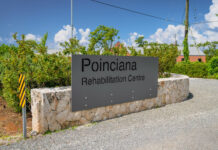
McKeeva Bush, who launched a new political organisation last month, criticised Health Minister Sabrina Turner for not getting the Poinciana mental health facility over the line, saying he would have removed her from the role if he were in charge.

Bush went on Radio Cayman on Friday to detail some of the discussions that happened among government members this week before the resignations on Thursday.
He acknowledged conflict with Minister Turner over his criticism.
And he confirmed there was a split among the coalition members over the National Conservation Act. He is among a group that supports amendments to the legislation.

Bush acknowledged that Sustainability Minister Katherine Ebanks-Wilks, who has responsibility for the Department of Environment and National Conservation Council, had opposed the proposals and was unwilling to bring the bill to Parliament.
In an effort to push the legislation through, he said Labour Minister Dwayne Seymour had agreed to bring the amendments to Parliament, adding that the UPM had received legal advice that this was permissible.
Bush said the majority of caucus supported the bill and suggested the three dissenting Cabinet members had wanted permission to be freed from the doctrine of collective responsibility to vote against the changes.
He said the premier had not denied this but has asked for the request to be put in writing.
UPM wants changes to conservation law
Bush said one of his problems with the bill was that the director of the Department of Environment was the chairman of the National Conservation Council. This isn’t actually correct. Stuart Mailer is the chair of the council.
It’s possible that Bush was referring to the fact that some technical functions of the council can be delegated to the director of the Department of Environment – something that has emerged as a bone of contention for opponents to the law, who have suggested it gives too much power to a civil servant.
Bush also highlighted concerns that two government entities, the National Conservation Council and the Central Planning Authority, were facing off against each other in court. It wasn’t clear what an amendment to the conservation law would do to change this, however.
In a judgment last year, the Court of Appeal affirmed that the conservation council, and not the CPA, has the “final word” in deciding planning applications that are likely to have adverse effects on marine parks or other environmentally protected areas.
Speaking more generally, Bush said he felt the law, which he voted for when it was unanimously approved in 2014, had been mis-sold to Parliament and needed to be weakened.
“Everybody knows I’m pro development, but I’ve put measures in place where we get something out of it, and I put measures in place even more recently to get more out of it, not to just stop things.”
Related Videos











I agree with those who refuse to weaken the Conservation Law of 2014. With expat population rising unchecked at nearly 10%/yr (capping it ought to be priority #1), development must now be done with even more caution and environmental consideration than ever before. The final arbiter to environmentally destructive plans ought to remain with the Conservation Council.