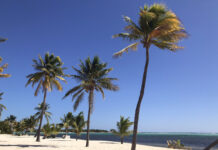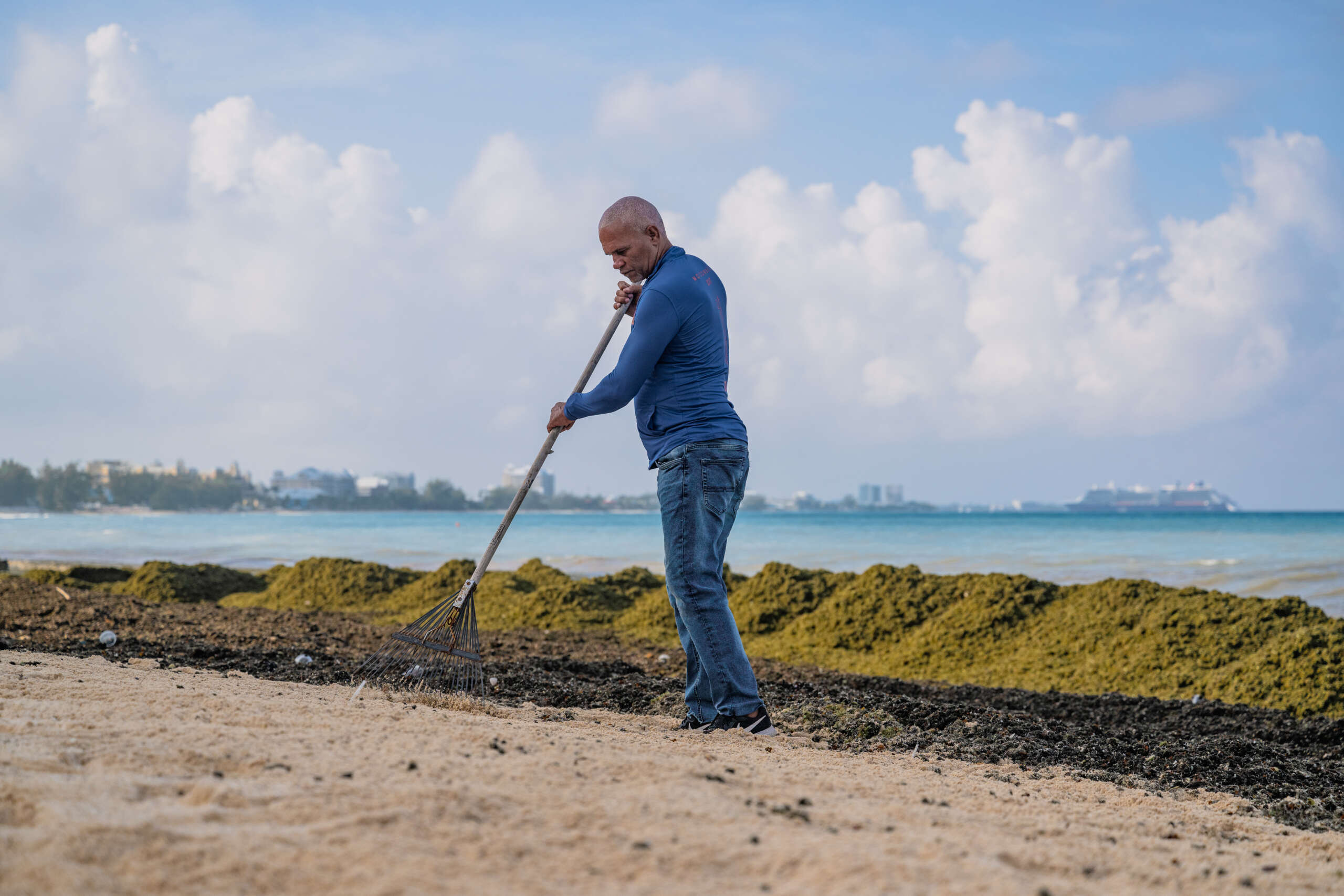
Wave surges fuelled by Hurricane Idalia deposited large mounds of marine algae on Cayman’s prized Seven Mile Beach overnight Tuesday prompting emergency clean-up operations on Wednesday.
Though initial reports suggested sargassum made its way to the prized tourist attraction, Department of Environment Deputy Director Tim Austin, in response to Cayman Compass queries, said it was, in fact, seaweed that had washed up along Seven Mile Beach due to the recent strong waves.
“This is not sargassum, but marine algae torn off the seafloor by the wave action. This is a natural process and the removal of the algae from the reef is often beneficial as it prevents the faster growing algae from smothering hard corals that compete for space and light,” he explained.
When the Compass visited the beach Wednesday, work was well under way to clear the seaweed from the coastline.
Rough seas
Idalia, which hit Florida Wednesday as a Category 3 hurricane with life-threatening storm surges, sent rough seas Cayman’s way as it headed to the US.
Austin said, as the tropical storm, which became a hurricane, was forming to the north of Cayman it generated “large waves that propagate out and can travel large distances”.
“Once the waves calm down and the usual offshore breezes re-establish, that should be the end to this event. Of course, if another storm generates more wave activity on Seven Mile Beach, then we will likely have a repeat of the seaweed washing ashore,” he said.
However, he said, there is less algae out now since it had been washed off the reef.
“So, that could reduce the size of the next influx; but it recovers quickly, so we can definitely expect it to happen again,” Austin said.
He said “seaweed strandings” often occurs after “large wave events” on Seven Mile Beach.
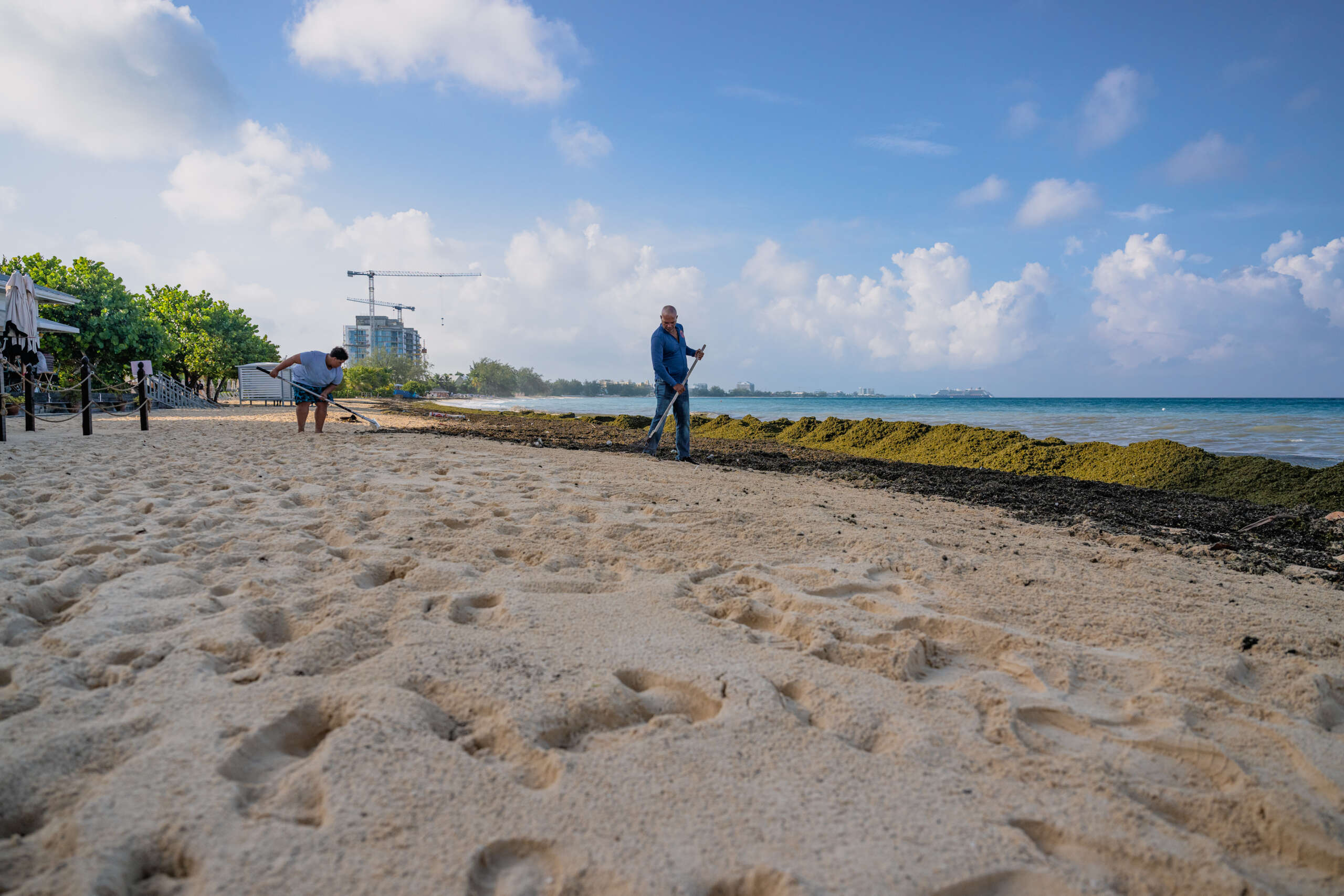
However, for Steven André, general manager at the Kimpton Seafire Resort, the appearance of the seaweed was unexpected, saying the amount on the beach at the hotel “in the last 24 hours certainly caught us by surprise”.
“[Tuesday] morning we had nothing, but today [Wednesday] it is a very different story,” André said in an emailed comment to the Compass.
The beachfront near the popular hotel appeared to be the hardest hit by the seaweed that, unlike the troublesome sargassum, had a green and dark brown hue.
Beachgoer Whitney Foster said she was stunned by the sight when she went for a walk on the beach by the Kimpton Tuesday evening.
“As we approached the water line, I thought I was seeing an optical illusion. The waves were completely black with seaweed. I’ve never seen anything like it. The smell was also horrendous. I have a lot of sympathy for all of the guests trying to enjoy their evening meal at Coccoloba [at the Kimpton], because it was a very strong and unpleasant smell,” she told the Compass via email.
Foster said that, as she continued walking down the beach, the volume of seaweed began to decrease; however, the walk was not an easy one.
“My feet kept falling under the sand since there was a thick layer of seaweed under the top layer of sand. From what I could see, it didn’t look like just sargassum, there was regular seaweed and moss in there too… sprinkled with litter, of course,” she added.
Clean-up timeline not fixed
After discussing the situation with the DoE, André said, the hotel has started the clean-up process.
“It will take a day or two to get the beach back in order. Our guests obviously don’t appreciate the inconvenience caused,” he said, adding, “overall, everyone has been fairly understanding of the situation”.
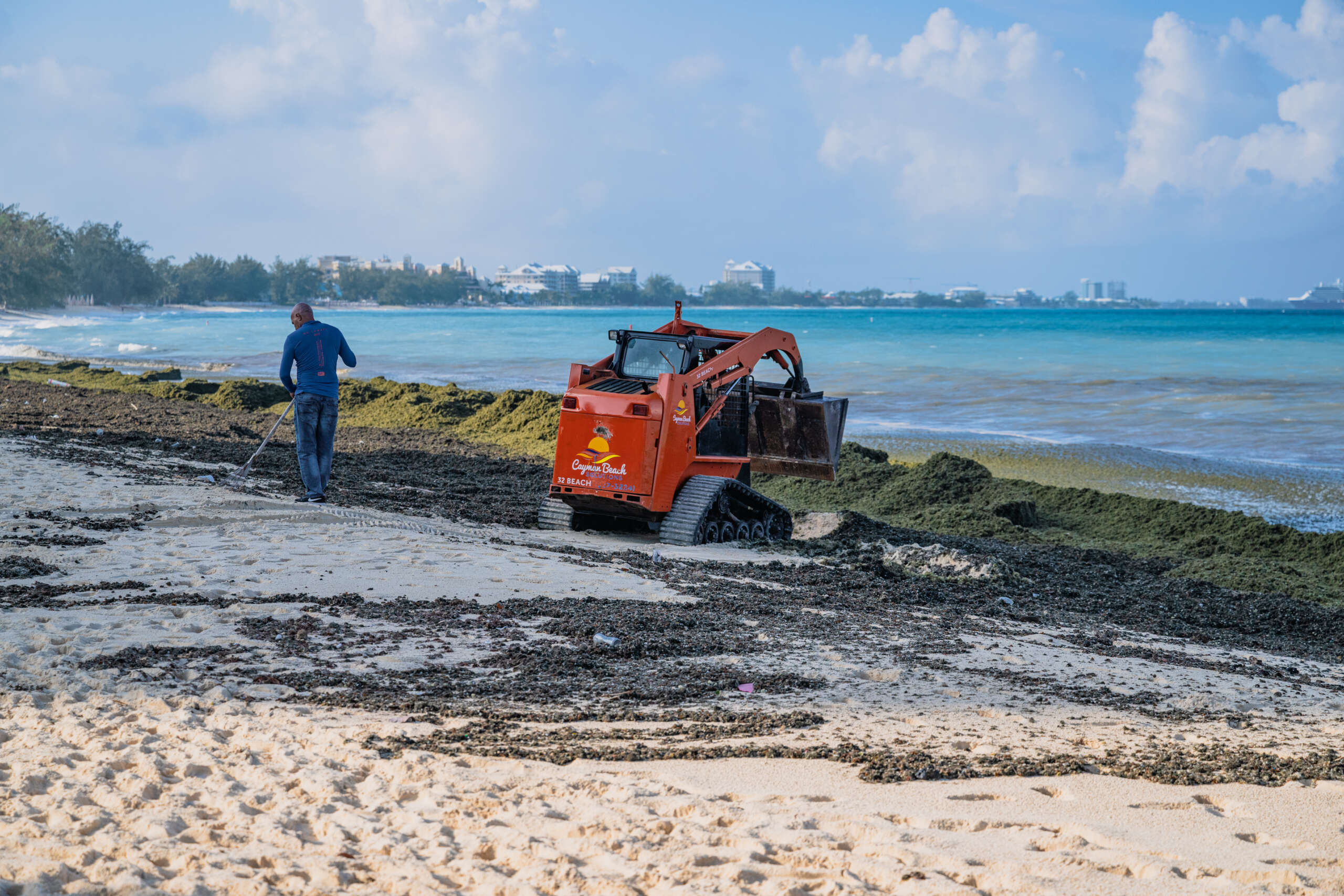
Austin said Cayman Beach Solutions, which had the contract to clear the area, contacted the DoE before starting work.
“Our team visited the site to mark out the existing turtle nests so that the heavy equipment used in the clean-up would not impact them,” he said.
Austin pointed out that Cayman Beach Solutions is using specially designed beach-cleaning equipment.
“Anyone attempting to clean a beach with heavy equipment must contact the DoE to ensure that the proper clean-up permissions and procedures are adhered to. This is particularly important during turtle nesting season,” he added.
Austin said wave direction has a big part to play with where the “seaweed strandings” occur.
“Due to the interaction of the shape of the coastline and direction of waves, there tends to be hotspots for collection, so I doubt this will have occurred along the whole of the beach,” he said.
However, the full assessment will have an accurate measure of impact, he added.
As for the effect of the strong waves on turtle nests, Austin said the DoE is “still taking stock of the impacts of the rough seas on the nesting beaches”.
Related Videos