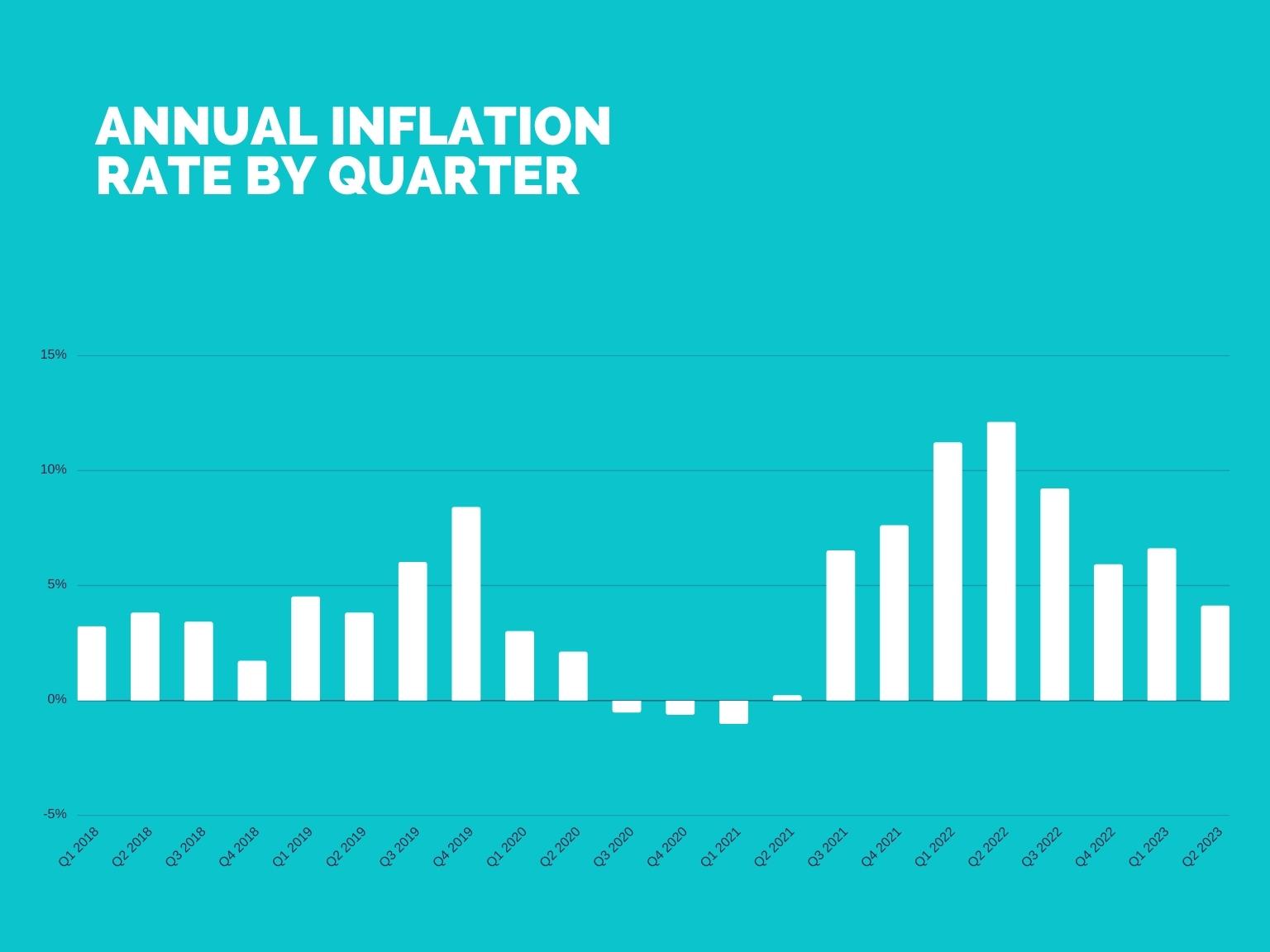
Consumer prices in the Cayman Islands during the second quarter of 2023 were 4.1% more than the same period in 2022.
The rate of inflation has, however, dropped from the first quarter of this year – down 2.5 percentage points from 6.6%.
Hikes in the cost of food, drink, household items and utilities remain among the largest contributors to the overall inflation rate.
Only transport and communication showed slight drops in cost compared to the second quarter of last year.
The data was published in ‘The Cayman Islands’ Consumer Price Index Report April-June 2023′ issued by the Economics and Statistics Office.
The government office measures the average prices paid over three months for 1,396 items of goods and services in Grand Cayman every quarter.
These prices are then used to estimate the Consumer Price Index and its rate of change – or the inflation rate.
The CPI for the second quarter this year was 130.4 – up 4.1% from 125.3 in the same period in 2022, but down very slightly from 130.6 last quarter.
Of the 12 categories within the CPI report, 10 had increased by some amount, according to the ESO.
In a press release announcing the latest data, Premier Wayne Panton said despite the slowdown in the pace of inflation “these increases remain well above the comfort levels for many Caymanians”.
He added: “Government initiatives to decrease the cost-burden for families will continue.”
Cost-of-living hikes
Compared to the second quarter last year, the cost of food and non-alcoholic beverages was up 7%.
The average prices of tea, coffee, and cocoa rose by nearly half at 47.9%, and milk, cheese and eggs rose by 16.4%.
Sugar, confectionery and snacks rose by 14.4% compared to the same period in 2022 and bread and cereals rose by 9.2%.
Another one of the biggest contributors to inflation was the increase in cost of utilities.
The price of electricity has increased 15.3% since last year, while water supply rose by 10% compared to the same period in 2022, and gas was up 8.8%.
While these are large increases, they are not as high as last quarter when water supply costs rose 37.1% and electricity prices rose 22.7% compared to the same quarter in 2022.
This quarter, rent also increased by 9% and materials for maintenance and repairs rose by 10.6%.
Some of the biggest rises in clothing included footwear bought locally, which jumped by 18.4% from last year, and clothing purchased abroad, which rose by 8.3%.
Recreation was a big cost, with reception (for example, radio antennas and satellite dishes) and recording equipment up by 25.8%, and games, toys and hobbies up by 11%.
Equipment for sport, camping and open-air recreation was up by 6.5%, while gardens, plants and flowers increased by 9.7%.
Insurance also shot up, with the rates for vehicles and housing contents rising by 16.7% and 10.5%, respectively.
Some drops
Among the few costs that fell this quarter were transport and communication.
However, transport only dropped by 0.1% compared to April to June last year, but that included a 9.3% fall in the average cost of fuels.
Other services related to personal transport equipment also declined by 4.1%, but maintenance, car prices and air transport rose, cancelling out the other cost drops overall.
The cost of communication was down by 2.6% due to a huge decline in cost of telephone and telefax equipment by 21% while other communications costs remained fairly stable.
Other price drops included the average prices for jewellery and watches, which fell by 10.4%, and the average cost of tobacco which fell by 1.5%.
A decline in the average price of contraceptives also meant that the cost of non-pharmaceutical medicinal products dropped by 10.5%.
‘Worrying’
Panton, who is also minister for finance and economic development, said price rises over the past few years can be partly blamed on the residual effects of the pandemic and Russia’s invasion of Ukraine.
“I think most Caymanians will recognise and appreciate that inflation is a local challenge with global causes,” he said.
In its July World Economic Outlook Update, the International Monetary Fund said inflation remains high globally and continues to erode purchasing power around the world.
“These burdensome, global inflationary pressures are a challenge for families and kitchen tables across the islands,” Panton said.
“This Government will continue to do our best to mitigate and deal with the effects of inflation for Caymanians here at home.”
The premier said price increases have the effect of raising the cost of living across the islands, especially for the most-vulnerable Caymanians.
“We know this is worrying for many people and families and this remains one of the top priorities for this government,” he said.
“Indeed, tackling the cost of living is one of the challenges this administration grapples with each day.
“Every morning, we wake up seeking solutions that bring meaningful relief to the people of this country.”
He stressed that the government is seeking to minimise the impact of inflation through its review of the national minimum wage.
The inter-ministerial housing task force also offers solutions to address issues surrounding the cost and availability of affordable housing, he added.
Panton said the impact of Central Bank actions and improvements in the international supply chain will help to temper price pressures throughout the upcoming year.
You can view the full CPI report for April-June 2023 here.
Related Videos