The United Nations Climate Change Conference COP28 – a meeting of the United Nations Framework Convention on Climate Change signatories – is taking place through 12 Dec.
The aim of the yearly conference is to give a platform to world leaders to negotiate and agree action on how to tackle climate change, limit emissions and halt global warming.
Over 70,000 delegates are expected at Expo City in Dubai between 30 Nov. and 12 Dec., including Connor Childs, Bella Rooney and Rickeem Lashley from the Cayman Islands.
The three, all representing the non-profit Sustainable Cayman, spoke to the Compass about the recently published sea-level rise data from Human Climate Horizons.
What are your impressions of Human Climate Horizons’ data?
The data on sea-level rise around Cayman is kind of a wake-up call. It’s like a vivid picture of what climate change could do to us.
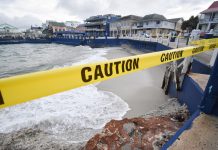
Projections, particularly under a business-as-usual model with our current emission rate, indicate a substantial rise in sea-levels, potentially submerging approximately 12% of our lands, equivalent to 32 sq km, by the end of the century.
Waiting for solutions from elsewhere isn’t an option.
We must act now to protect and enhance what makes our country resilient, utilising what we can to safeguard our assets until long-term solutions are in place.
Should this be a concern for the residents of the Cayman Islands?
Given the data’s gravity, it is crucial for Cayman’s residents to be concerned about the potential impacts of sea-level rise.
We need to be aware, get ready, and educate each other on how to adapt to climate change.
Let’s mix in the talk of sea-level rise with things we’re already familiar with, like our annual hurricane-preparedness campaigns.
The challenge of a sometimes-harsh climate is not something new to our people, so we are in the unique position to build on what we’re already familiar with, with the wealth of new information afforded to us by the global community and conferences like COP28.
Collectively, we feel that Cayman residents should rightly be worried, but that worry and fear should be turned into action through being a part of the solution.
We can all improve our consumption habits, and we can all act in pursuit of a just transition to carbon neutrality at a faster pace to limit the impact of these statistics.
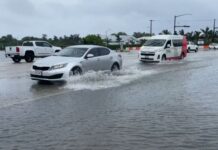
Our new normal, if we don’t, is not one any of us should want – drought and increased temperatures, stormwater flooding to properties, oceans full of plastic and devoid of life, and unhealthy societies and economies.
How can Cayman prepare for the predicted sea-level rise?
To prepare, Cayman should prioritise some practical interventions.
Planning for the bad-to-worst-case scenarios, we can think from now about how we would implement coastal defences, set up early-warning systems, and make sure our land-use planning is sustainable.
Infrastructure investments should focus on resilience to sea-level rise, ensuring that critical facilities and communities are safeguarded against the anticipated changes.
However, it’s not just creating resilient infrastructure; community engagement and education building on the local familiarity with hurricanes will play a vital role in building a climate-resilient society capable of navigating the challenges posed by rising sea-levels.
We’ve all got a role to play in building a society that can handle the challenges coming our way.
What do you think would be the impact on past and future seafront development?
Previous developments may encounter heightened vulnerability, necessitating comprehensive assessments, regulations, and potential adaptations.
These measures would become crucial to minimise risks and enhance the safety of both Caymanians and visitors utilising these structures.
Acknowledging the unfortunate inevitability of displacement and the need to plan for its management (especially stormwater management of interior flood zones), future seafront projects must incorporate climate-resilient designs and adhere to the guidelines that are put in place with safety and sustainability in mind.
Also, consideration must be given to the life span of building materials in comparison to the structure itself, accounting for changing conditions.
For instance, it would be imprudent to employ building materials with a lifespan of 70 years for a structure on a coastal stretch that might become unsuitable/unsafe for use, or in worst case, cease to exist, within 30-40 years.
A forward-looking approach to coastal development is essential to ensure the sustainability and resilience of Cayman’s infrastructure in the face of ongoing climate change.
One way stakeholders can do this in preparation for future code standards would be to adopt a sustainable building framework like [the one advocated by] OnePlanet to move towards a combined nature-positive and net-zero development model.
Incorporating the principles of the 2001 Cayman Islands Environment Charter throughout a new planned development vision would give stakeholders the opportunity and guidance to make the right decisions whilst still achieving economic gains.
Related Videos