The Cayman Islands has no voice at the international table on climate-change impacts on small island nations, according to a leading Caribbean climate advocate.
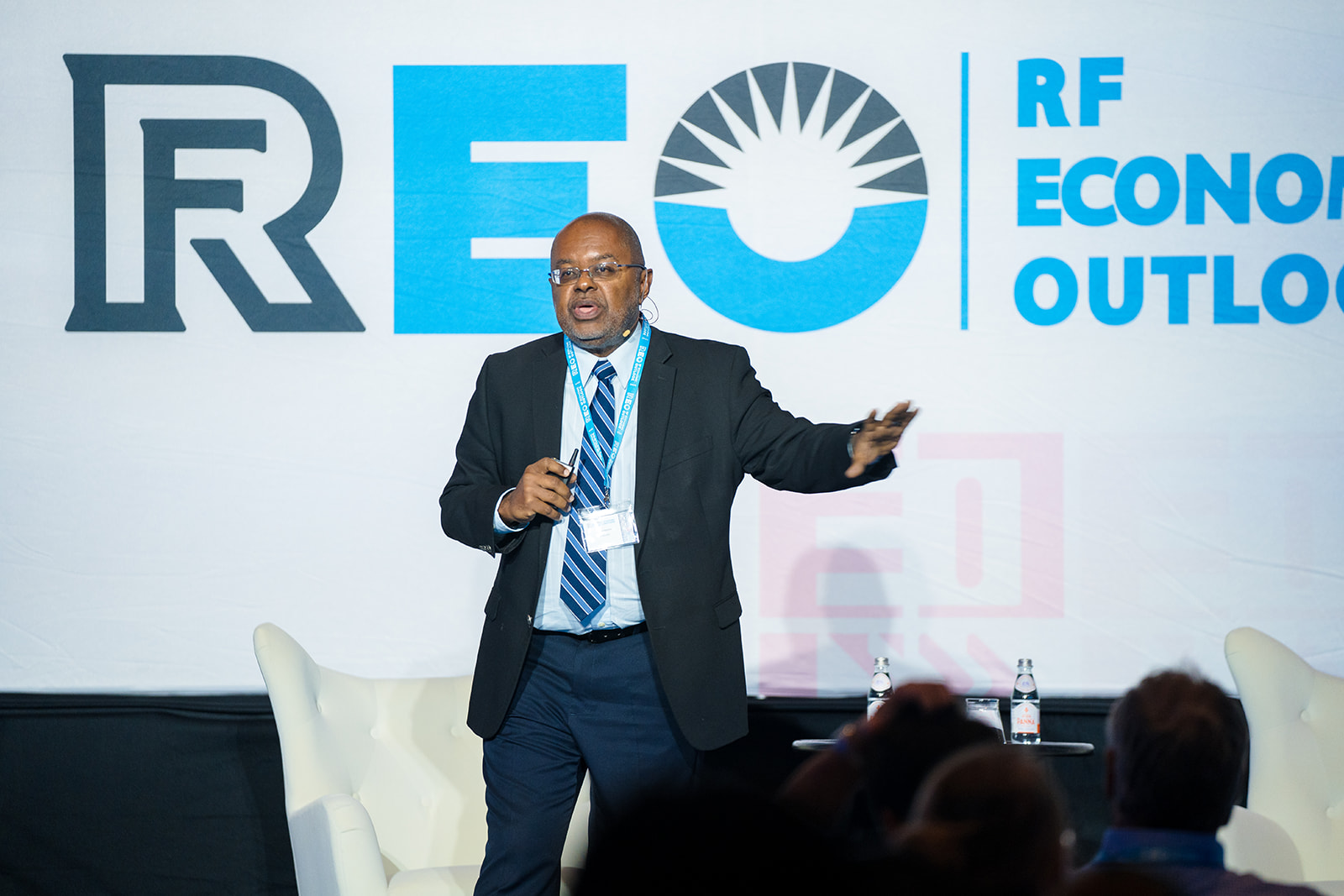
James Fletcher, who led the Caribbean delegation at the pivotal COP20 climate-change conference in Paris in 2015, told attendees at an economic forum in Cayman last week that, in his years negotiating on behalf of Caribbean islands, he had never heard Cayman being represented at high-level talks.
Fletcher, a former government minister of sustainable development and energy in St. Lucia, was among those instrumental in getting world leaders to accept the aim of preventing global temperatures from increasing beyond 1.5 degrees Celsius at the 2015 Paris meeting.
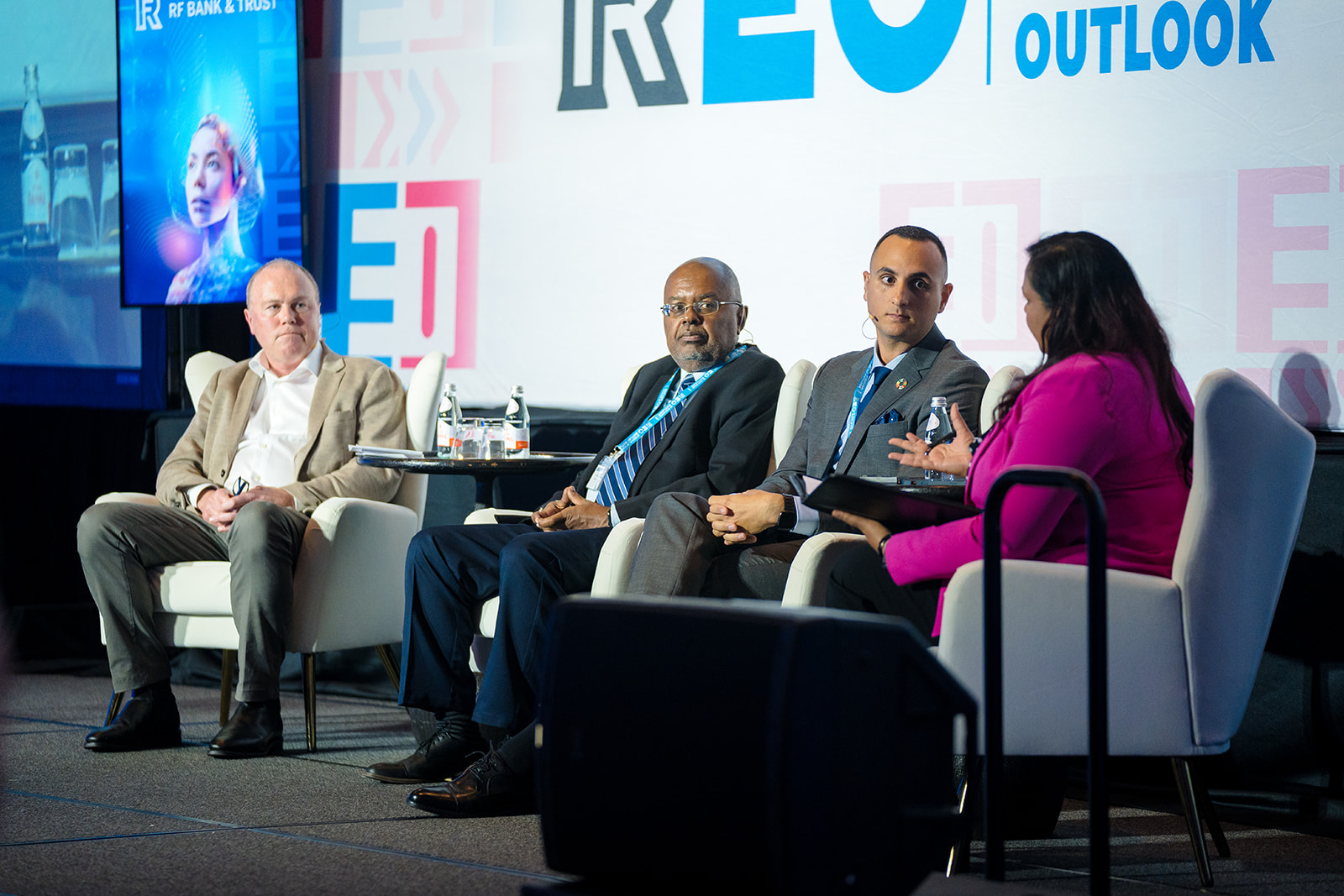
“I’ve been attending conferences and been a party to climate-change negotiations for a long time. I have never once heard anyone speak on behalf of the Cayman Islands, because the Cayman Islands is not a party to the United Nations Framework Convention on Climate Change,” he told attendees at the RF Economic Forum at the Kimpton Seafire resort on Friday.
“You’re a dependent country of Great Britain, so the United Kingdom is supposed to be speaking for the Cayman Islands. When I’m negotiating with the United Kingdom, they’re not speaking on behalf of small island developing nations.”
Fletcher told the audience that when he was negotiating with Amber Rudd, when she was the UK’s minister for climate change, “she was fighting me on loss and damage because loss and damage meant liability and compensation, which is something that the United Kingdom did not want to consider.
“But, for you in Cayman, loss and damage is important, so who speaks on your behalf now?”
He said when he speaks at international forums about countries that will be inundated as a result of climate change, he talks about places such as the Bahamas, Cuba, Belize and the Marshall Islands. “I’ve never once mentioned the Cayman Islands. I will now,” he said.
He added that Cayman had not been “part of that ecosystem that is in my sight because, unfortunately, nobody is speaking on your behalf”.
Cayman’s climate-change policy
The Cayman Islands did have a presence at the 2021 COP26 meeting in Glasgow, Scotland, in which then Premier and Minister for Sustainability and Climate Resiliency Wayne Panton participated as a member of the UK delegation.
At that time, Panton announced that Cayman, with assistance from UK funding, would undertake a climate-change assessment, as part of efforts to update a 2011 draft of a National Climate Change Policy and Strategy that had never been implemented.
That assessment was completed, and the draft of the climate-change policy was subsequently amended, but has yet to be finalised.
Earlier this month, in response to queries from the Compass on the status of the policy, a spokesperson for the Ministry of Sustainability and Climate Resiliency said a revised draft had been presented to Cabinet last October.
The spokesperson added, “The recently appointed Minister for Sustainability & Climate Resiliency Hon. Katherine Ebanks-Wilks has had the opportunity to review the revised draft and, once final edits have been incorporated into the document, the Ministry will submit the updated draft Policy to Cabinet for approval. Meanwhile, the Ministry has continued to progress related work, such as public awareness of the severe risks climate change poses to our islands.”
In the meantime, revisions to Cayman’s outdated national development plan – last amended in 1997 – are also awaited. The new plan is being created by the Central Planning Authority, the Development Control Board, and the Ministry of Planning, Agriculture, Housing and Infrastructure.
Fletcher told attendees at Friday’s conference, which addressed artificial intelligence and climate-change issues, that it was vital that any national development plan incorporate climate impacts.
Cayman 5th most vulnerable in Caribbean
The main consequence of temperature increase for small island nations is sea level rise, something that will have a hugely detrimental impact on low-lying islands like those in Cayman. It will also bring stronger storms, droughts, and associated food and water insecurity.
Fletcher described Cayman as the fifth-most-vulnerable country – in terms of sea-level rise – in the Caribbean, behind Bahamas, Cuba, Antigua and Barbuda, and Belize.
He said a 1 metre (3.28 feet) sea rise would cause enough land loss in the Caribbean to displace 110,000 people.
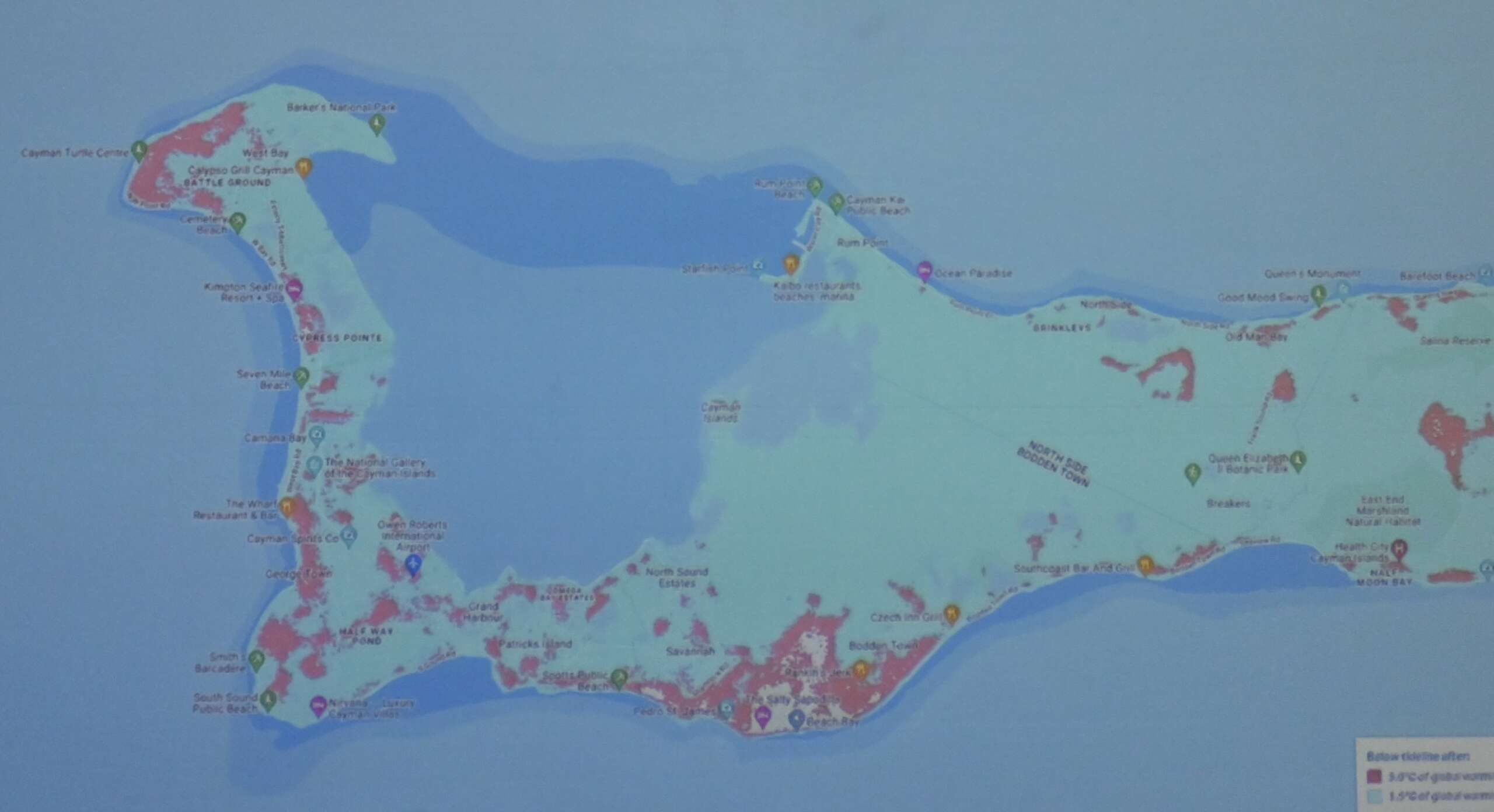
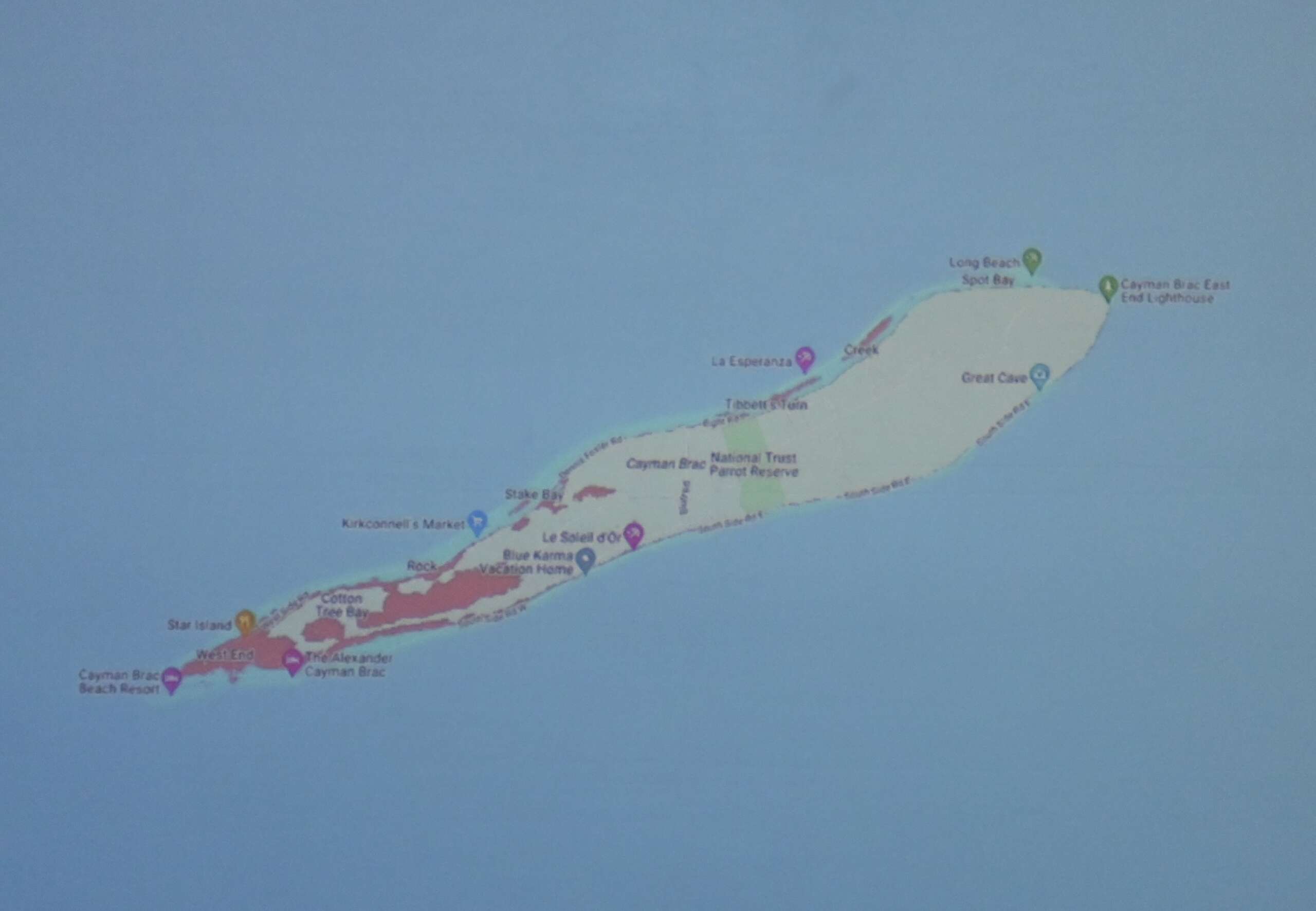
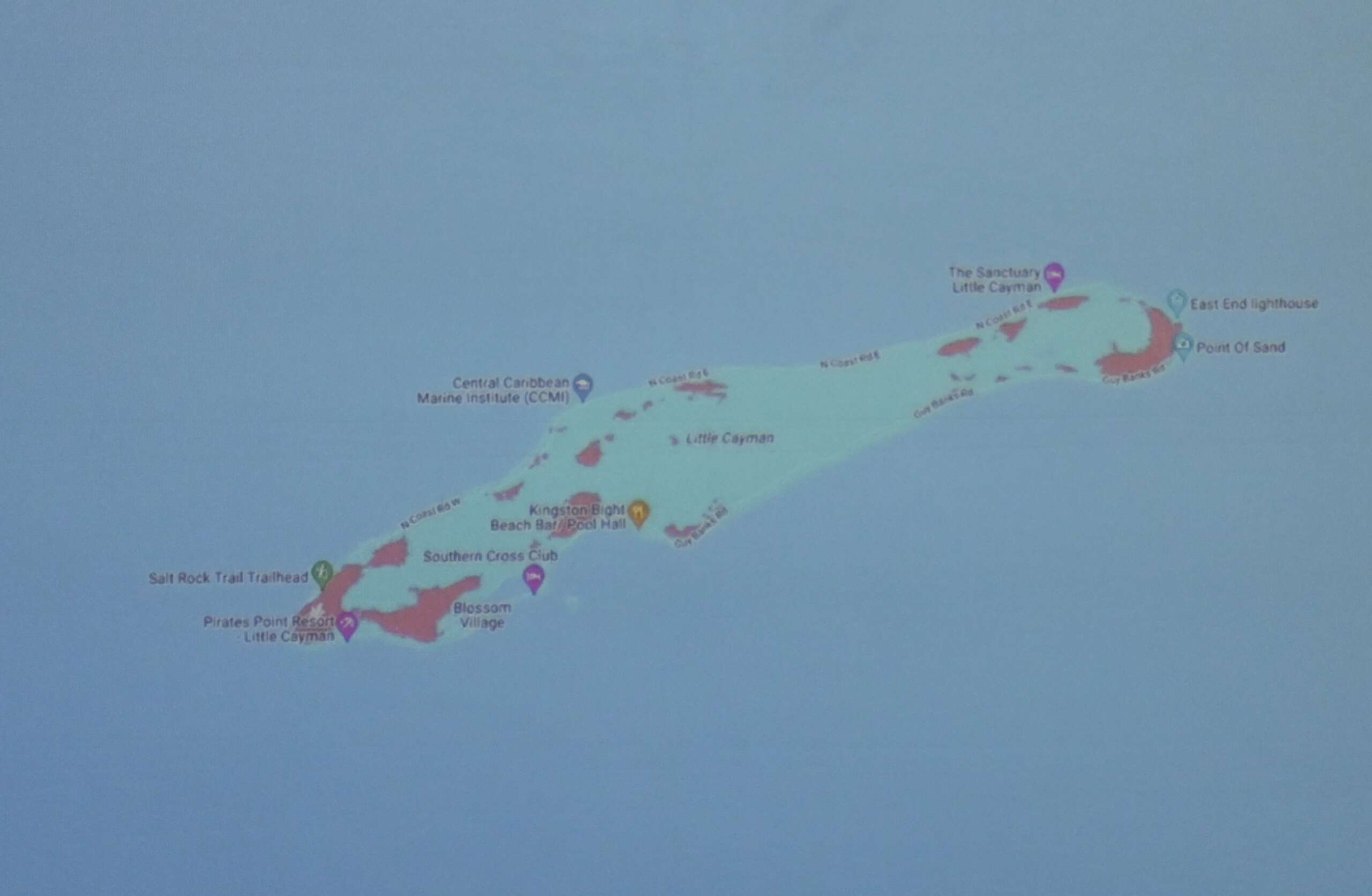
Fletcher displayed maps of Grand Cayman, Cayman Brac and Little Cayman, showing what a 3 degree Celsius temperature rise would mean to the coastal areas of all three islands.
“Those of you who own property in those areas will not need to build a swimming pool,” he said. “That’s a flippant way of saying it, but … if we do not do something about sea level rise, if we do not do something about mitigating emissions of greenhouse gases, this will be your future.”
Funding resiliency
He added Cayman is one catastrophic storm away from being a high-income country to having its GDP effectively wiped out.
Noting that in 2008, the international community pledged that it would make available to developing counties US$100 billion annually from 2020 to respond to climate impacts, Fletcher said the cost of adapting to such impacts was now estimated to be between $160 billion and $340 billion a year, rising to a trillion dollars a year by 2050.
“And that’s not even taking into account loss and damage,” Fletcher said.
In many cases, he said, funding for weather-related disaster recovery comes in the form of loans, thus impacting a country’s debt-to-GDP ratios.
Stating that those loans come from countries whose carbon emissions are driving the rise in global temperatures, he likened the scenario to someone breaking your legs with a baseball bat, and then loaning you the money to undergo surgery and pay for your cast.
The Caribbean, as a whole, contributes less than 0.2% of the global inventory of greenhouse gases, Fletcher noted.
At COP28 in Dubai, a loss-and-damage fund of $700 million for small island states was agreed.
“$700 million is less than 0.2% of what we need annually for loss and damage,” he said.
“Meanwhile, the big fossil fuel companies, the ones who are emitting all these greenhouse gases into the atmosphere, paid their shareholders, in 2023 alone – the hottest year the planet has ever experienced – an unprecedented $111 billion, which is 158 times what was flagged for loss and damage at COP20.”
2023 hottest year on record
Fletcher, who is chairman of the executive board of the Caribbean Centre for Renewable Energy and Energy Efficiency, painted a grim picture of the rising temperatures the planet is experiencing.
“Previously, we had 2016 being the hottest year, and then 2020 came along, and it wasn’t quite at the 2016 level, but it was still hot. 2023 just blew everything out of the water,” he said.
The global average temperature in 2023 was 1.46 degrees Celsius above the pre-industrial baseline.
And 2024 is shaping up similarly, with the first two months of this year being the hottest January and February since records began in 1850.
“This is not variability, this is normal,” Fletcher said. “It’s not a phase. The climate sceptics will tell you this happens all the time, that we’re just going through a phase. This is not a phase. The last nine years have been the hottest on record since 1850.”
He added, “2024 is likely to be the first year that we reach 1.5 [degrees above the baseline].”
Related Videos