


When Foreign Secretary David Lammy took office after Labour’s historic landslide victory Friday in the UK general election, one of his first calls was to the Cayman Islands. But how will the changing of the guard in the UK impact us?
Observers in the overseas territories could be forgiven a touch of trepidation about the new government’s approach on a couple of key issues that impact Cayman.
Historically the party, currently led by Sir Keir Starmer, has taken a more hostile stance towards offshore financial centres than the Conservatives, whose chaotic 14-year reign came to an abrupt and comprehensive end on Thursday.
Labour took 412 seats for a majority in the House of Commons, with the Conservatives left with just 121 seats in one of the biggest reverses in history.
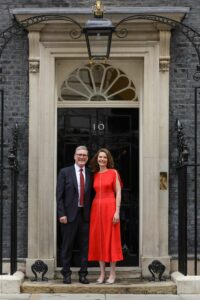
🤝 The King received in Audience The Rt Hon Sir Keir Starmer MP today and requested him to form a new Administration.
Sir Keir accepted His Majesty’s offer and was appointed Prime Minister and First Lord of the Treasury. pic.twitter.com/g1TwdPObbD
— The Royal Family (@RoyalFamily) July 5, 2024
The initial reaction from political figureheads in Cayman was positive.
One of new foreign secretary David Lammy’s first calls after taking office was to Cayman to check on the impact of Hurricane Beryl and pledge support to the territory.
Premier Juliana O’Connor-Connolly said she was encouraged by that brief call, coming as it did within hours of the election victory.
“I came away, not like Donald Trump just looking at Putin in the eyes, but I came away with sufficient energy and synergy that I think that we have a new cautious optimism that Cayman has a modern partnership to enhance and augment,” she said, referencing the former US President’s warm reaction to his first meeting with the Russian leader.
Lammy posted on X, formerly Twitter, that he had been immediately in touch with the premier and governor of the Cayman Islands on day one in the job.
Change begins now. pic.twitter.com/UTS40y4Ole
— David Lammy (@DavidLammy) July 5, 2024
“The UK is helping our friends in the Caribbean as they deal with the devastating effects of Hurricane Beryl by releasing funds to help the region recover.
“I have just been speaking with the Cayman Premier and Governor to outline our commitment to the Overseas Territories,” Lammy wrote.
Watching brief for financial services
While the new government may prove a friend in a storm, there are wider reasons to be cautious about a Labour government’s impact on Cayman. The party has championed public beneficial ownership registries, among other regulatory measures aimed at financial centres like Cayman.
Asked about the changing of the guard, Deputy Premier and Minister for Financial Services Andre Ebanks said, “We look forward to working with the new government in line with international financial services standards and complying with our constitutional obligations.”
Tim Ridley, a former partner at Maples, said the turmoil of the Conservative Party’s 14-year rule had likely taken its toll on a weary British public.
“It is just cricket as usual. It is time to let the other team go into bat. Sadly, the UK has got to such a point in its decline that I doubt the change in government will make any real difference in the UK,” he said.
“Cayman will just have to keep a close eye on things like increased beneficial ownership disclosure and the non-domicile rules.”
Nick Dixey, a lawyer with Nelsons and an avid follower of UK politics, hosted the firm’s election watch party at XQs on Thursday, hastening to ensure the show went on after the worst of the weather had passed.
He agreed that “time will tell” what the result means for Cayman.
“There will be understandable concerns that a centre left government in the UK may respond to a widely held perception that the Cayman Islands is an offshore playground and haven of the tax-avoiding wealthy,” he said.
“The Labour government is committed to ending the use of offshore trusts to avoid inheritance tax, and to end ‘non-dom’ status so as to require those who living in the UK, but are officially resident overseas, to pay UK tax,” he said.
But he noted that the overseas territories did not expressly get any mention in the Labour manifesto.
Big picture
Outside of the impact on Cayman, Dixey said the story of the night may prove to be the rise of the right-wing Reform party. Nigel Farage’s party took 14% of the national vote, but only four seats in Parliament, potentially reigniting debate about Britain’s first-past-the-post system.
The Liberal Democrats, by contrast, took 71 seats with only 12% of the national vote.
Dixey said the real story of this election is not perhaps that Labour won, but that rank-and-file, Telegraph-reading Tory supporters were so exasperated with their party that they either stayed at home or voted for Reform – the new party on the right led by Brexiter Nigel Farage.
“This split the vote and allowed Labour and the Liberal Democrats to make massive gains by default, leading to a huge Labour majority on a reduced turnout of just 60% – without any of the enthusiasm or euphoria of Tony Blair’s landslide in 1997.”
Related Videos








Non-doms are wealthy foreigners living in the UK but not born in the UK. That is, the UK is not their domicile of origin.
Supposedly thousands will leave the UK. Hopefully some will move here, bolstering our economy.