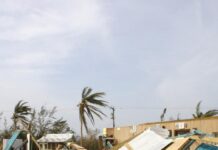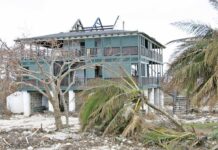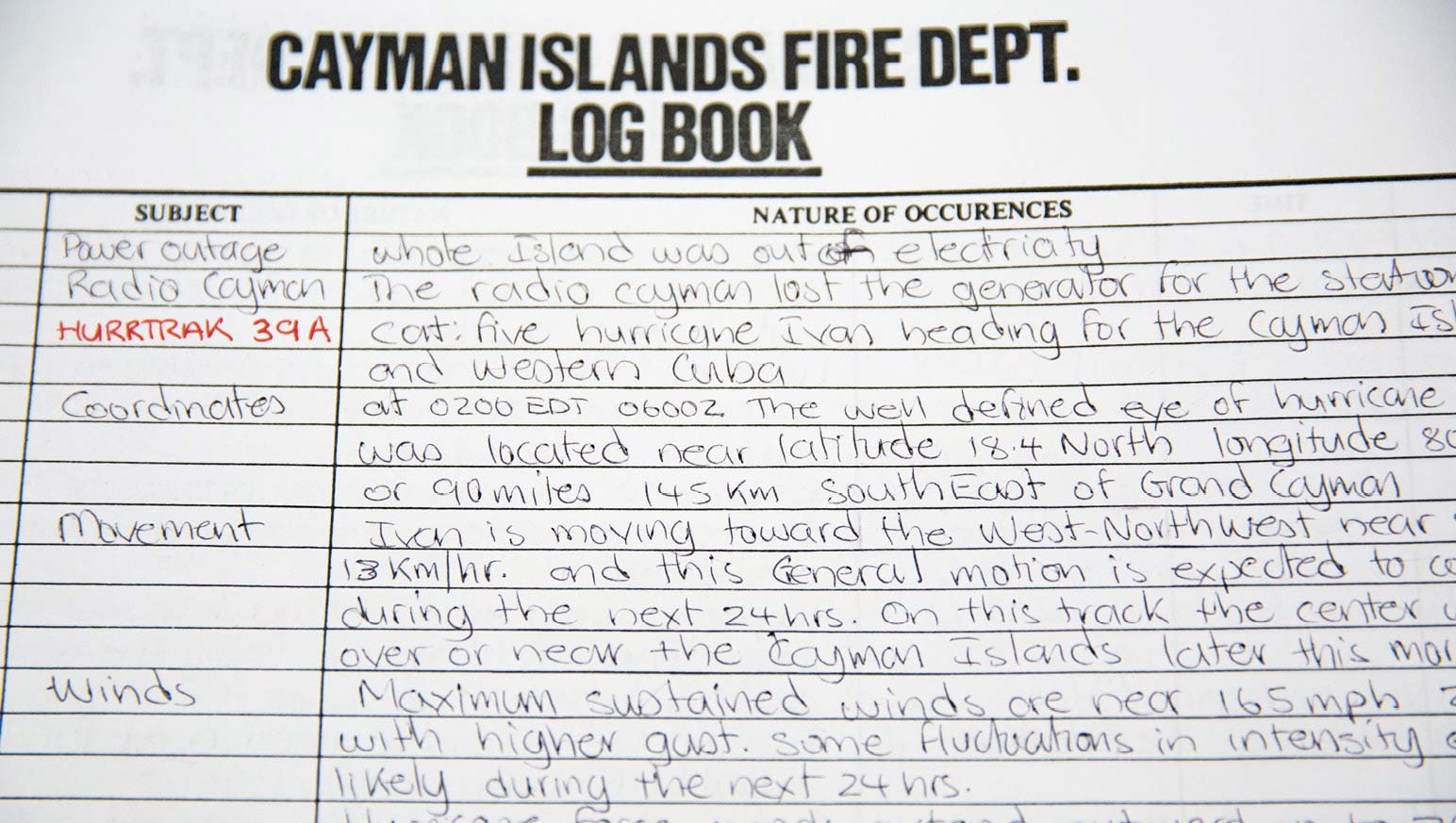
The Cayman Islands Fire Department logbook records an hour-by-hour account of storms that have assailed Cayman.
The 34-page Hurricane Ivan section of the logbook chronicles the chaos, escalating terror, mounting destruction and dispatch of emergency assistance.
The logbook is a vivid account of the assault on the Cayman Islands by the most powerful storm since 1932.
Wednesday, 8 Sept.
The logbook records the 8am opening of the Emergency Operations Centre and a preliminary all-day meeting of the National Hurricane Committee.
Thursday, 9 Sept.
The book noted widespread apprehension: “Extremely dangerous Ivan strengthens into a category five hurricane over the southcentral Caribbean sea … a hurricane warning will likely be required for Jamaica later this morning”.
At 4pm., at the behest of the committee, Government Information Services (GIS) issued a hurricane warning for the Sister Islands, extended to Grand Cayman at 6pm.
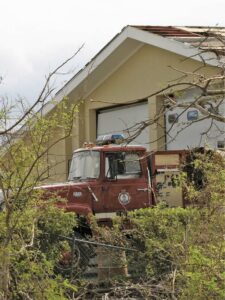
In the wake of the warning, the logbook noted frenetic mounting of shutters at Red Bay School, government buildings and shelters; and cancellation of classes at all schools.
“Hundreds of tourists, expatriate workers and Caymanians took advantage of outgoing flights,” the logbook noted. “CAL has announced the cancellation of all flights on Saturday”.
Friday, 10 Sept.
At 8am, GIS announced the opening of shelters across Grand Cayman. At 3pm, the Port Authority shut the George Town port and GIS urged the Sister Islands to prepare for direct impact. warning that a slight change in Ivan’s course indicated Grand Cayman might be similarly affected.
In the Brac, more than 325 people ultimately crowded into the Aston Rutty Centre, and 152 into the West End School, but, according to the logbook, “a significant proportion of residents in the Brac opted to ride out the storm in the caves in the side of the Bluff”.
Meanwhile, the NHC warned Grand Cayman residents of the strong possibility that Ivan would come closer than initially thought.

“The NHC took the decision to close Owen Roberts Airport after (the) last flight tonight”. the log records.
Saturday, 11 Sept.
Ivan continued to move throughout Saturday with predictions that the storm would hit Cayman within 24 hours.
“With Hurricane Ivan moving closer to Grand Cayman, NHC has ordered police and fire officers to drive into flood-prone vulnerable areas advising residents by means of loudspeaker to seek shelter,” the logbook noted. “If it maintains this track, it continues to hold great threat for all three Cayman Islands, but especially for Grand Cayman.”
Caribbean Utilities Company said it would provide power as long as safely possible and would only shut transmissions to particular problem areas. Three more power lines went down, however, near Mahogany Drive, in North Side/East End and South Sound/Crewe Road.
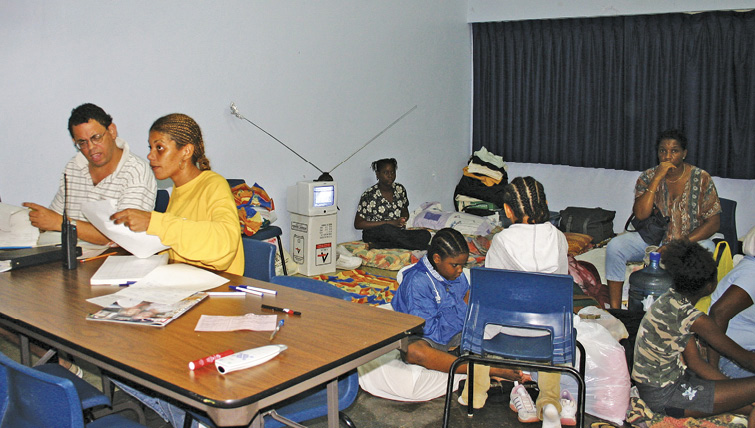
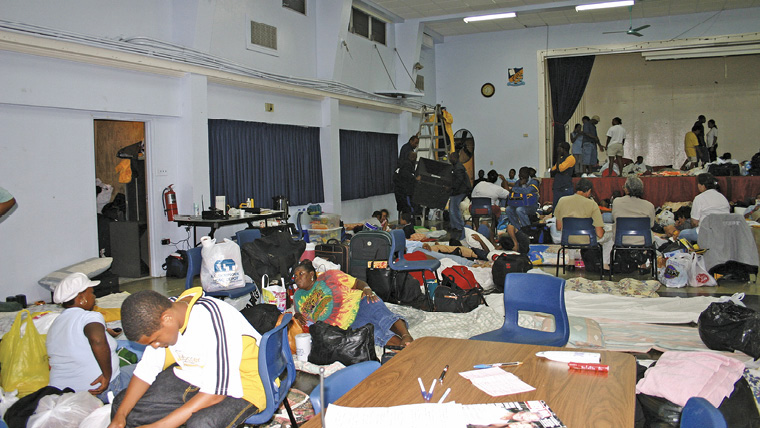
Fifty tourists were sent to the Prospect Primary shelter, and another 50 to the University College of the Cayman Islands. The West Bay shelter was full. GIS directed West Bayers still seeking shelter to try George Town, while George Town Primary School, also full, directed people elsewhere. A bed-ridden woman in Rock Hole needed an ambulance.
The Water Authority and Consolidated Water both suspended service around 6pm, at the same moment Governor Bruce Dinwiddy declared a formal state of emergency.
At 9:10pm, all hurricane shelters closed; one hour later the Health Services Authority (HSA) reported 584 people at the Cayman islands Hospital in George Town: 427 adults and children, 111 HSA staff and families, 39 patients and seven babies.
At nearly 10:30pm, forecasters predicted that the hurricane was likely to be near or over Cayman within hours. Only three hours later, the log notes, Ivan is 90 miles distant.
Meanwhile, the generator at the George Town Primary shelter went out, causing two people to faint, and staff to force the front door open to gain fresh air. Despite declaring a medical emergency, however, staff learned ambulance services were suspended and “they would have to do what they could”.
An hour later, GIS noted, according to the log, “some persons driving around the streets” and calling it “imperative that everyone seek shelter immediately. This is no time to take chances”.
Sunday, 12 Sept.
At 12:15am, CUC reported power outages in West Bay and 95% of George Town; 90 minutes later, it went out everywhere.
When Ivan slammed into Cayman at 1am Sunday, the storm pushed steady gales of 165 mph and a surge between 8 and 10 feet, driven by 30-foot waves in North Sound.
Panic began to spread as people were driven from their homes. The North Side Civic Centre was losing shingles, and the door was already gone; East End Primary started by losing shutters and, 82 minutes later, part of its roof, as the house in front of the school lost its entire roof. At 7am, the roof on the Islay Connolly Hall blew off and the Bodden Town Civic Centre roof was increasingly in jeopardy.
At 8:15am, because of water in its generator, the Cayman Islands Hospital in George Town was without power, while the parking lot was flooded to the top of cars.
“The maternity ward is flooded, moving patients to the second floor; the temporary morgue is floating and patients in the building nearest the Seventh Day Adventist Church are being moved to the hallway,” the logbook recorded.
That afternoon, the church allowed hospital personnel to force the doors, using it as a shelter.
Busloads of people, blankets, babies and food supplies moved from the Bodden Town Civic Centre – which had lost its roof – to the primary school.
In a gruesome development, the log notes that “Edney Mclean reported that there are caskets floating around in East End from the graveyard”. In fact, early casualty counts from Ivan were much higher because of the cemeteries that were flooded – and the graves washed up – during the storm.
By 4pm Sunday afternoon, Ivan had started to retreat but continued to lash the shores with hurricane conditions, heavy winds and huge waves.
All residents, the log warned, “should continue to remain indoors”.
When the storm was over, and the all-clear given on Monday, 13 Sept., residents came out to survey the devastating damage. The long and difficult recovery from the storm started immediately and, in some case, caused hardships that surpassed those felt during the storm. Now, 20 years later, Hurricane Ivan lives on in the memories of those who went through it.
Related Videos