

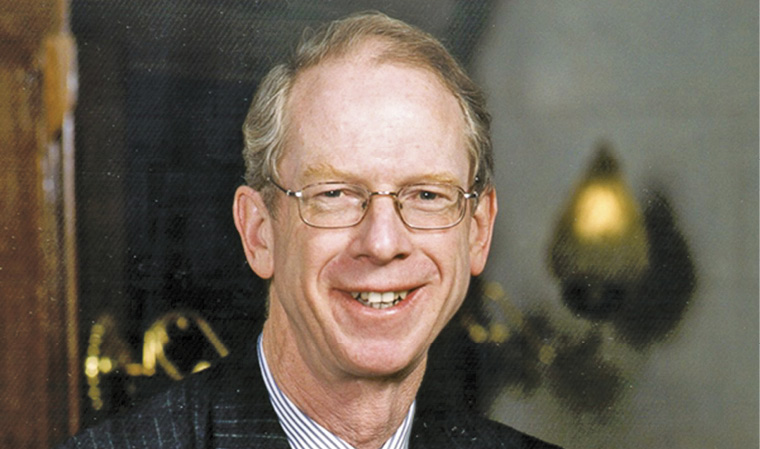
In an interview in 2014, the late Governor Bruce Dinwiddy spoke of his experience of the hurricane and his shock at the devastation.
Ivan was the first storm of such severity to be experienced by Governor Dinwiddy and his wife Emma during a long career in the diplomatic service.
Dinwiddy, who died in 2021, was governor of the Cayman Islands from May 2002 until October 2005, with Hurricane Ivan playing a pivotal part of his tenure in the British overseas territory.
He was the chairman of the Cayman Islands Recovery Operation after the storm, a crucial role in coordinating the recovery efforts.
State of emergency
It was Dinwiddy who called the state of emergency as Ivan gathered wrath and aimed directly for Cayman’s shores.
“On the Saturday evening, when the eye of the storm was still some way from Grand Cayman, on the advice of the senior officials at the Emergency Operations Centre, I declared a state of emergency in a short speech broadcast by Radio Cayman,” he recalled.
“During the next 48 hours I was in constant touch with senior officials and members of the National Hurricane Committee. I also sought to maintain telephone contact with London, which became more difficult as the storm progressed.
“Discussions within the fire station, as we became more aware of the severity of the damage, meanwhile turned increasingly to the challenges we would face in the immediate aftermath.”
During the storm, Dinwiddy was at the Emergency Operations Centre, housed within the fire station by the airport, from early evening on Saturday, 11 Sept. until Wednesday, 15 Sept. venturing out for the first time on the Tuesday morning.
It was Dinwiddy who called the state of emergency as Ivan gathered wrath and aimed directly for Cayman’s shores.
Shock at damage
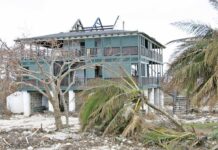
His reaction to the dramatic scenes all around Grand Cayman was one of shock, particularly at the extent of the damage, the impact of the flooding as well as the wind and rain, and the loss of familiar landmarks.
Dinwiddy, who began his career as a junior economist for the Swaziland government and later joined the UK Foreign and Commonwealth Office in 1973, served overseas postings in Vienna, Cairo, Bonn, Ottawa and Dar es Salaam, but had never encountered the destruction of a hurricane before.
“I experienced some other spectacular, but much shorter storms (with torrential rain and/or massive thunder and lightning) in Mozambique, while I was working in Swaziland, and in Tanzania, but nothing remotely as devastating as Ivan,” he said.
Although the Governor’s Office did not lead the recovery efforts, its staff was much involved with security and other issues not constitutionally devolved to the elected (Cayman Islands) government, and in liaising with the UK government in London. And as well as overseeing the recovery committee, Dinwiddy chaired frequent meetings of the board of trustees of the Cayman Islands National Recovery Fund.
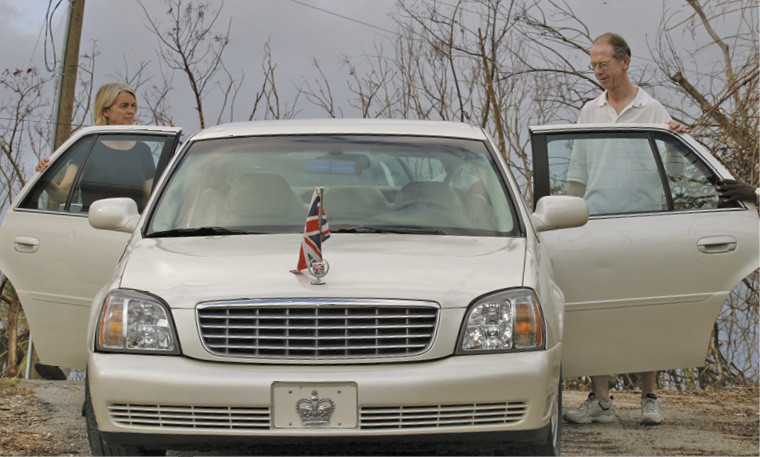
Help from the UK
The UK government sent a planeload of emergency supplies, including tarpaulins, which arrived on Wednesday, 15 Sept. and were distributed by the National Hurricane Committee.
“H.M.S. Richmond, a Royal Navy frigate, had earlier reached Cayman waters after following Ivan across the Caribbean from Grenada (also hit by the storm), where it had given vital support to the government and people there,” said Dinwiddy.
“When the waves around Grand Cayman subsided, H.M.S. Richmond and her Royal Fleet Auxiliary support ship provided valuable practical assistance, including with security, before leaving to resupply.
“Several UK experts, including Larry Covington, the UK government’s law-enforcement adviser for the British Overseas Territories, and Frank Savage, former governor of Montserrat and of the British Virgin Islands, also gave invaluable help.”
And while the UK government did not contribute financial aid as such, it did give support. For example, it helped with the transport costs of emergency police reinforcements from Bermuda, the British Virgin Islands and Turks and Caicos, and flew in 35 members of the Bermuda Regiment to assist with the cleanup.
Aspects of the recovery remained a major preoccupation of Dinwiddy’s remaining time in Cayman.
Impressed at recovery
After leaving in 2005, he did not return to the island for four years, until 2009 when he attended a conference organised by the UK Overseas Territories Conservation Forum and hosted by the Cayman Islands Department of Environment and the National Trust for the Cayman Islands. Cayman’s comeback in those intervening years greatly impressed Dinwiddy.
“Apart from the rebuilding and new construction, I was particularly pleased to see the recovery of the natural vegetation,” he said. “More generally, it is a great tribute to all the people of Cayman that the economy, including tourism as well as the financial sector, recovered so well after the storm.”
Dinwiddy’s most memorable moment of the storm was at the fire station, praying in a circle with members of the National Hurricane Committee and George McCarthy, who was Cayman’s financial secretary at the time.
“Looking back, it was a great privilege to share in the experience of Ivan and to see how the people of Cayman responded together to the colossal challenges they faced during and after the storm,” he said.
Related Videos





I first met George McCarthy in April 1969 as we both started work at Scotiatrust on the same day!. He was very friendly and very talented, but he did not stay long as he was clearly destined for much higher office. I still see him from time to time usually at the supermarket, and he always stops to say hello.