

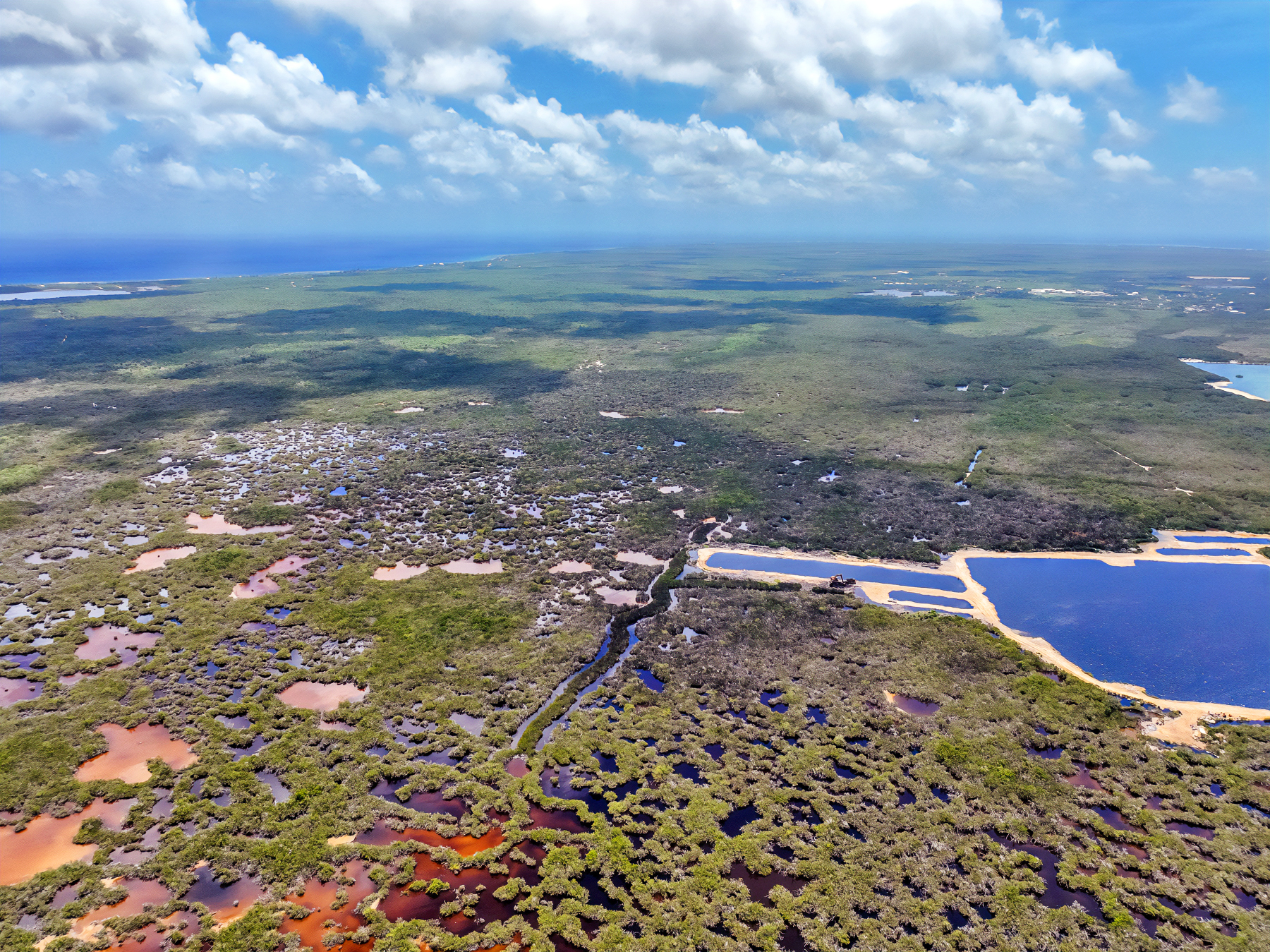
North Siders and East Enders have called for government to opt for the cheapest version of the proposed East-West Arterial extension to be implemented so the road can be built as soon as possible, without a US$1 billion price tag for the islands.
At a public meeting to discuss the recently released draft environmental statement about the project, residents decried the expensive option as unnecessary, calling instead for a less costly alternative that did not include several concrete structures and a road elevated as high as 20 feet, as suggested in the document.
Ezzard Miller and Arden McLean, former elected representatives of North Side and East End, respectively, accused the consultants and the National Roads Authority, as well as the media, of highlighting the US$1 billion (CI$898.99 million) cost of the project over 50 years in a bid to stymie the project.
They suggested that the cost-prohibitive price tag outlined in the environmental statement would lead to the road not being built.
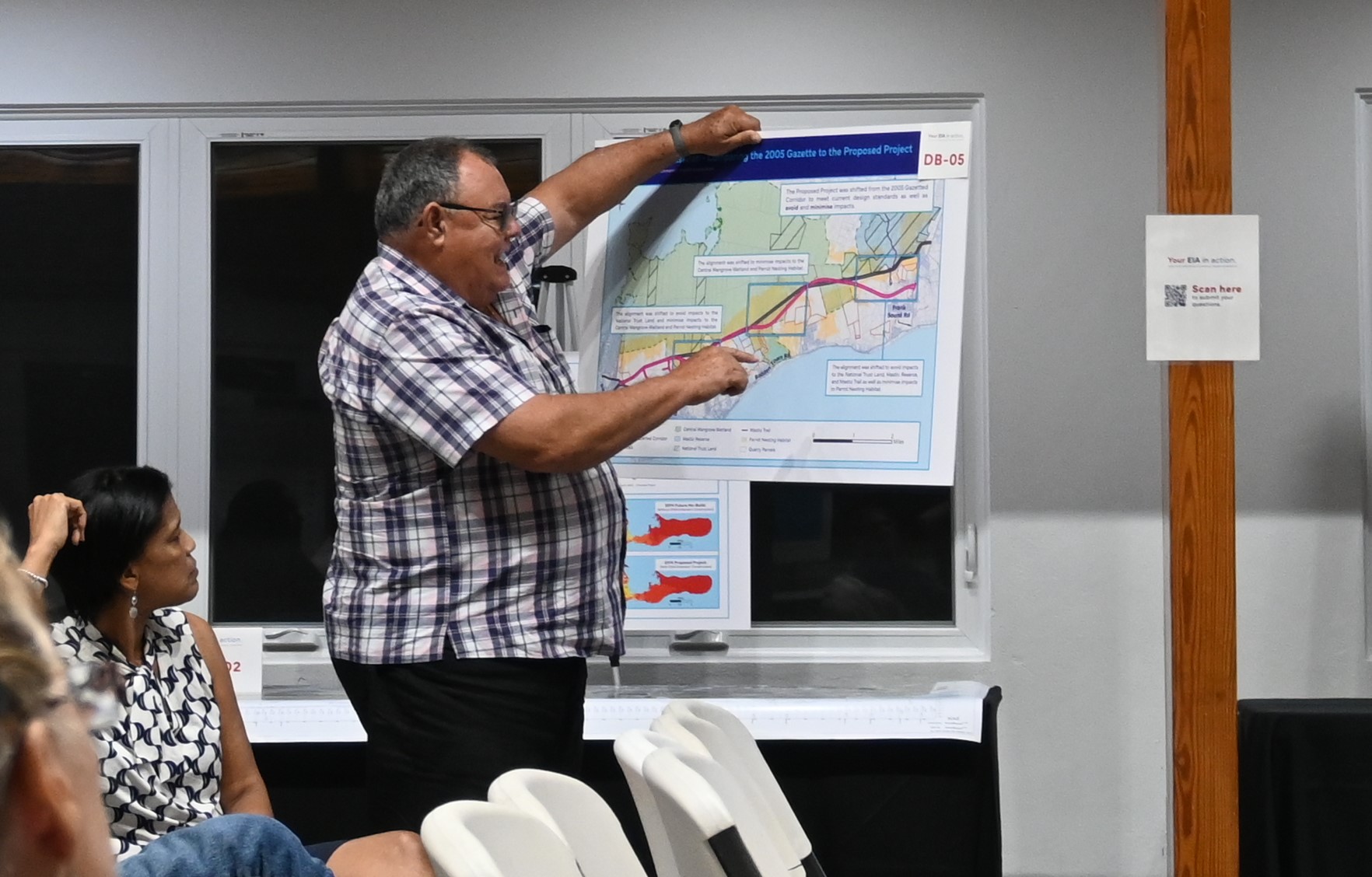
“Everybody’s telling me we can’t build this road because it’ll cost $1 billion over 50 years … I couldn’t just support a road that costs $1 billion,” he said, pointing out that the cost of the Esterley Tibbetts extension to West Bay several years ago was much less than the proposed cost for the East-West Arterial extension.
He urged the government, “Build the road, the same way you built the one going to West Bay.”
Lindsey Ulizio, senior project engineer at US-based consultancy company Whitman, Requardt and Associates, which compiled the report for the National Roads Authority, responded, “This EIA process took a conservative, worst-case scenario approach to meet the critical success factors we established at the beginning of the project, one of which would be to provide a fully resilient corridor for more moderate storm events.
“However … from the full, most conservative approach, there is the option of doing additional cost-reduction savings.”
40-60% cheaper option
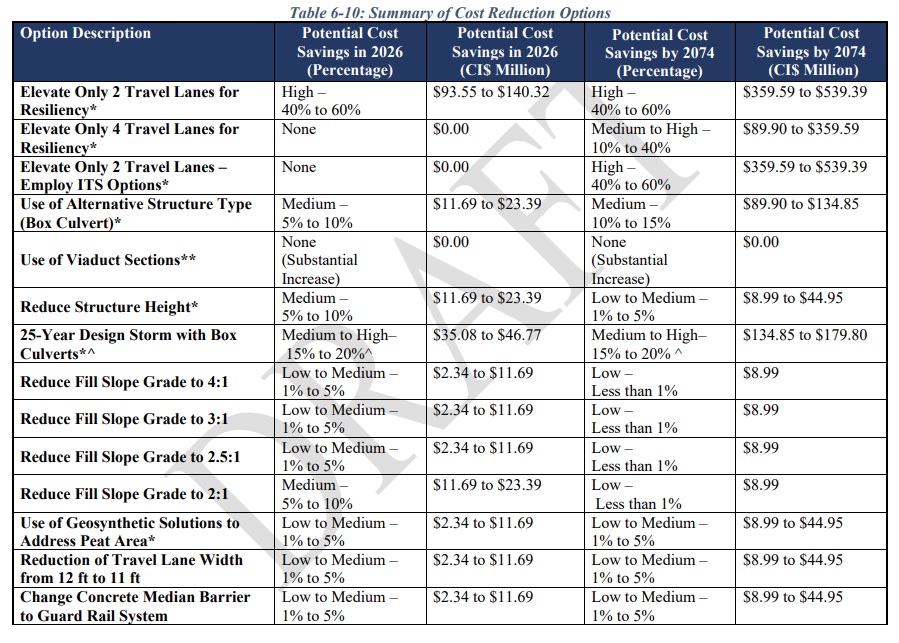
The cheapest version of the road considered by the consultants would cost 40-60% less than the most expensive model, potentially bringing the price of the road down to as low as $359.6 million over 50 years. That option would require more maintenance and repairs by the National Roads Authority following storms, the consultants said.
Asked why they had used the most expensive model to highlight in their report and presentation, the consultants said they had used the version with the highest resilience against storms, including a 50-year storm event.
Brent Barrett, another engineer with the consultancy firm, described how it was anticipated that nine intersections would allow access to the south of the road, which would be introduced in the 2026 design, with an additional six intersections for access along the northern part of the corridor being introduced in 2036 and later.
This most expensive option includes all lanes built to an elevation of 15-20 feet, which, Barrett said, provided a “fully resilient corridor for more moderate storms” and would enable the quickest recovery and lowest maintenance following storms. That option, Barrett said, also reflected “the highest assumed levels of impact to the natural environment”.
In that version, the initial cost of the build-out of the two sections of the extended road, expected to begin in 2026, was estimated to be almost CI$120 million for the first section and nearly CI$114 million for the next section.
Another option – considered a “good fit” in the environmental statement – was a road with all lanes at an elevation of 10-15 feet, which would offer a 15-20% potential saving on the cost of building and maintaining the extension.
A third option – called an “acceptable fit” and which would knock 40-60% off the potential cost – involves having only two lanes fully elevated to 15-20 feet in the ultimate build-out, with all other lanes at 3-5 feet elevation.
Barrett said there were options that could “streamline and reduce the cost”.
Cutting down on congestion
He also told the meeting’s attendees that the new road would help distribute employment to the eastern districts, which, in itself, would help reduce congestion, as fewer people would be travelling during rush hours to and from George Town.
Miller, in his comments at the meeting, also suggested that, to reduce traffic jams, the only people who should be allowed to have driver’s licences in Cayman are those who are at least second or third generation Caymanian.
Other attendees questioned why the consultants had used such extreme “worst case scenarios” when drawing up their plans, stating the type of storm that would bring flooding and sea surge to a road elevated to 20 feet would have been so destructive that it would wipe out the island.
“No planning on Earth can control that storm,” McLean said.
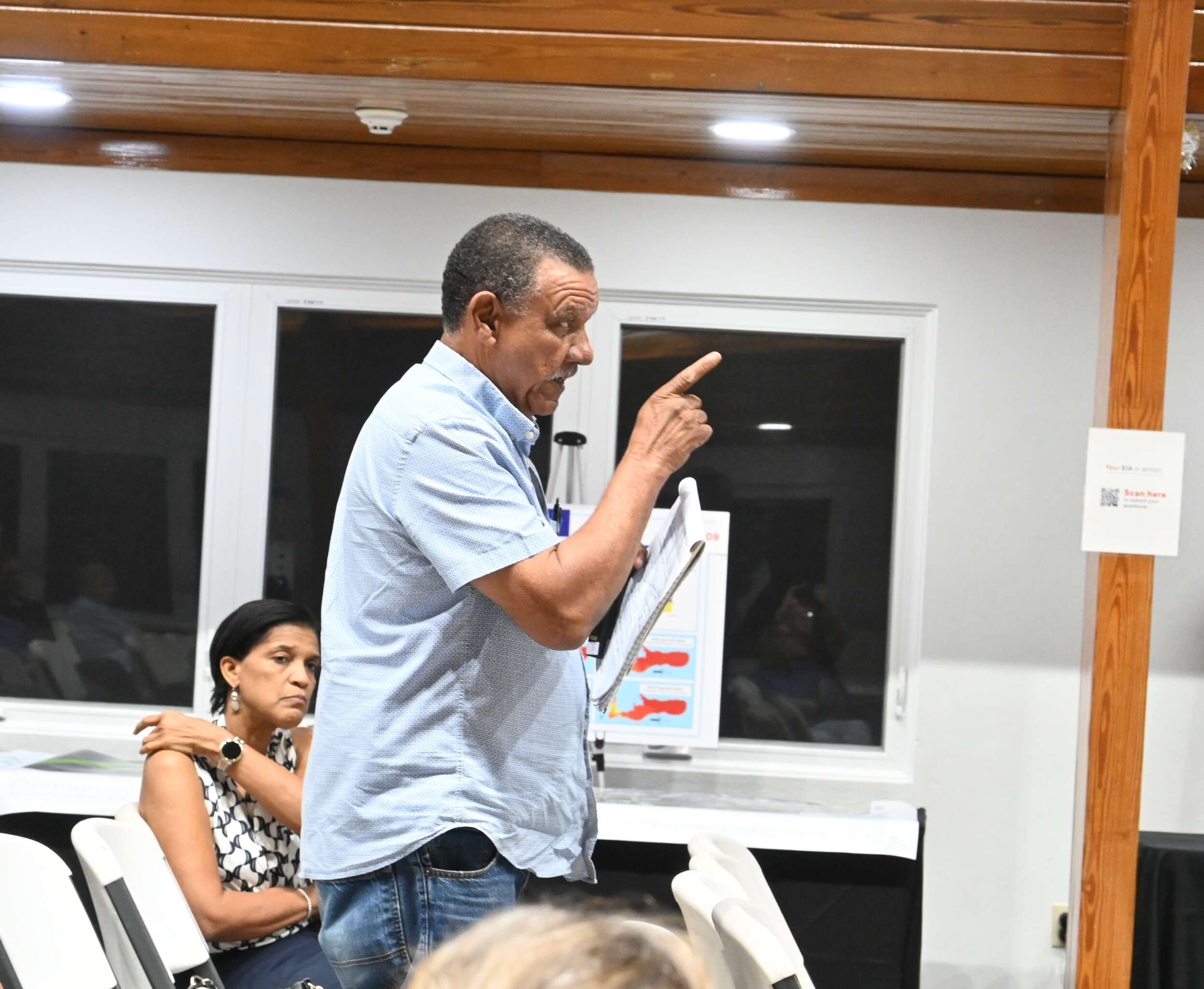
McLean was the minister responsible for roads when an extension to the road was gazetted in 2005. That extension was never built. He told the audience if the 2008 economic crisis had not occurred, the road would have been completed.
Two sections of the planned extension are subject to an environmental impact assessment — which is currently under way — under the requirements of the National Conservation Act, which was passed by government in 2013.
The first section of the road, extending from Hirst Road to Woodland Drive, is not subject to an EIA. The second section, from Woodland Drive to Lookout Gardens, and the third, from Lookout Gardens to Frank Sound Road, covers a distance of about eight miles.
Four options for the new extension were considered, and Cabinet opted in August last year to go with what is known as Route B3.
Melanie Carmichael, from environmental advocacy group Sustainable Cayman, speaking at the meeting, noted that the Environmental Assessment Board, which advises on EIAs, had recommended a different option, the shorter B2 route, as costing less and having less impact on the natural environment.
She asked the consultants if it was normal for Cabinet not to take on board the recommendations of experts from such a board, which the consultants declined to answer because of its political nature. Her question led to heated responses from the former elected members at the meeting.
Public consultation
A second public meeting to discuss the environmental statement will be held on Thursday night, 23 Jan., at the Bodden Town Church of God on Shamrock Road, across from Rankin’s Jerk Stand, at 6-9pm.
The public consultation will close on 3 Feb.
Comments on the draft environmental statement can be submitted:
- In writing during the public meetings – comment sheets will be provided.
- Electronically via e-mail to [email protected]
- By mail to the Department of Environment, P.O. Box 10202, Grand Cayman KY1-1002, or
- By hand, in writing, to the Department of Environment, Environmental Centre, 580 North Sound Road, George Town, Grand Cayman.
Related Videos








Only second or third generation Caymanians allowed a driving licence now? What is this becoming?
A police state?
What a suggestion, Mr Miller!
What about only allowing those with a BMI less than 24?
How would you feel about that?
Its about time these two gentlemen place their input on this disastrous project. I still don’t understand this statement “ the new road would help distribute employment to the eastern districts, which, in itself, would help reduce congestion, as fewer people would be travelling during rush hours to and from George Town” if government offices or the private sectors have no presence in the districts, wouldn’t the employee still have to go to town and again bottle neck at Hurleys?
I hope they’re smart enough to lay streetcar tracks down the middle. Every major city in Europe and North America has them. They are a very efficient and inexpensive mode of transportation and would alleviate the traffic congestion problem we have.
I agree with my people from Savannah to the outer eastern districts. This roadway (dual lanes each direction) needs to be built at the cheaper cost option, ASAP!
Ezzard Miller displaying his usual xenophobia:
“Miller, in his comments at the meeting, also suggested that, to reduce traffic jams, the only people who should be allowed to have driver’s licences in Cayman are those who are at least second or third generation Caymanian.”
That will certainly reduce traffic jams as the population would shrink from 70,000 to about 30,000 and the tourist and financial industry would collapse.
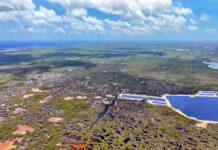
What’s that massive lake in the photo? – I thought dredging for fill was banned some time ago.This must have had a considerable adverse effect on the local environment,