

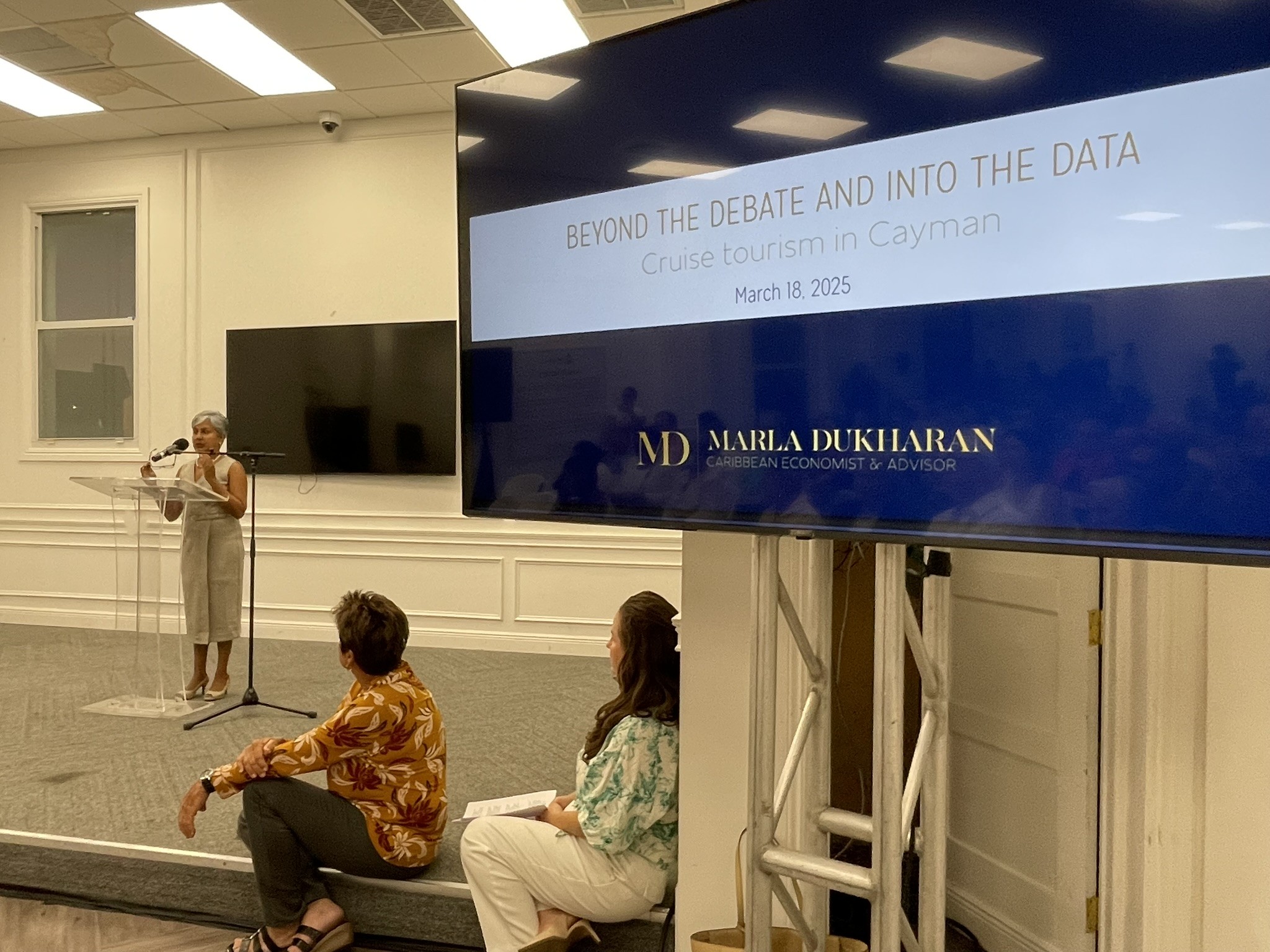
Campaigners against a cruise berth received a boost on Tuesday, 18 March, with a new report by economist Marla Dukharan on the issues surrounding the upcoming referendum.
Dukharan, who launched her report ‘Cruise Tourism in Cayman‘ during a community rally held on Tuesday night by campaign group CPR Cayman, concluded that the development of cruise berthing infrastructure in Cayman is “unnecessary”, that it would not necessarily reverse the decline in cruise passenger numbers, and that she would discourage any such project if it involved financial outlay or obligation.
CPR Cayman’s event at Constitution Hall in George Town was the first time the group had held a public meeting since the referendum was approved by Parliament at the end of last year, and followed several similar public meetings held by the pro-berth group, Advancement of Cruise Tourism.
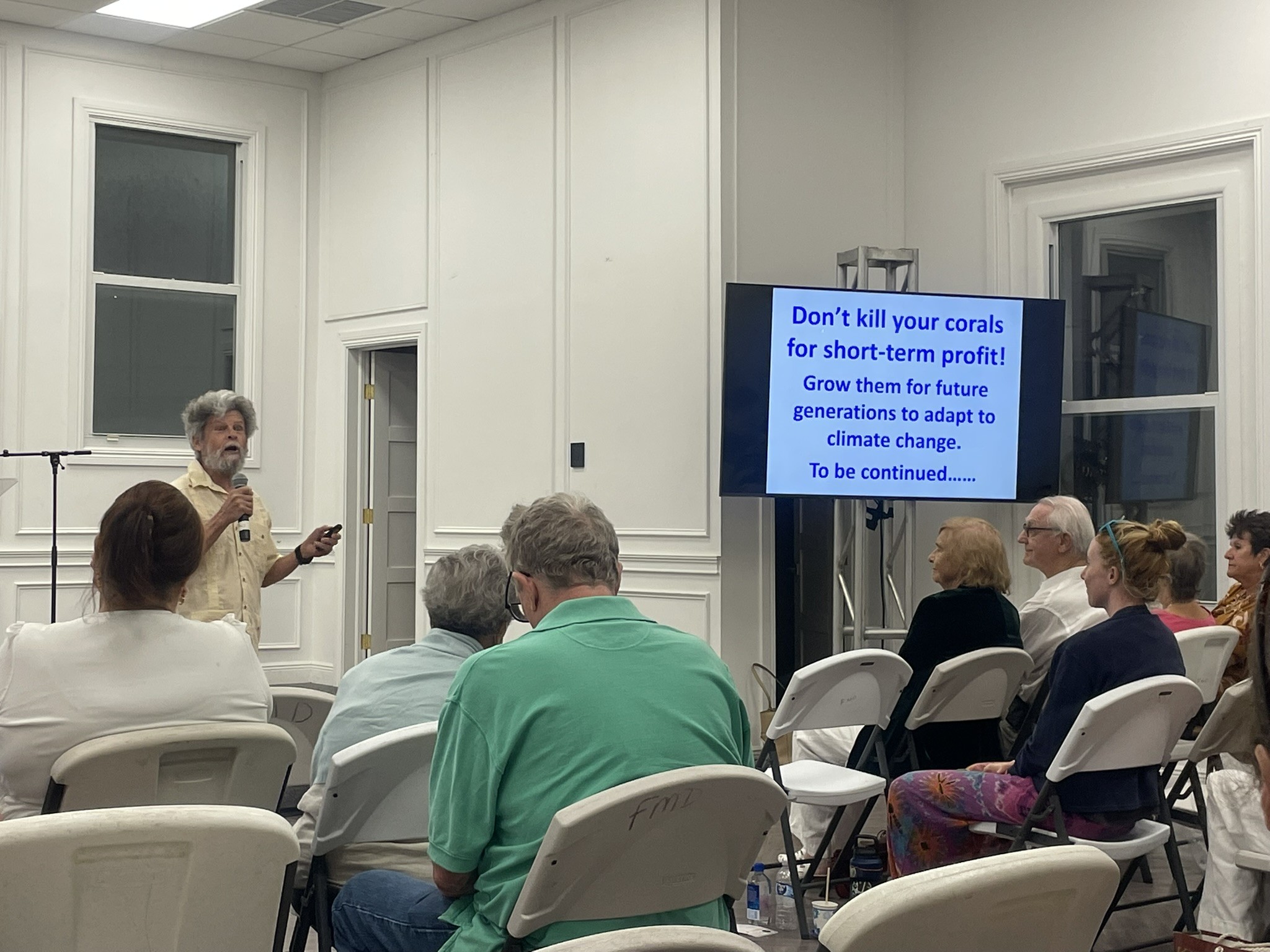
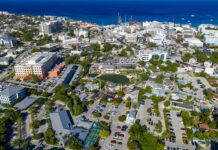
The event was introduced by CPR Cayman’s Michelle Lockwood and Shirley Roulstone, both of whom were instrumental in the battle over the referendum in 2019. Other speakers at the event were Courtney Platt, whose photos showed the current state of marine life in George Town harbour, and Tom Goreau of the Global Coral Reef Alliance, who demonstrated the impact of cruise ship tourism on coral reefs around the Caribbean according to his extensive personal experience.
Before introducing the speakers, Lockwood said that people were free to make up their own minds about the issue, but they wanted to hold the event to look at the environmental and economic impact of a cruise berth.
“I want you to imagine that we have a beautiful home that comfortably fits 15 people in for a party, but it then gets out of hand, and now you have 40, 50 people there,” she said. “At what point do we realise that the party has gotten beyond what we can comfortably cope with?”
“We’re not anti-cruise tourism,” Lockwood added. “We are for quality tourism, and we think that can be achieved.”
Sensitive topic
In her report, Dukharan said that the topic of cruise tourism was a particularly sensitive one, saying it has been “heavily politicised and weaponised to polarise in the Cayman Islands, which is both unfortunate and unnecessary”.
She said that she intended her report, which was based on her own independent research and not commissioned or financed by CPR Cayman, to show a “dispassionate analysis of the relevant data and information available and the conclusions that have emerged naturally from the research conducted”.
“Any yes or no answer would, by no means, represent an informed decision in response to a clear question, as demonstrated by the many unknowns,” she said.
“One could only hope that many questions surrounding the possible development of cruise berthing infrastructure would have to be answered before any such project breaks ground.”
Using data from the Business Research and Economic Advisors (BREA) 2024 report, which looked at the economic contribution of cruise tourism, she said that the outlook for cruise in the Caribbean overall was not encouraging, with steady declines in global cruise share, cruise disembarkation rates and spend, and cruise passenger surveys showing that they would be unlikely to return for a resort vacation, contrary to anecdotal reports.
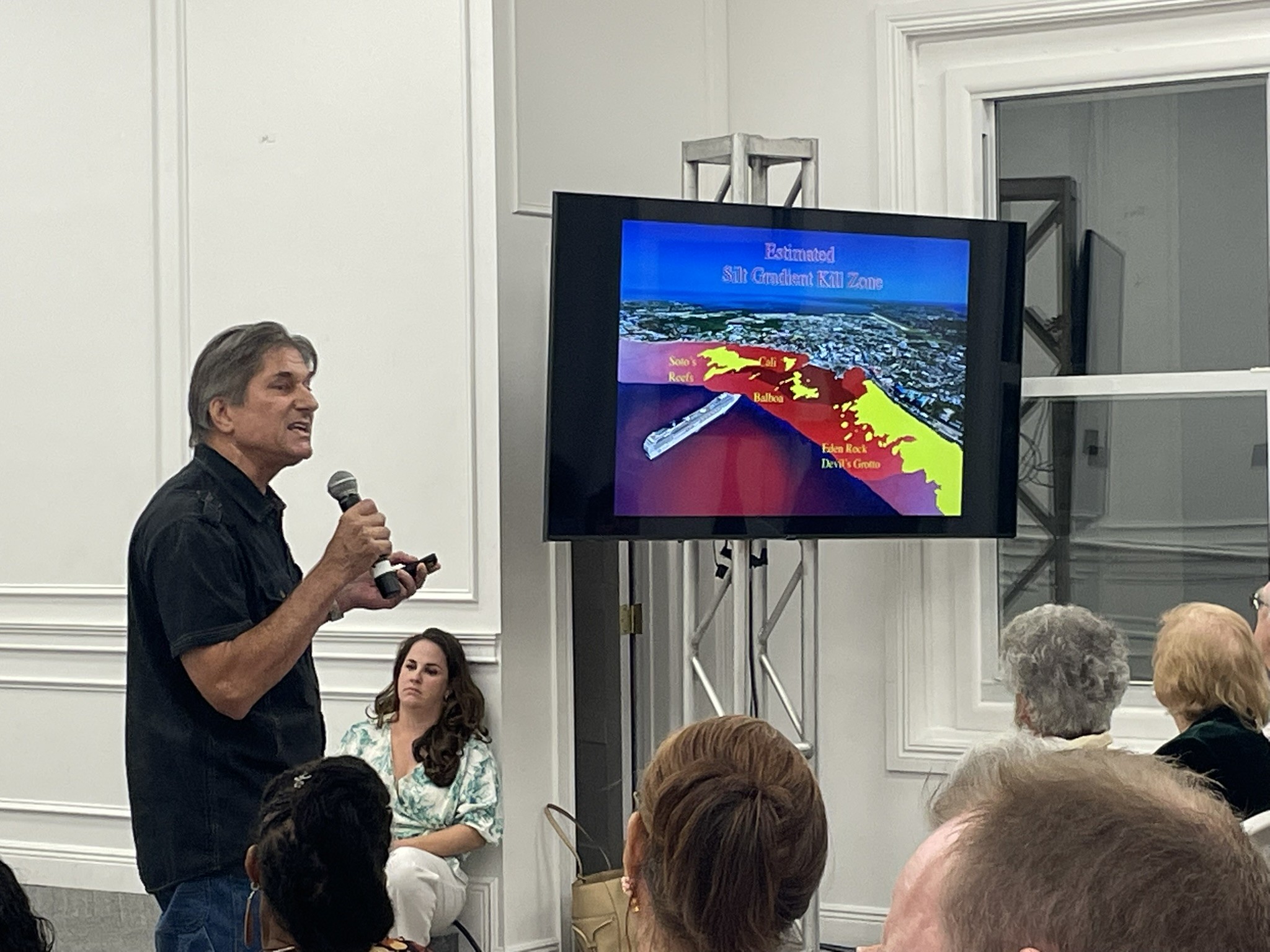
She suggested that cruise tourism, rather than leading to stayover visits, might actually deter longer stays, due to overcrowding and the damage done to reefs and marine life, which are popular tourist draws.
“Any decision to invest further in the cruise sector in the Caribbean — whether taxpayer money or otherwise — must recognise the trade-offs for the [marine] environment, stopovers and residents in the first place, and be substantiated by an independent and objective socio-economic impact survey, rather than reports highlighting all the benefits of cruise, while ignoring the costs,” she said.
Cruise berthing ‘not a panacea’ against falling numbers
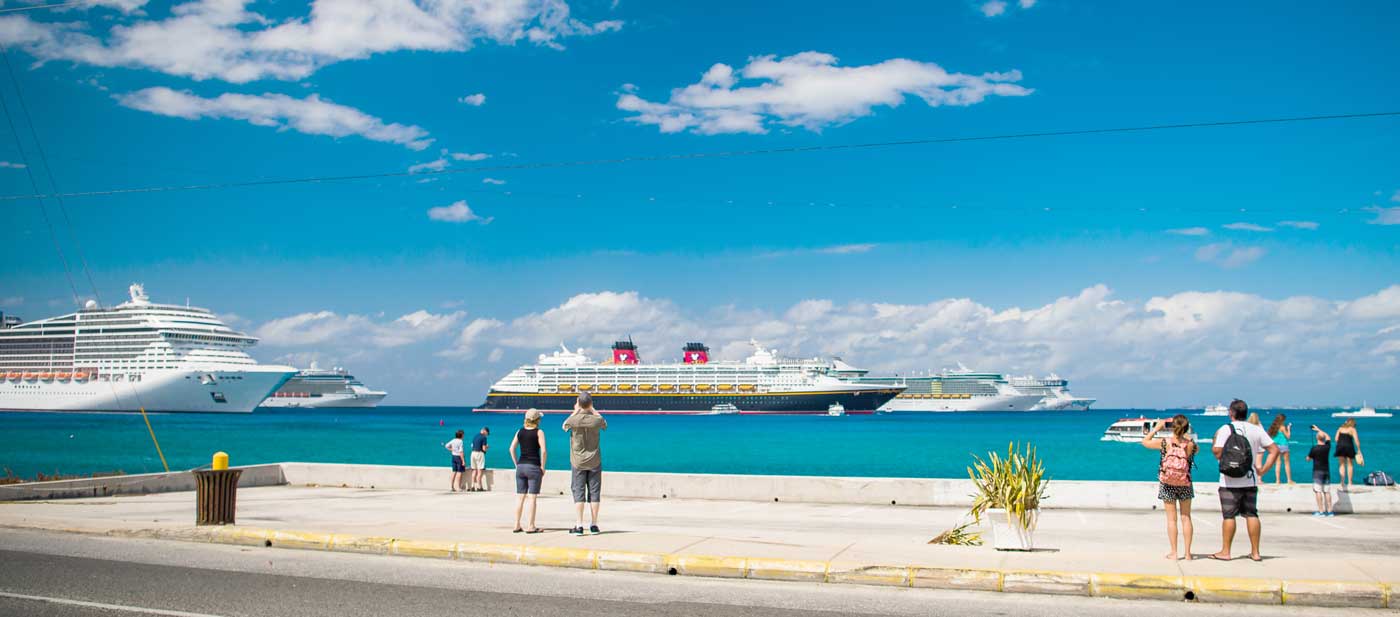
On the issue of having a cruise berth versus using tender boats, Dukharan noted that neither Cayman nor Belize have cruise berth infrastructure, but they have two of the highest disembarkation rates in the Caribbean, while the Bahamas has a huge amount of cruise port infrastructure but the lowest disembarkation rate in the Caribbean.
She also noted that nearly three-fifths of Caribbean ports experiencing declining cruise arrivals already have cruise piers, which can accommodate the ‘mega’ cruise ships, including St. Maarten, Jamaica and Cozumel, so building a cruise berth would not necessarily reverse the decline.
“Building cruise ship piers and more specifically those that accommodate larger-class vessels is not a panacea against declining cruise arrival and does not guarantee higher cruise arrivals,” she said.
On the subject of jobs supported by the cruise sector, she pointed out that problems in education are compounding the inequality problem in Cayman, and that expanding the number of low-paid jobs in the cruise industry would do nothing to help balance the situation.
Looking at the bigger picture, Dukharan said that there were arguably more pressing issues for the Cayman Islands to deal with, including the landfill site, beach erosion, the cargo port, pensions and the growing national debt, adding, “I would argue that the government of the Cayman Islands can ill-afford to cover any financial or human capital costs associated with the development of any cruise berthing infrastructure in the Cayman Islands.”
Cayman Islands voters will take to the polls on Election Day, 30 April, to decide whether Grand Cayman should have cruise berthing infrastructure, in one of three referendums which will be held that day.
Related Videos


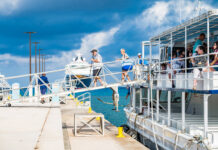








At present getting back on the ship is such a hassle that cruise passengers tend to eat lunch on island.
If they could just walk back onto the ship, where they can eat for free, most of the passengers will do so.
This is particularly true for the large Carnival type ships that appeal to families on a low budget.
I agree with everything in this article. Focus on residents and stay over visitors. The people that return to Cayman don’t want to be anywhere near the thousands of people when there are several cruise ships in port. Keeping the stay over visitors coming back is very important, not those that visit for less than a day.
Unless I misread the article, it seems that the economist more than “questions the necessity” of building berthing for cruise ships; she clearly intimates that it is a bad idea. Perhaps those who push the idea of the panacea of building cruise berths should remember that ideas have consequences, and bad ideas have victims. Cayman has already been victimised by bad ideas; we don’t need any more.
“nearly three-fifths of Caribbean ports experiencing declining cruise arrivals already have cruise piers, which can accommodate the ‘mega’ cruise ships, including St. Maarten, Jamaica and Cozumel, so building a cruise berth would not necessarily reverse the decline.” This effectively kills the one and only argument Minister Bryan says why Cayman should build a berth – to stop the decline of cruise tourism. It is going to decline whether a berth is built or not, so save money and the environment and do not vote in favor a cruise berth.