

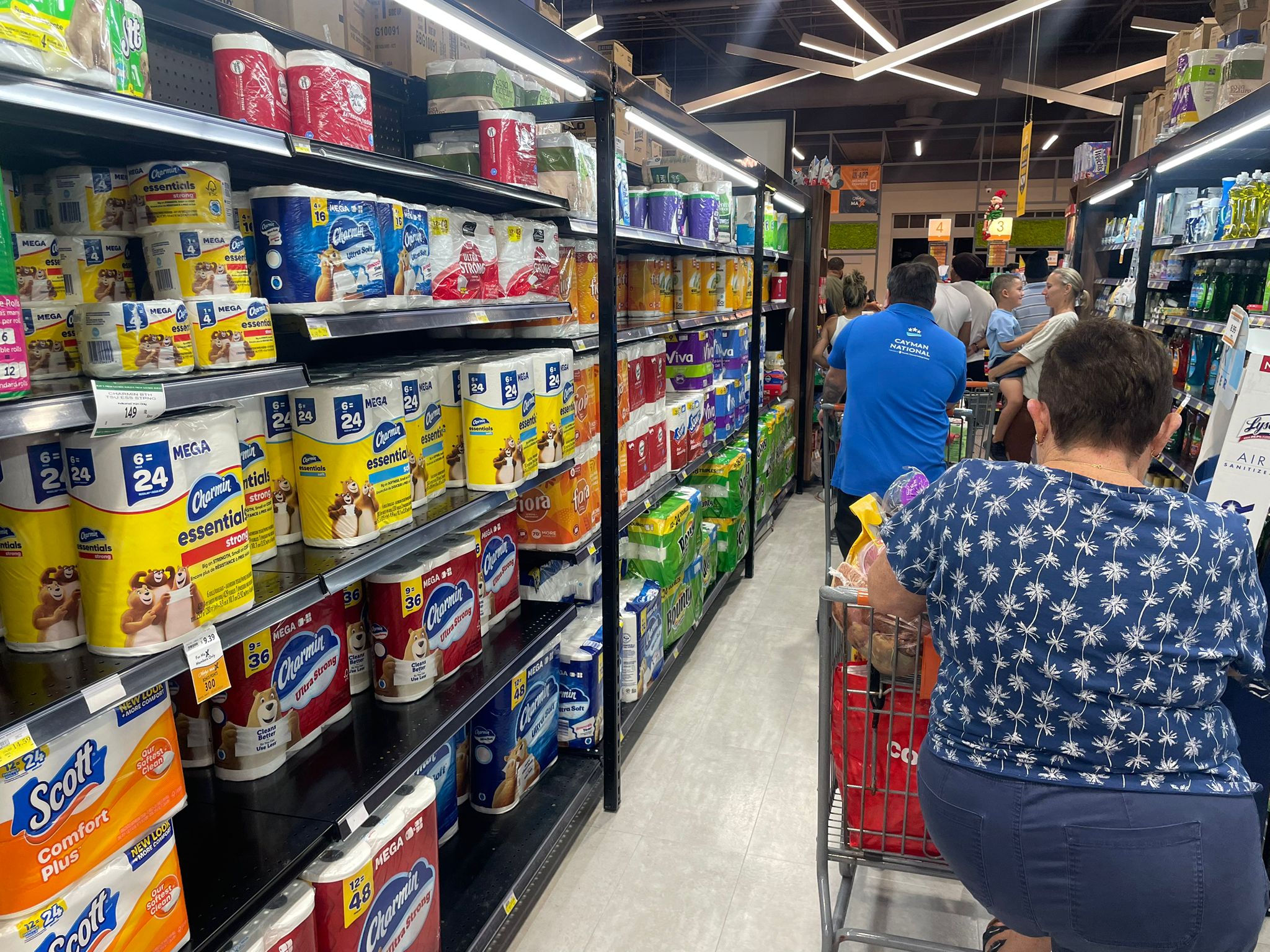
Cayman Islands residents spend an average of just over $36,000 a year on everything from rent and groceries to vacations, healthcare and entertainment, according to a newly published survey.
By far the biggest increase in spending was on groceries and health care, the data suggests.
Over a 12-month period leading up to January 2024, government statisticians surveyed 2,400 families on their spending patterns.
Participants were asked to record their expenses in a ‘memory jogger’ notebook and answer questions on their family budgets.
The data helps paint a picture of the key factors driving up cost of living in Cayman as well as where we are spending our cash on leisure.
10 key findings from the household budget survey
1. Cayman residents spent more than $3 billion collectively
The survey results suggest Cayman residents collectively spent more than $3 billion in 2023 – almost double the figure for the last time the survey was carried out in 2015. While population increase was a key driver of net spending, the per-person expenditure has also increased.
The survey calculates that the ‘average Cayman resident’ spends around $36,400 each year, reflecting an increase of 3.4% per year since 2015. The key drivers of this increase were healthcare costs and groceries.
2. Rent and bills represents a third of people’s spending
Housing is unsurprisingly, by far the biggest line item for Cayman families. A third of all income goes to rent or mortgage, and to utilities bills for electricity, gas and water. That looks relatively low at $12,000 a year but encapsulates a wide spread of situations, including mortgage-free homeowners and people living in shared rental accommodation.
Housing and utilities remain the biggest budget challenge, but they have not – at least based on the numbers in this survey – increased at the same rate as healthcare or food, for example.
3. Grocery spending has surged
Collectively Cayman families spent more than $300 million on food and drink (excluding alcohol and meals at restaurants) over the course of the year. That’s almost double the amount compared with 2015. While some of that increase can be attributed to the growth in population, much of it has come from price inflation, particularly on meat and cereals.
4. We are spending more at restaurants
Cayman residents spent $230 million at restaurants and cafes in 2023 – almost double the 2015 figure. Eating out also made up a greater share of the average household expenditure. This figure is likely buffered by the emergence of app-based delivery services like Let’s Eat and Bento, which helped restaurants survive during the pandemic and have gone on to become major businesses on the island.

5. More devices, lower data costs
The advance of technology continues to create new costs for Cayman residents. But while spending on ‘information and technology’ equipment – cellphones, laptops, digital notebooks and tablets – rose significantly, spending on services such as broadband and data shows only a modest per person increase.
Cayman’s broadband costs remain among the highest in the world, but both globally and locally, improving technology has helped make faster packages available and the cost is generally split between the household.
6. Healthcare costs a growing challenge
Cayman residents now spend more than double per person on health compared to 2015. Health has gone from a relatively minor household cost to one of the fastest-rising pressures on family budgets.
That is largely driven by increased spending on outpatient services – trips to doctors or physiotherapists – and medicines. The report doesn’t analyse the underlying factors but rising instances of chronic diseases, an ageing population and inflation linked to US pricing on medicines and technologies are among the likely factors, based on previous Compass reporting.
7. Are we becoming more abstemious?
Rock band Oasis – back in the news right now on their world reunion tour – once wrote, “All I need are cigarettes and alcohol.” But in Cayman that’s not the case. Expenditure on alcohol and cigarettes increased only marginally over the past eight years, despite a surging population. And the amount we spend on these vices as a portion of family budgets has actually gone down to become the lowest share of all the categories examined.
8. Insurance bills are climbing
The rising cost of insurance – a headache for many families over the past few years – is laid out in black and white in the stats. We are now spending around 7% of our family budgets on insurance and financial services. This was not even a line item in the 2015 report, reflecting its growing significance to expenditures.
As the Compass reported in 2023, home insurance premiums jumped by as much as 40% and in some condo complexes, nearly double because reinsurers are charging much higher rates after repeated hurricane seasons hit hard in the region.

Other natural disasters seemingly unrelated to Cayman, like wildfires in the US and Canada, have also had an influence because of the impact on the re-insurance market.
In Florida, insurers have withdrawn from high-risk markets or hiked rates significantly, driven by escalating hurricane losses and unaffordable reinsurance costs – a trend worth watching for Cayman.
9. We are spending less on leisure and more on our homes
The report hints at a broader shift in how Cayman residents spend their spare cash.
Spending on recreation and vacations is down significantly as a portion of spending, while home furnishings, digital devices and eating out are all up.
Again, the report doesn’t get into the details, but overall decreases in discretionary spending suggest some belt tightening in the face of inflation on food and rent.
A reallocation of expenses towards home comforts and digital connectivity is in line with pandemic-era trends of working from home. Restaurant expenditure is an outlier, in that sense, but the growth in spending on this sector could be linked to the emergence of restaurant delivery services and to the underlying inflation on food.
10. Essentials versus leisure spending
Along with housing and bills, food is the main non-negotiable monthly expense and the one over which families have the least control.
The survey found that lower-income families were spending a much larger slice of their budget (17%) on food, leaving less room for leisure and recreation spending. Wealthier families spent more on food in real terms but a far smaller fraction of their overall budget (6.7%). That is to be expected, but in the wake of massive inflation on food over the past several years, it has led to calls for shifts to the duty regime to lessen the burden on the least well off.
Related Videos













Cayman is getting so hard to afford. 100k feels like the new 40k.
Some of our merchants can do a lot more towards lowering the cost of living.
I’ve already seen Trump’s tarriffs effects in a local supermarket, notably in vegetables, but possibly across the board. There will always be international factors which impact our cost of living in Cayman, it’s often uncontrollable.
What is controllable is the amount of gouge, sorry, profit that merchants make. In many cases, merchants could manage with a certain markup to cover all costs plus some profit. Volume transactions would make their banker happy. But some merchants add a ‘greed factor’ to their profit, just because they can.
If they would consider the larger picture and use “Chinese logic” – smaller profits, larger volume – they would do more to soften the effects of our high costs of living.