

A new study ranks Cayman as the world’s second-most expensive jurisdiction, yet finds costs are mitigated by high local purchasing power.
The Cost of Living Index by Country 2026 is published by Numbeo, the world’s largest living cost database. Although it’s not an academic study and may contain inaccuracies, it claims to have almost 850,000 people around the world contributing data to the crowdsource model, which means it gives an interesting global perspective to ongoing concerns about costs in Cayman.
Cayman’s overall score is 115.6, is sandwiched between top-ranked Bermuda on 135.8 and the US Virgin Islands on 111.3. All of the top nine countries have small populations under one million, while most are islands or financial centres.
The index uses New York City prices as a base level for comparison at 100. So Cayman’s score of 115.6 means that Cayman’s overall cost of living is judged to be 15.6% higher than in New York. But a more relevant comparison is to see how Cayman compares to other Caribbean jurisdictions and international financial centres.
Comparing Cayman with other places
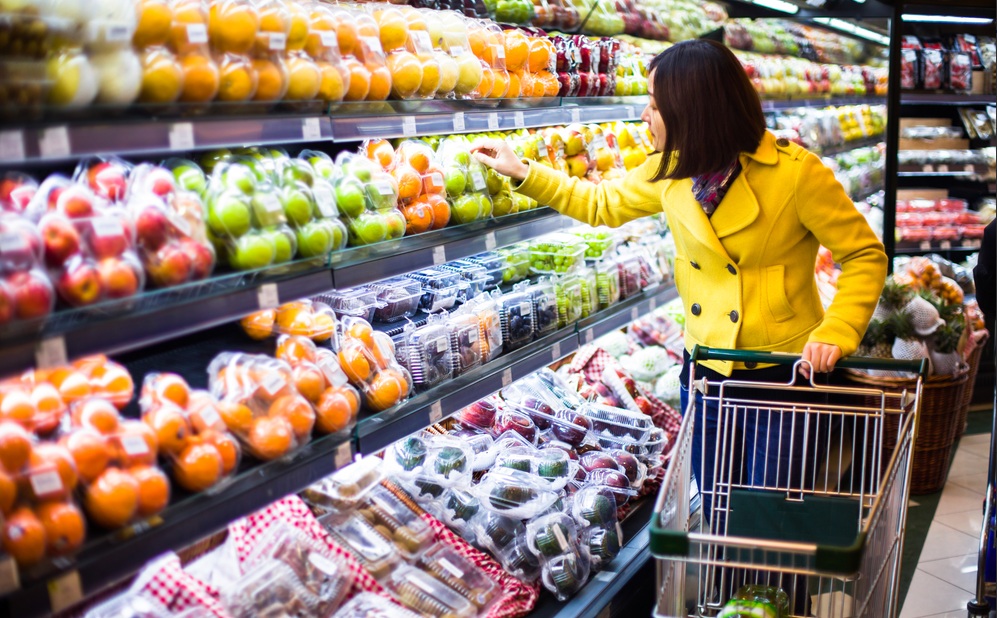
Cayman had more expensive rent than the likes of Singapore, Hong Kong, Gibraltar, Guernsey, Jersey, Switzerland and the Bahamas. Cayman’s grocery cost was third highest, only below Bermuda and the US Virgin Islands. Yet it did marginally better with restaurant prices, with eateries in Jersey, the Bahamas, Switzerland and Bermuda all ranked as more costly.
Commenting on the index, Simon Cawdery, a director at HLX Management, said: “It’s an interesting set of data and just highlights why government should not get bogged down in needless committees, needless working groups and drawn out ‘evaluations’ and just get on with cutting the costs of import duty on healthy fruits and vegetables and raising the import duty on unhealthy, fatty and sugary products, both to cut the cost of groceries and the cost of living as well as benefit the entire country’s health system.
Local economist Julian Morris added: “I don’t think the cost of basic goods has risen much in real terms – it has always been expensive to import goods to Cayman, as with any island economy.
“The cost of land has risen, especially in the Seven Mile area, and in combination with severe restrictions on development that is driving up the cost of housing.”
Numbeo’s data also showed that Cayman’s high costs were mitigated by its relatively ‘local purchasing power index’. A score of 149.6 means that people earning an average salary in Cayman are able to buy 49.6% more local goods and services than someone earning the average wage in New York City. Cayman’s local purchasing power index was the highest in the Caribbean and seventh highest globally.
“The economy is far more diverse than it was even 30 years ago, which creates more opportunities for more people,” said Morris
It is difficult to obtain an accurate comparison of living costs in different jurisdictions because there are myriad factors, such as exchange rates, average salaries and government policies, that need to be taken into account. For example, Norway is the 10th most expensive country on the Numbeo list, yet part of that cost comes from high levels of taxation that is used to provide public health and education services.
“The comparisons are a bit misleading because they are averages,” said Morris. “Cayman is on average considerably more expensive than ‘the U.S.’ but it is not much more expensive than, say, New York City. Meanwhile, if you are on the average salary in Cayman, then you can probably afford more than a person on the average salary in NYC. But if you are on a low income in Cayman, you may really struggle.”
Related Videos













Hong Kong is more expensive to rent or buy an EQUIVALENT property than Grand Cayman. So is New York.
A 2,000 sq.ft. condo on SMB, the most expensive area in Grand Cayman, costs, say, $5 million.
A 2,000 sq.ft. condo on the Peak on Hong Kong island would be at least $10 million.
Put that 2,000 sq.ft. condo in Manhattan and it would be a smilar price.
I wonder if “local economist” Julian Morris does his own grocery shopping??
Prices seem to increase on every supermarket visit, especially on vegetables. Don’t kid yourself, Mr. Morris, international supply chain costs have increased post-Covid and even more since Trump’s recent trade war, and local wholesalers and retailers have passed them on.