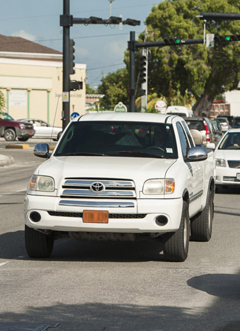
Police will make a sustained effort over the next few weeks to lighten things up when it comes to vehicles with illegally tinted windows.
“Over the coming weeks, officers will be focusing their attention on those motorists who circumvent the Traffic Law and its regulations by removing tint from their vehicles prior to inspection and reapplying new tint after inspection,” Royal Cayman Islands Chief Inspector Angelique Howell said Wednesday.
Police started Friday with an island-wide crackdown that resulted in the prosecution of 17 drivers with illegally darkened windows.
RCIPS officers have long associated tinted windows in vehicles with illegal activity, but until recently they weren’t allowed to write tickets for those offenses.
In 2011, the Royal Cayman Islands Police Service issued one citation for windows with dark tint, according to records revealed under an open records request. In 2012 that number went up to 89, and in 2013 more than 140 tickets were handed out for tinted windows, according to police records.
“We are all acutely aware that some vehicles in the Cayman Islands are used for criminal activity, such as the transportation of drugs/firearms or as getaway cars following criminal incidents,” RCIPS Superintendent Adrian Seales said in October. “All too often, vehicle windows are tinted and license plates are obscured to intentionally hinder police investigations or in an attempt to prevent vehicles being identified in CCTV images.”
A driver can be sentenced to six months in prison and fined up to $2,500 for having illegally tinted windows.
Some window tint on vehicles is allowed, but it is up to the commissioner of police, in consultation with the director of the vehicle licensing department, to determine whether the tint is so dark that it would be considered unsafe to drive the car.
The front windshield of a vehicle must allow “not less than 70 percent light transmission,” excepting a maximum 6-inch-wide strip that can be placed at the top portion of the windshield, according to the regulations.
The front side windows must allow a minimum of 35 percent light transmission. The rear windshield and rear side windows can allow less than 35 percent light transmission, but only if fitted by the vehicle manufacturer as standard equipment. In any case, tint on the rear windows of a vehicle must allow at least 15 percent light transmission.
Drivers with medical conditions or other “special public interest” reasons, as defined by the department of vehicles director, may be allowed to have darker tinted windows on the sides and rear of the vehicle.
In addition to the illegally darkened windows, RCIPS officers will go after license plate covers that can be used to obscure the digits or letters on the plate.
“The plates should be readable in good daylight (with the aid of glasses or contact lenses, if worn) at a distance of 60 feet,” a police statement noted. “Persons who are non-compliant commit an offense under the Traffic Regulations and liable on summary convictions to a fine of $300 or to imprisonment for a term of six months, or to both.”
The RCIPS also notes that the rear plate lights should illuminate the rear license plate at night so it can be read at a distance of 30 feet.
The police service has made few arrests or issued citations for obscured license plates. Records show just three citations were issued in 2011 and four in 2012.

Related Videos