


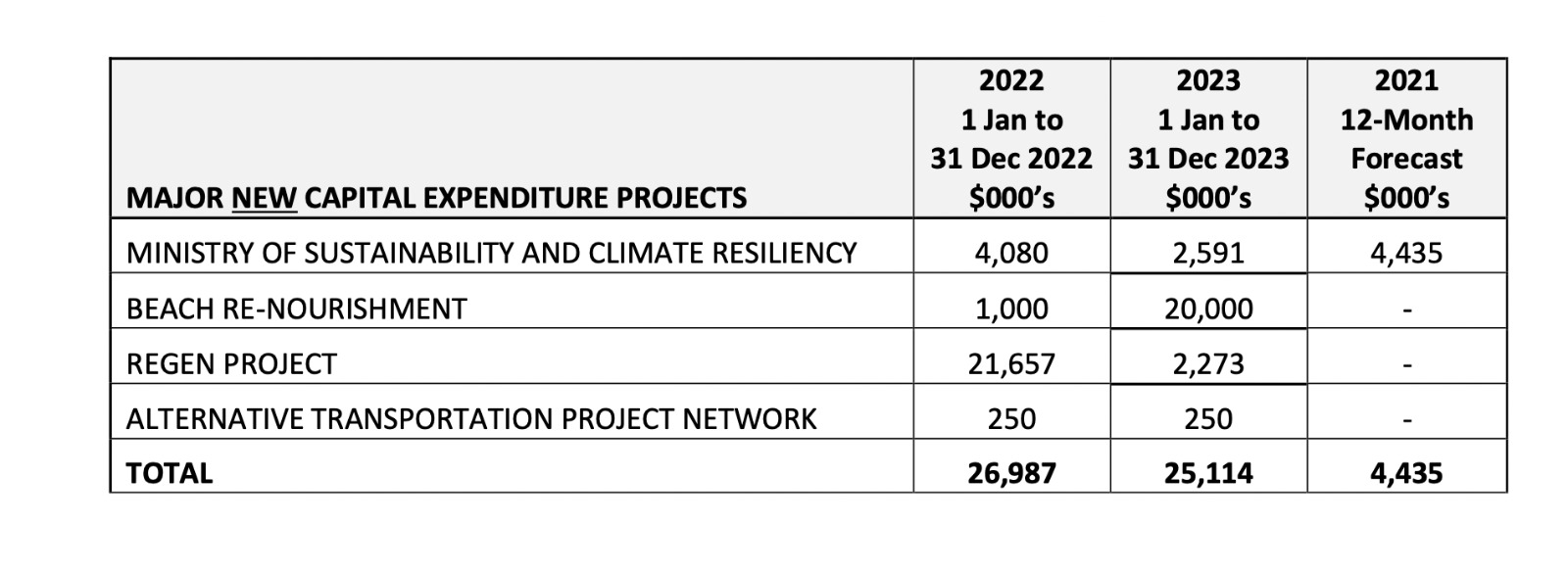
Government plans to allocate $21 million over the next two years for a project to restore a large stretch of lost sand at the southern end of Seven Mile Beach.
Storms and natural erosion have stripped away sand along almost a mile of beachfront.
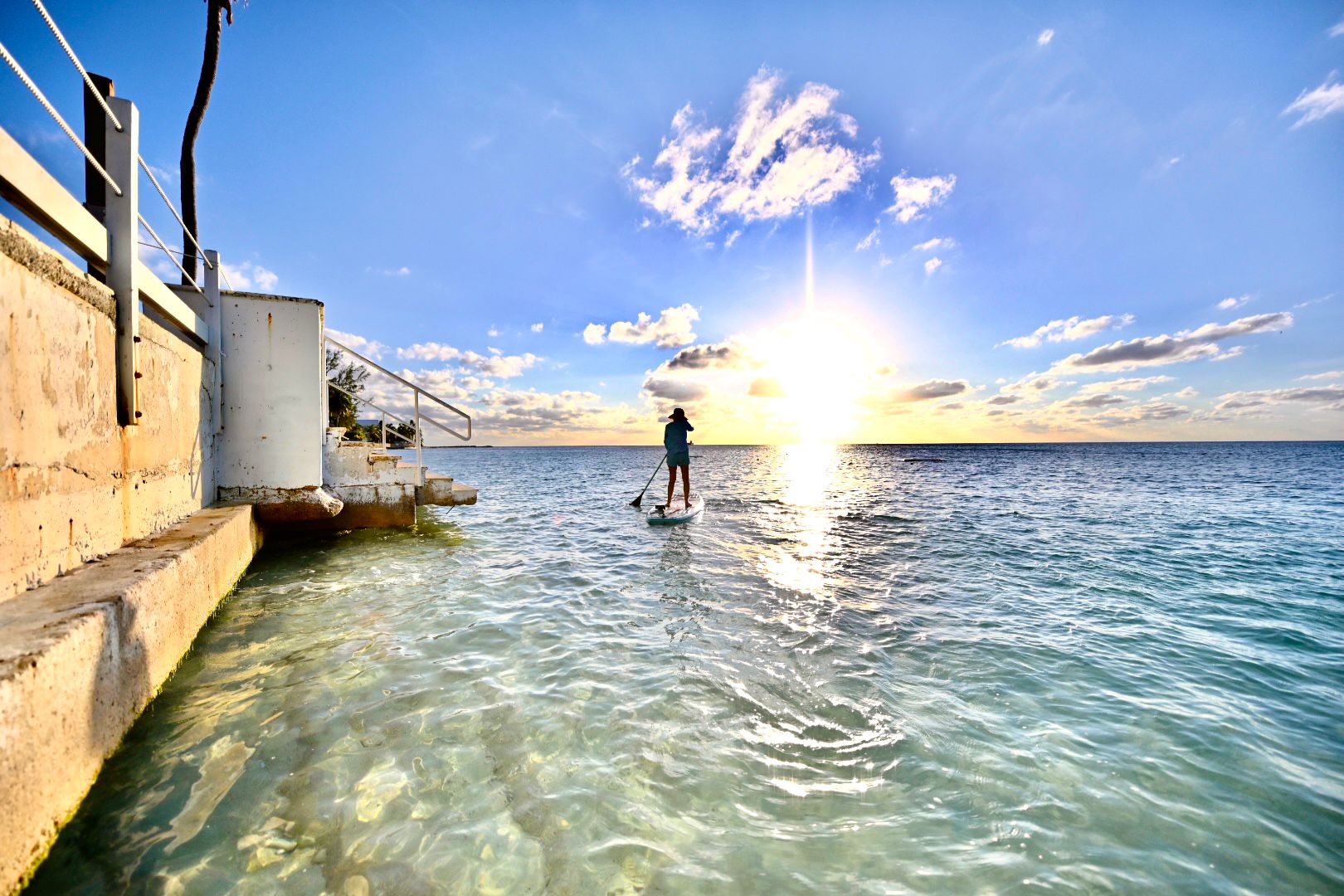
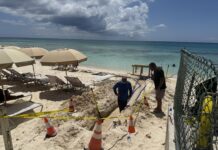
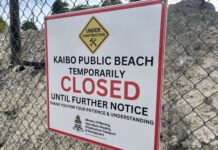
Swimmers can now wade waist deep where sunbathers once sat in deckchairs in front of the Marriott Beach Resort. The hotel has had to remove all images and advertising suggesting it has a beach.
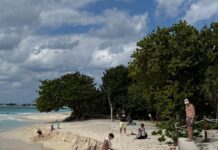
It is not just the resort that is impacted. The beach has receded to nothing but a few pockets of sand along the stretch of coastline from the Coral Beach Club to George Town Villas.
Jennifer Ahearn, chief officer in the Ministry of Sustainability and Climate Resiliency, is part of a task force chaired by Premier Wayne Panton that has been looking into the problem.
She said a proposal for a “beach re-nourishment” project – which would involve adding a significant amount of sand to the coastline at the southern end of the beach – is under discussion.
Many of the technical details remain to be worked out and the $1 million allocated for 2022 is expected to cover a business case and feasibility study for the work.
An additional $20 million has been allocated for 2023 when the project, if approved, is expected to get under way.
Ahearn said initial consultations with an experienced coastal engineer suggested that beach re-nourishment is feasible. The Department of Environment has also indicated that the project could be a viable medium-term solution and it would not oppose the project – if it is handled correctly.
Ahearn said key challenges include sourcing the right sand and ensuring that it is distributed effectively to prevent it being swept away in the next storm.
“The beach re-nourishment is a project that will take quite a long time to deliver because of all the planning and analysis that has to take place,” said Ahearn.
“It is not just a case of going out there and dumping a bunch of sand on the beach.”
She said the magnitude of the project was yet to be determined and there would likely be community consultation in the new year.

Ahearn acknowledged that the option of “doing nothing” remained on the table and would be factored into a business case study. But she said there were negative impacts for property, tourism, business and recreation caused by the loss of so much coastline.
While storms and coastal dynamics have always shaped and reshaped Seven Mile Beach, the loss of sand at the southern end is the most significant on record.
“In my living memory, we have never had it this bad,” said Tim Austin, deputy director of the Department of Environment.
He said the amount of beach impacted and the duration of those impacts suggested a more permanent shift.
Gina Ebanks-Petrie, DoE director, said it was normal and expected for the boundaries of a beach to flex over time.
When hard structures like hotels, condos, pools and sea walls are built on the active beach – as has been the case in Cayman – that can impact the ability of a beach to naturally replenish itself.
This overhead view shows the area of beach that has been most impacted by erosion.
She said the problem was largely a tourism and recreational issue rather than an environmental one. Of the various proposals put forward over the years, the DoE believes beach re-nourishment – which essentially involves adding significant amounts of sand to the impacted area – stood the most chance of success.
Ebanks-Petrie said that kind of project – if handled correctly with properly-sourced sand – would have limited negative impact on the environment.
Long term concerns
In the longer term, both the DoE and the Beach Erosion Committee are concerned about the underlying problem of structures that have been built too close to the water.
“The location of structures on the active beach and sea walls on the active beach has certainly exacerbated erosion, particularly at the southern end of the beach,” she said.
The Department of Environment endorses a policy of “beach retreat” that would see buildings moved further back from the coastline as they are renovated or redeveloped.
Ebanks-Petrie said she was hopeful that a new Development Plan would help control coastal construction in order to “future proof” the beach against erosion and the impacts of sea-level rise.
Ahearn said the erosion committee – which includes officials from the planning, environment, and lands and survey departments among others – is also looking at imposing stricter coastal setbacks for development.
Currently setbacks are measured from the high water mark. Ahearn said the committee was looking at establishing a fixed reference line, further inland, that would be used to determine how close to the water new structures could be built.
She acknowledged that there was less that could be done about existing buildings, many of which were developed decades earlier.
“Everybody knows there is no silver bullet,” she said. “There is no one thing that has caused this and no one solution that is going to fix it overnight.”
The proposed $21 million budget allocation for beach re-nourishment is expected to be discussed by MPs in Finance Committee later this week or early next week.
Related Videos







Great. You can no longer walk the beach. The sooner the better
There is potential for making a huge mess of it here.
I hope government has really thought through all of the aspects of bringing in more sand… They did this in Fort Lauderdale and the sand washed back out to sea and buried the first reef in sand. It’s just gone.
Nobody wants to look at rock jetties but the good thing is they keep the sand in place and create fish habitats.
https://www.sun-sentinel.com/fl-beach-coral-damage-20140822-story.html
I would estimate the total cost will end up being 2-3X the current figures but it is well worth it. The key is not just dumping sand but addressing the erosion and any causes within our ability.
When Bridgetown, Barbados built its port it caused creation of a large beach. Not suggesting a port, but it might help to understand that.
“Ahearn said key challenges include sourcing the right sand and ensuring that it is distributed effectively to prevent it being swept away in the next storm”
Hilarious – no clue how nature works, a strong enough storm will take what it wants and say thank you very much….
You have got to be kidding me! Private investors have made their fortunes after they were allowed to build too close to the sea. Now poor Caymanian taxpayers, on the basis of our regressive tax system, must pay to restore the beach and allow them to continue to make more money from their properties.
A waste of money.
It’s the fault of the parrot fish that used to create enough beach to replace that washed over the drop-off. Most of the parrot fish have gone so less beach.
Whatever sand is dumped there now will wash away.
I think our government (people) should not pay for the solution of this problem. I think our government should allow the businesses and associations that line that section of the beach to present proposals to solve this problem for themselves. This is not everyone’s problem. Our government needs to provide a solid framework that allows for well considered solutions – not the solutions themselves – and certainly not the funding.
Beach replenishment is a part of the new normal all around the world. Miami has been trucking millions of metric tons of sand to keep its beaches from slipping away, for years now. The biggest problem around the world is we spend far too much studying and preparing reports than “doing”. Your Caymanian grandparents would have organized a barge and started moving sand rather than standing on the beach for photo-ops and pointing with worried expressions for the camera. If we spent half of our time and resources that we spend wringing our hands about turtle friendly lighting and their mating season on fixing the actual problem by moving earth and sand, we might actually get some turtles back, and some tourists and their money with them, to keep the economy moving.