

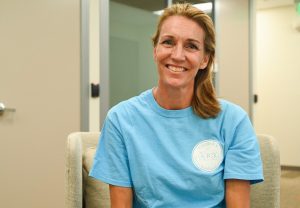
As a single mum surviving on the government stipend, Kristy Blackburn feels the impact of rising prices more than most.
The pandemic has taken a hard toll on the West Bay mother-of-two. Her rent doubled when the expatriate woman who was sharing her home lost her job and had to leave the island.
Her own job – at a hotel – also disappeared and she is getting through only with the help of the $1,500 stipend and support from charities like Acts of Random Kindness.
With the cost of groceries climbing every day and fuel and electricity prices also spiking, it is becoming harder and harder to stretch her budget.
Even if she is able to find work, the jobs she is seeing advertised pay $8 or $10 an hour and there is significant competition for every post.
Special report: Cost of Living
Shopping for groceries for children is the biggest challenge.
“I try to give my kids fresh fruit and vegetables but they are so expensive. I got a small pack of strawberries a few months back for $4.99. The other day it was $10.
“A carton of milk is $6, a loaf of bread is $5.”
Shopping on the kind of budget offered by low-wage work, or even the stipend, is difficult. A day’s wages is quickly gone on a handful of daily essentials.
For Blackburn, all of the stipend goes straight out the door on rent and utility bills. She gets some assistance with food vouchers, but they only go so far.
“I am grateful for everything I get, but it is getting harder. Since the pandemic there has been all kinds of products delayed or out-of-stock and the prices have gone up” she said.
“I have to take myself out of the equation and just think of my kids.”
The stipend has been a lifeline, but she is concerned that it could stop, before she gets chance to find work that will pay her bills and cover the travel and childcare expenses that come with going back to work.
Hundreds more in same boat
Charity ARK is providing food and utilities to hundreds of families, like Kristy’s, that are still struggling from the financial impact of the pandemic and Cayman’s challenging cost-of-living.
Tara Nielsen, of ARK, said recent inflation on rent, fuel, groceries and CUC bills, had compounded an existing problem.
“A lot of people were already struggling, then there was COVID and now we are seeing the cost of everything going up and, for some people, it is just unmanageable.”
She said the charity’s food vouchers – which vary in size depending on the size of the family – were being stretched thin amid price increases at the supermarkets.
“People’s salaries are not increasing, the minimum wage is not increasing. It is just the prices.”
She said many people were also struggling to catch up on overdue bills and payments from the height of the pandemic. CUC and some others gave leeway on timing of bill payments in the height of lockdown but those debts are now long overdue for some homeowners.
Economists maintain that the kind of rapid inflation Cayman, and the UK and US, is experiencing right now impacts the lowest income residents most because non-optional spending like food, transport and utilities represents a much higher percentage of their household budget.
Minister for Social Development André Ebanks said input from the Economics and Statistics Office would drive policy interventions to assist the most vulnerable if and when the effects of inflation become acute.
Reform needed
He acknowledged more wholesale reform is needed and said this was a priority for his ministry.
“The ebb and flow of global economic conditions is a stark reality – and inevitably contributes to temporary economic effects within the Cayman Islands,” Ebanks told the Cayman Compass.

“This is why government is committed to a sweeping reform of its financial assistance system, so that it becomes more agile and modern – and thereby able to insulate vulnerable people against such economic situations when they invariably occur.
“These wholesale changes will require substantial and meaningful changes in legislation, policy, and regulation, all of which the ministry is actively developing.”
Meanwhile, significant budget increases for the ministry will go towards staff increases and improvements in services at the Needs Assessment Unit, he said.
He highlighted a new online application system as an early sign of progress.
Related Videos













“Sweeping reform, wholesale changes of the assistance programme”, if these ever happen it will take years on Government’s past performance. In the meantime thousands of people like Ms Blackburn are becoming increasingly desperate. Has Mr Ebanks met with the local charities who are actually doing something, has he met with some of their clients to see the scale of the problem?. He says input from the Economics and Statistics Dept will drive policy intervention “if and when the effects of inflation become acute”. Well the effects of rampant inflation certainly has no effect on Ministers earning in excess of $200,000 with allowances, but they are most definitely acute on many right now.
Yet hotels and restaurants complain they cannot find staff. What is happening here? Why can’t Ms Blackburn and other like her find work so she can pay her bills?
As for cost of living; unfortunately we are in the hands of global inflation caused by ridiculously loose monetary policies from USA and UK politicians who only see as far as the next election and staying in power along with supply problems caused by covid.
Pity that poor senior on a fixed income, earning interest on their bank deposit of 0.1% p.a. while inflation, not just here, is some 7% p.a.
Well said, Norman: US, UK and EU loose monetary policies have a lot to answer for.