A presentation on research of how deep-water corals in Little Cayman are adapting to climate change will be held on Friday, 9 Dec., at the George Town Public Library.
Professor Tali Mass from the University of Haifa, Israel, who is working with Central Caribbean Marine Institute’s researchers, is using specialised equipment and new methods that have been developed to study the corals.
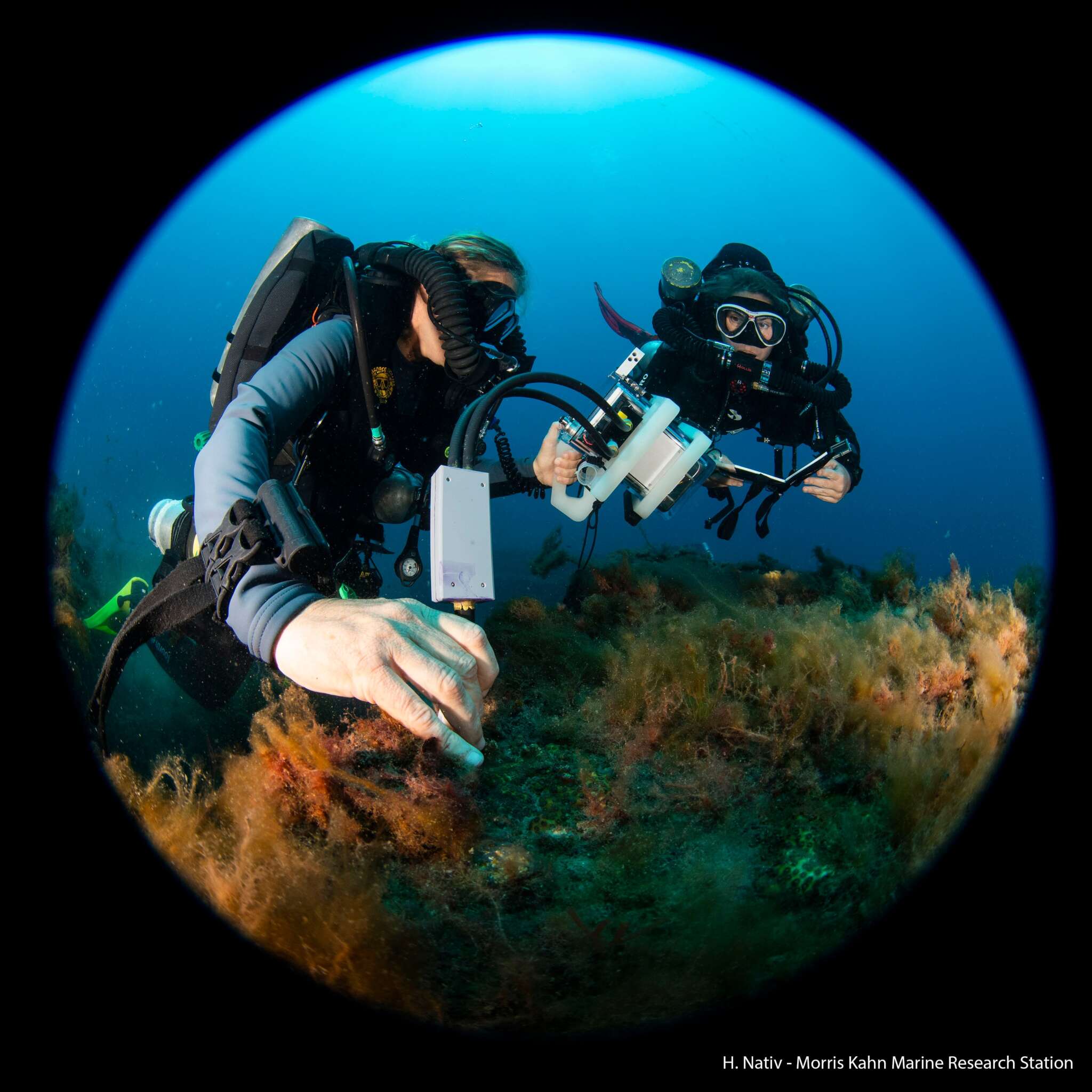
Led by CCMI’s Director of Research Gretchen Goodbody-Gringley and Professor Mass, the team of scientists is seeking answers by studying corals living down to depths of 50 metres on the reef walls of Little Cayman.
Using both open- and closed-circuit technical scuba diving gear, they are investigating what adaptations have enabled certain corals to survive across broad environmental gradients. With this information, they hope to understand how the capacity for corals to change and respond to depth may give insight into their overall adaptative potential and ability to survive in the face of future climate change.
Goodbody-Gringley explained in a press release, “We know that some species of corals are capable of living under very different environmental conditions; you can see examples of this all along the reef walls of the Cayman Islands. The same species of coral can look very different when they grow 10 meters underwater versus 50 meters, because those individuals have had to adapt to survive given different conditions, like light availability, temperature variability, and nutrient flow.
“But little is known about exactly how they do so. If we understand the mechanisms of coral adaptation, maybe we can help more corals survive in the face of rapid, human-caused climate change.”
This project began earlier this year with scientists photographing and collecting samples from corals at various depths to get baseline information on genetic composition, physiology, and skeletal structure. They will next cross-transplant selected individual corals between deep and shallow reefs, documenting changes in these corals over the course of a year, including genetic alterations, skeletal differences and variations in the number of symbiotic algae present in the corals, which they depend upon for food.
Supported by the US National Science Foundation-Binational Science Foundation of Israel, researchers are also comparing the data gathered from this experiment in Little Cayman with corals subjected to the same experiments in the Red Sea and the Mediterranean Sea for a wider basis of understanding.
Researchers also want to understand if these changes are then passed on genetically to future generations. To do this, researchers will monitor larval release from these corals, collect the larvae from different depths and then settle them under the various conditions, from deep to shallow and vice versa.
The larvae and newly settled juveniles will subsequently be assessed for growth, survival, and variations in physiology, morphology, and gene expression.
“Human-caused climate change is subjecting corals to conditions beyond their normal limits, thus we’re in a period of rapidly declining reef health worldwide. However, some species and some individuals display the capacity to survive,” said Goodbody-Gringley. “Dr. Mass and I are interested in understanding the ability of some corals to persist in our changing climate.”
Mass will present a talk on her research at 5pm at the library on Friday. Attendance is free but space is limited, so the Central Caribbean Marine Institute is requesting interested attendees register online at https://donate.reefresearch.org/tmass22.
Related Videos