

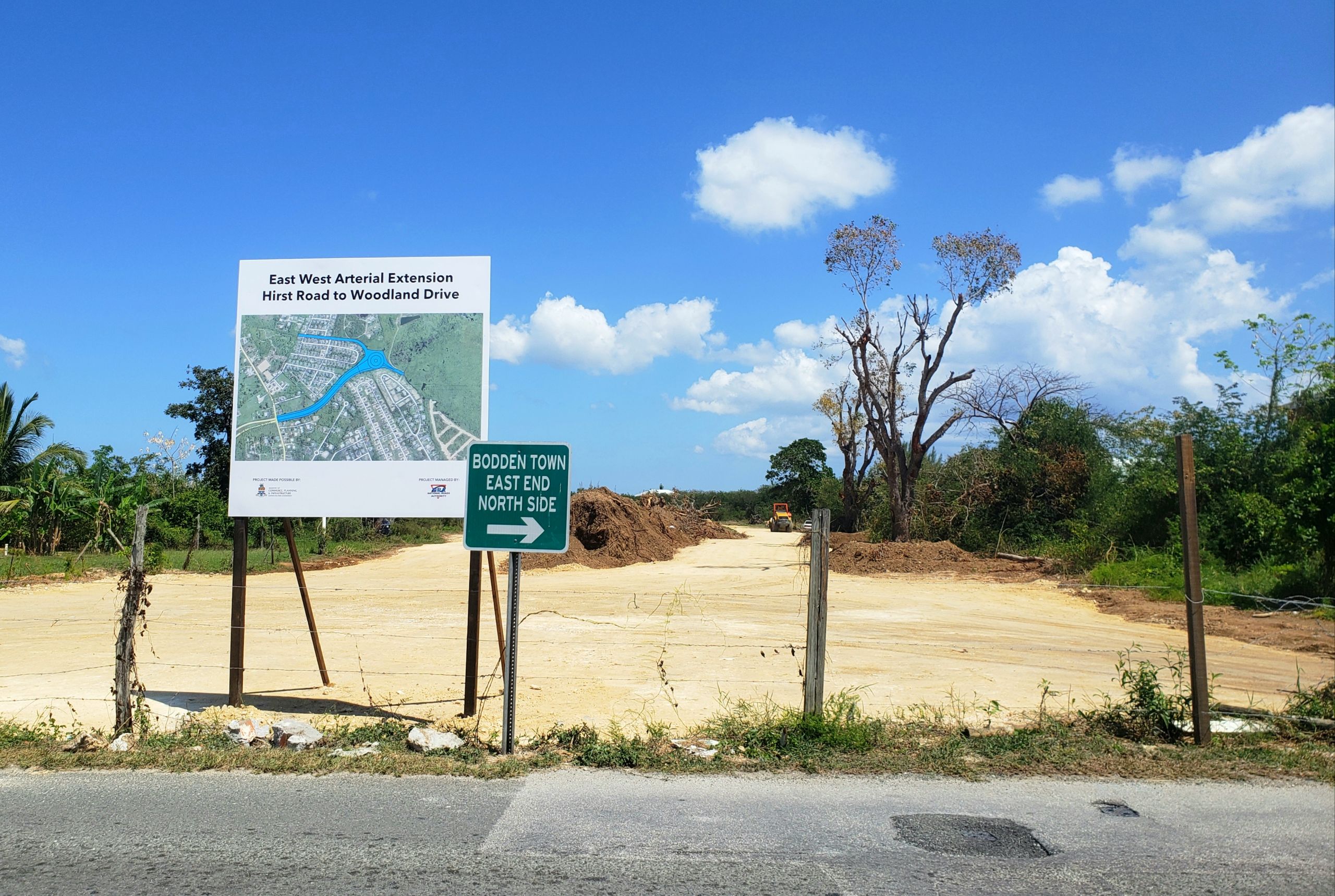
An analysis of the proposed East-West Arterial extension, carried out on the request of environmental advocate group Sustainable Cayman, suggests that the 10-mile road expansion is unnecessary and funds would be better spent widening existing roads.
Kevin Kay of UK-based Ardent Consulting Engineers, noted in his report, that since most of the heavy traffic begins at Bodden Town, expanding the road as far as North Side, through part of the Central Mangrove Wetland, is unwarranted, and suggested that one of the motives behind the plan is to enable property development in the area.
“The levels of traffic recorded on the eastern sections would not seem to justify the creation of the East-West Arterial Extension, based on current traffic flows. Even if one was to account for the anticipated level of growth in the eastern districts, and the consequential increase in traffic that would occur as a result, it is difficult to see how the NRA could justify any infrastructure beyond the Hirst Road/Shamrock Road connector,” Kay said.
The National Roads Authority says, to help alleviate traffic congestion from the eastern districts, it plans to extend the East-West Arterial, which currently runs from Shamrock Road in Prospect to Hirst Road in Savannah, as far as North Side, via two new sections from Woodland Drive to Lookout Gardens in Bodden Town, and then from Lookout Gardens to Frank Sound Road. Work is already under way to connect a section from Hirst Road to Woodland Drive.
An environmental impact assessment must be carried out on the two proposed new sections of the road, and two public meetings to discuss the terms of reference for the EIA are being held this week.
The first of these meetings will be held tonight, 7 Feb., at the Craddock Ebanks Civic Centre, at 923 North Side Road, North Side, from 6pm to 9pm. The second will be held on Thursday, 9 Feb., at the church hall of the Cayman Islands Baptist Church, at 163 Pedro Castle Road, Savannah, from 6pm to 9pm.
‘Not justified’
Kay, in his report, stated, “It could be argued … that there is less justification for new road infrastructure serving the eastern neighbourhoods of the island, owing to the lower residential density. This is compared to recognised ‘pinch points’ further west where there is a greater need to manage conflicting streams of traffic.”
He referred to a 2018 study, which suggested that government wanted to expand the East-West Arterial into the environmentally sensitive Central Mangrove Wetland to promote development in that area. That report, authored by Katrina Jurn, Joseph Lavallee and Lawrence King, stated, “The demand for real estate by international investors … has been one of the key drivers of mangrove wetland clearance. Interview results suggest the hypothesis that these dynamics have persisted due to the alignment of political forces that has emerged in their defense: a state structurally-dependent on development fees for revenues and dependent for political support on landowners and the development and real estate industries.”
Kay noted that while that statement strays into the political sphere, “it would appear to be the case that the rationale for the EWA Extension is partly driven by a need to improve the accessibility to land for development, more than it would be about meeting some marginal journey time savings from populations located furthest away from the (employment) poles of attraction. The resilience point, including improving access for emergency vehicles, could potentially be met through other means.”
He said traffic data suggests that Shamrock Road, east of Savannah, accommodates a maximum westbound traffic flow of about 1,000 vehicles per hour, which decreases by half, to about 400-500, further east at Northward Road, with a further reduction to about 300-400 at Bodden Town Road.
He said this volume of traffic “should be within the link capacity of the road network to accommodate, as the directional limit of single carriageway road would be between 1,300-1,500 vehicles per hour.”
He argued that while section 2 of the proposed extension, as far as Lookout Gardens in Bodden Town, “may be seen as an opportunity to release further land for development, it would not appear to be justifiable based on highway capacity alone. The case for Section 3 is even more doubtful on traffic grounds alone.”
Kay suggested that widening Shamrock Road and Bobby Thompson Way would have a far greater impact on traffic flow than extending the East-West Arterial.
He also suggested the NRA progress with the construction of the BP40 coast-road route, from the area near Pedro St. James to Manse Road in Bodden Town, which was gazetted in 1979 but never built.
Kay said the argument for building the section of road from Lookout Garden to Frank Sound Road was “much weaker”, as the bottlenecks in traffic were not being experiencing in Bodden Town, but further west, where traffic from multiple locations converge.
“It has already been shown by the NRA that these issues are being addressed by existing infrastructure improvement proposals. The case for the EWA Extension is therefore unfounded on the grounds of providing vehicular traffic benefits alone,” he said.
The terms of reference for the road’s EIA note that the assessment will not only examine the impacts and benefits of expanding the East-West Arterial, but will also look at alternatives, such as widening existing routes and keeping the status quo.
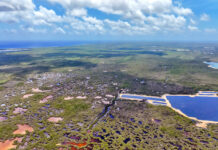
The National Conservation Council in 2016 determined that the proposed oad extension required an environmental impact assessment, as it will encroach on up to 174 acres of the Central Mangrove Wetland, “with the potential indirect disturbance of a larger area”.
Related Videos









They are certainly correct that the biggest bottlenecks are at the AL Thompson and Hurley’s roundabouts where flyovers (overpasses) are desperately needed.