

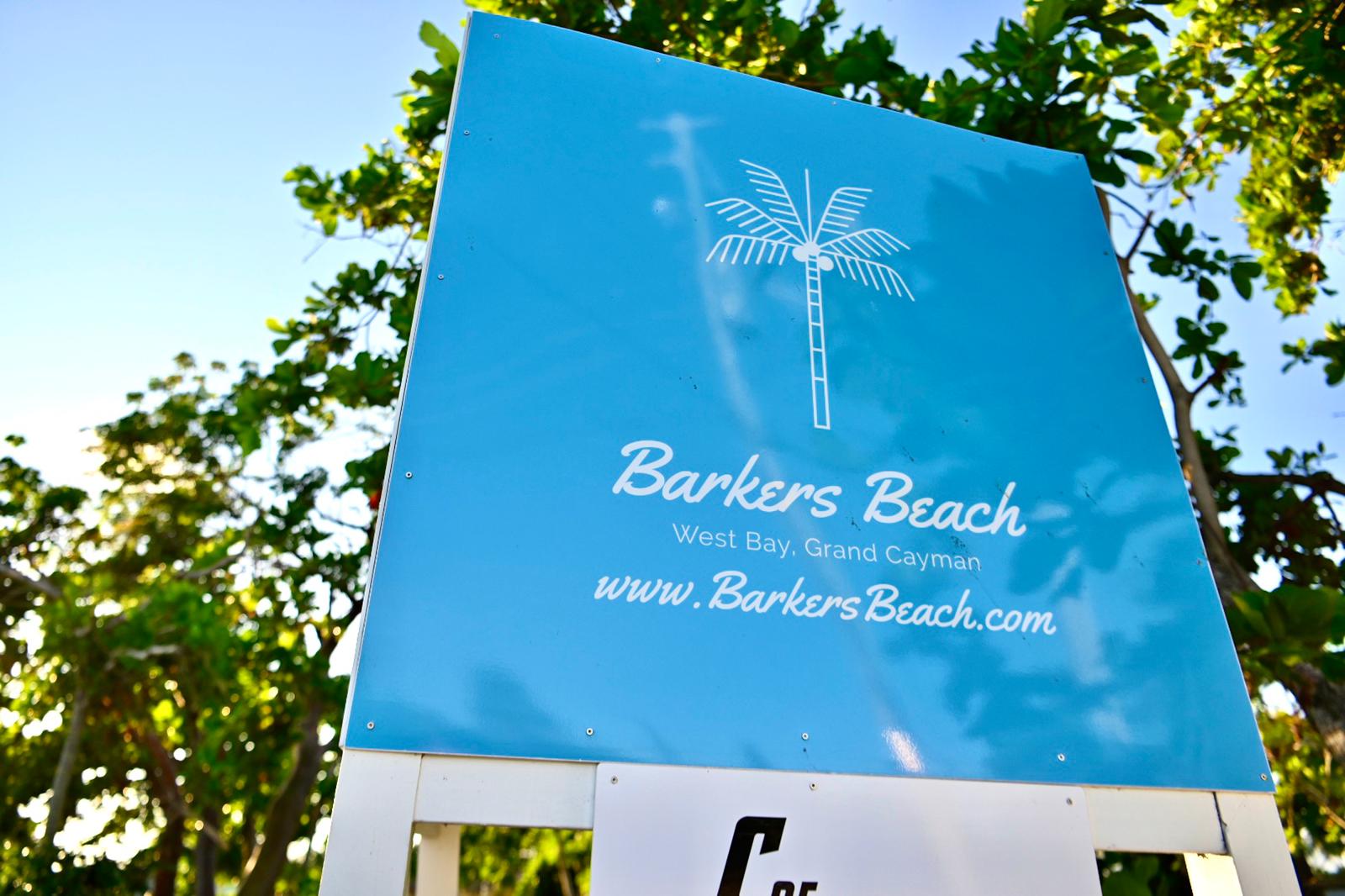
The Central Planning Authority has approved an application to build Barkers Beach Resort, a five-storey hotel, in West Bay.
According to the planning board’s minutes, Coe Group Ltd was granted permission to build the hotel on Conch Point Drive, which will be constructed alongside an existing two-storey apartment building on the same site that the developers plan to convert into hotel rooms and a ground-floor restaurant. The hotel will have a total of 32 rooms.
The planning board in 2021 refused an application by the Coe Group for a hotel with three separate five-storey buildings at that site, on the grounds that it did not meet the required minimum setbacks.
The company, owned by Morne Botes and Joseph Coe, returned to the CPA last month with a different plan, which included retaining the existing two-storey building at the site, which is located immediately east of Pampered Ponies.
The planning board determined that while the existing building does not comply with minimum required high-water mark and side setbacks, “it is existing and the applicant is not proposing to change the footprint of building walls”.
The building is located 66 feet from the mean high-water mark; the required minimum setback is 130 feet. Planning regulations also require that side setbacks to be a minimum of 20 feet, but the two-storey building is set back only 15 feet.
The CPA, in approving the application, noted that all new buildings laid out in the plans comply with the minimum setbacks, with the exception of a small area of the proposed new building that connects to the existing property. The CPA members determined that this area is located landward of the existing building and that the variance is “negligible”.
There were no objectors listed in relation to the application.
The developers have said that, despite its name, the planned hotel is not based in Barkers National Park, but rather on the road that leads to Barkers.
Conditions attached
The board attached several conditions to its approval, including that a licensed land surveyor carry out a survey of all the existing buildings and topographical features, such as site levels and contour lines at 2-foot intervals, and that no excavation of the remaining beach ridge be carried out.
“Should the surveys … reveal that the proposed plans involve any excavation of the oceanside profile or apex of the beach ridge, plans shall be revised such that buildings are relocated to avoid such excavation,” the CPA stated in its conditions.
At the CPA meeting, held on 4 Jan., the developers said they hoped to break ground by September and the resort would take two years to build.
CPA agendas regarding the earlier application for this development had listed it as a $118.5 million development. Asked why this latest application, listed at $12 million, was so much less, Coe said this had been an error on the part of the Planning Department when drawing up the agendas, and the cost of the earlier application had, in fact, been, $11.85 million and a misplaced decimal point had led to the misunderstanding.
Department of Environment concerns
The Department of Environment, in its submission on the application, had raised a number of concerns about the development, and queried if the site was even suitable for a hotel, because there was a rock/rubble beach, rather than a sandy beach, beside it. The DoE included a photo of the stony beach in its submission.
However, Joseph Coe told the board that this photograph was taken after a storm when the sand had been washed out, but also noted that the image showed the site next door to the proposed development and not the beach in front of the planned hotel.
The DoE also noted in its submission that the basement level parking included in the plans would mean that the beach ridge would have to be excavated, and stated, “Removing or levelling the beach ridge reduces the site’s resiliency against wave overtopping and removes that sand from the beach system permanently.”
However, the developers told the planning board that the parking area will be under the building and would be excavated from the existing berm, but nothing seaward of the 130-foot setback.
The DoE directed that all construction materials be stockpiled at least 50 feet from the mean high-water mark, a condition which the CPA included when granting its approval.
The department had also recommended that any beach-quality sand excavated from the site should be used to recreate the beach ridge, which Joseph Coe argued was contrary to the DoE saying it did not endorse the “grooming” of beaches.
Botes took exception to the DoE’s comments on its submission, describing its response to the application as “weird” and “comical”, and said it was “obviously a personal attack”.
See the Central Planning Authority minutes here.
Related Videos













Oh NOOOOOOO
How CAN this happen?
I’m going to write to the Premier.
He PROMISED to keep Cayman safe from greedy ugly developers.!