

Bodden Town East MP Dwayne Seymour says he intends to bring a motion to Parliament requesting that a section of the proposed East-West Arterial nearest to Bodden Town be built without an environmental impact assessment.
The National Conservation Council previously deemed that the planned 10-mile extension to the road requires an EIA, under the National Conservation Act, because of the likely detrimental effects it could have on the environment.
Speaking at a mid-term public meeting in Bodden Town Thursday night, Seymour said that as the proposed road was gazetted in 2005, long before the 2013 National Conservation Act was enacted, that legislation “should not impede a previous Cabinet-approved order… to build this road to give an alternate route for relief during traffic rush hours and during emergencies and hurricanes”.
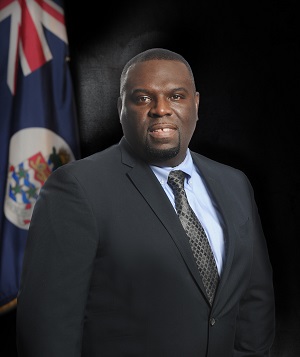
He is asking that the section from Hirst Road to Lookout Gardens be built as soon as possible, without waiting for the outcome of an EIA, as he said this area was “less environmentally sensitive” than the section from Lookout Gardens to Frank Sound Road in North Side.
Seymour said he planned to introduce his motion at the next sitting of Parliament, which is expected to begin on 26 April.
Reiterating comments he made at town hall meetings hosted by the National Roads Authority in February about the terms of reference of the road extension EIA, Seymour said he wanted “one more hour’s sleep” for himself and his constituents.
However, Premier Wayne Panton, when he took to the stage at Thursday’s meeting, seemed to indicate that it was unlikely that the Hirst Road-Lookout Gardens section of the road would be built without an EIA.
Premier: EIA is necessary
Reminding Bodden Towners of extensive flooding experienced in the town’s Gun Square and Belford Estates over the years, he said an EIA was essential to ensuring the East-West Arterial extension was “done properly” and in such a way as to avoid future flooding issues.
“We need to make sure that we know exactly how to do it without causing more problems,” he said. And that’s why we need to have this environmental impact assessment completed.”
He added that, on the present track, the EIA would be completed by the end of this year.
Acknowledging that “even if the road was started right now, it would still take time to build it,” the premier said steps had to be taken in the near-to-medium term to address traffic congestion, not just in the eastern districts but around the island. These include improved public transport, carpooling, a government-subsidised park-and-ride scheme, and limiting the importation of vehicles.
Slowing vehicle imports
The Cayman Compass recently reported that more than 8,000 additional vehicles were licensed to drive on Cayman’s roads in 2022.
The premier said he had been shocked to read those numbers in the Compass, as the figures the government had received from the Ministry of Border Control had indicated that about 4,400 cars had been imported. “Instead we find out that 8,000 new cars had been registered in 2022,” he said.
“If you strung those, bumper to bumper, and separate them out by one car length, that’s about 24 miles of traffic. So, you understand why it’s an imperative for us to limit the number of cars that are being brought in,” he added.
Noting that there had been an increase of about 10,000 in the population in the last two years, he said there needed to be restrictions on the age of cars being imported.
To further address traffic congestion, the premier added, Tourism Minister Kenneth Bryan, who until the recent Cabinet reshuffle had transport as part of his ministry before it was transferred to Jay Ebanks, had issued a request for proposals for electric buses to be used in a park-and-ride scheme. A consultancy firm had won that RFP and the process would soon begin, he said.
Related Videos










One of the concerns for phase 2 of the EWA is what is referred to as the ‘bathtub’ effect.
When you have a heavy rain event, water floods and drains naturally to the lowest point ie the Central Mangrove Wetland whereas a Hurricane event will flood from all sides. If you damn the area with roads as proposed by the EWA and southerly connectors, simply adding basic drainage under a road that is only 5’ above sea level will require significant engineering to mitigate the already known choke points and gulley effects.
Recent examples of drainage ditches from Parkway under the Harquail bypass along the landfill to north sound is an example of recent engineering for mitigating problematic infrastructure whereas the Linford Pearson Hwy drains south from the road to the south sound wetland basin which acts as a natural collection and filtration basin.
Neither of these roads were built with an EIA and both have an environmental impact on surrounding urban development, especially as wetlands are removed or die off. An EIA for phase 2 of the EWA will highlight the problems and solutions for and why the EIA review is critical.
We hope that MP Seymour understands that protecting homes and saving lives as well as planning for future development are more important than an extra hour in bed.