

Getting up at 4am, and dressing their children and feeding them breakfast in their cars, all while sitting in morning traffic, is a daily routine for some living in the eastern districts of Grand Cayman, a public meeting about the East-West Arterial extension heard on Tuesday night.
During the meeting at Craddock Ebanks Civic Centre in North Side – the first of two being held this week – consultants from US-based Whitman, Requardt & Associates, working with the National Roads Authority, went through the draft terms of reference for the environmental impact assessment for the proposed 10-mile extension of the road from Woodland Drive to Frank Sound Road.
In the question-and-answer session following the presentation, some current and former elected representatives from the eastern districts solidly placed their support behind the plan to extend the road.
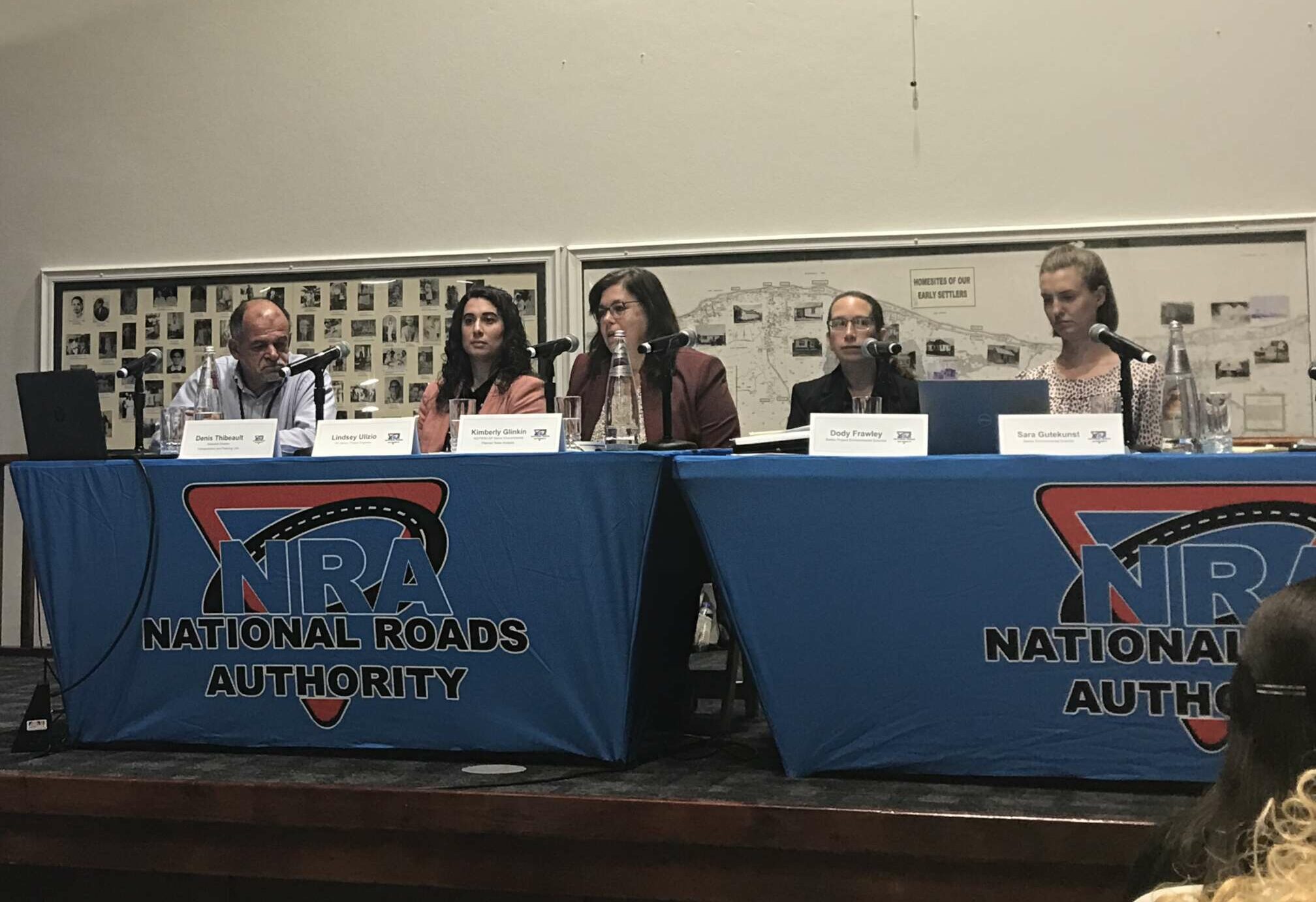
Former East End representative and former minister responsible for roads, Arden McLean, told the meeting that plans to expand the road dated back many years, saying that if the 2008 economic downturn had not occurred, the extension would already have been built, and an EIA would not have been necessary. The National Conservation Act, under which the EIA on the proposed road is being carried out, was passed in 2013.
McLean heavily criticised an analysis of the project Kevin Kay, of UK-based Ardent Engineers, done on the request of Sustainable Cayman, which questioned the need for the expanded road and suggested that widening existing roadways on the route would address the congestion issue.
The consultants said that report had been submitted to the NRA rather than to the team drawing up the terms of reference, so it would be up to the NRA whether its contents were considered in drawing up the scope of the project.
McLean said environmental advocates, whom he described as “akin to religious fanatics when it comes to the environment”, were trying to prevent development of the eastern districts. “They live in George Town on built-up swampland and then they come up here and tell us up here what we must do,” he said.
He said of George Town residents, “They get up 45 minutes before school starts and get the children there, and get to work too after dropping the children. … Parents in East End and North Side have to get up at 4 o’clock in the morning, get the kids ready, either give them breakfast in the car or leave them at the mercy of the grandparents to get them on the bus at 6.30,” he said.
He added that he did not believe the proposed road was “a panacea for our traffic woes, but certainly it is going to help these families in these eastern districts”.
Bodden Town East MP Dwayne Seymour echoed McLean’s plea for the new road to be constructed, saying he gets up at 4am to get his children ready to send to school in George Town.
“We’re tired, we have to eat breakfast in the car… This is reality. All we want in Bodden Town is one more hour’s sleep,” he said, adding, “People leave home in the mornings when it’s dark and they come home in the dark.”
Seymour, who ran his car into an electricity pole on the night of 28 Oct. last year, had said at the time that getting up early and working late to avoid traffic congestion was making people “more prone to a tired nature and accidents”.
At the meeting on Tuesday, he said, “[Drivers from] North Side and East End, they meet the traffic in Bodden Town, but in Bodden Town, we can’t get out of our roadways, so we have a real serious problem there.”
He queried why the EIA would take a year, as outlined in the terms of reference, and whether that year had started yet. He also asked why there could not be a phased approach, with separate EIAs for the two individual sections of the road under consideration, as Section 2, from Woodland Drive to Lookout Gardens, would have less of an impact on the wetlands, compared to Section 3, from Lookout Gardens to Frank Sound Road.
Scott Thompson-Graves, senior vice president of Whitman, Requardt & Associates and EIA project director, responded that the year-long timeline would start once the terms of reference had been finalised and the EIA began. He said, based on similar previous projects, a year was the anticipated time it takes for the consultant engineers and environmental scientists to do their due diligence in relation to the EIA.
Former North Side legislator Ezzard Miller asked the consultants if the purpose of the EIA was to “find a reason not to build this road or … to find areas that may be adversely impacting the environment and mitigate them”.
Denis Thibeault, assistant director of the NRA, responded that it was the latter, “to find mitigation”, to which Miller stated, “I don’t believe ‘no build’ is an option.”
The terms of reference of the EIA include three options: a “no-build” option; a “build in gazetted corridor option”, which would include changing existing roadway locations and layouts, such as using bridge structures to elevate roadways; and changes to Bodden Town Road, such as imposing limited rights-of-way, creating dedicated lanes for public transit and pedestrian/bicycle use, and adding or widening lanes on existing roads.
Grand Harbour area not part of terms of reference
Some attendees queried how creating an additional road that would feed into already congested highways would prevent bottlenecks from occurring on rush-hour journeys to and from George Town.
Lindsay Ulizio, senior project engineer, said the NRA was currently addressing traffic congestion further west from the proposed road, around the Grand Harbour area, from the Chrissie Tomlinson roundabout to Bobby Thompson Way.
“They are working very diligently to come up with solutions to uncork those bottlenecks,” she said.
The NRA’s Thibeault confirmed that the scope of the assessment to be carried out on the proposed expansion of the East-West Arterial did not include the impact the new road would have on traffic flow around Grand Harbour.
NRA director Edward Howard said prior to drawing up the draft terms of reference for the EIA for the new road, the NRA was already looking at traffic flows into and out of the Grand Harbour area, carrying out a “corridor study” that takes the potential impacts of an extended East-West Arterial into account. He said he expects the results of this study to be released in the “next couple of weeks”.
Concerns over impact on Central Mangrove Wetlands
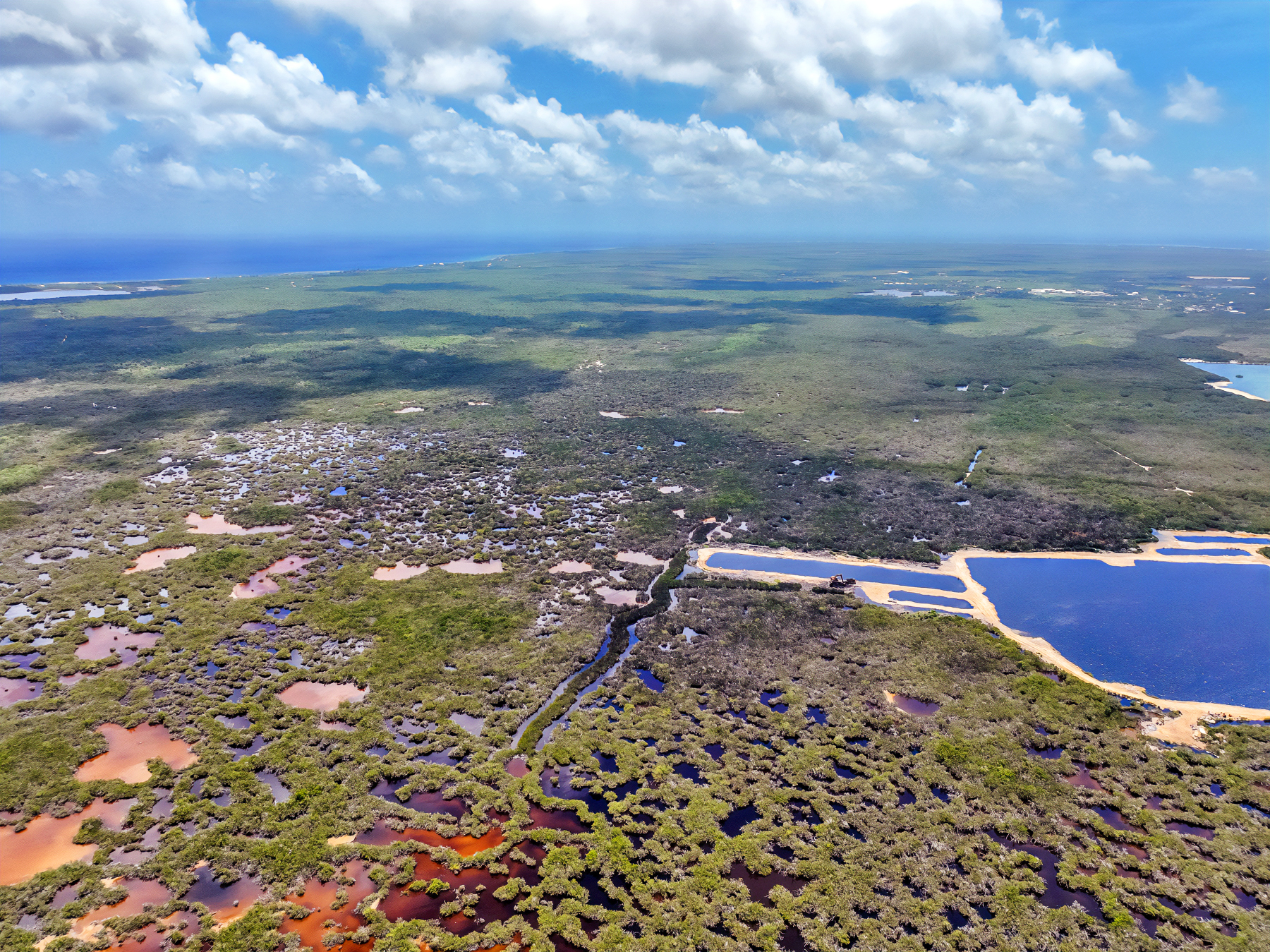
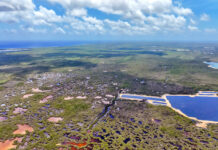
A number of attendees voiced concerns about the impact the proposed road would have on the Central Mangrove Wetlands, through which it would be built, and any subsequent effect that may have on the North Sound.
One attendee asked the consultants whether, as the Central Mangrove Wetlands are the largest contiguous wetlands in the Caribbean, “should we be tampering with it at all?”
Joyce Barkley, project manager with the consultancy firm, responded that this was not a yes or no question for the consultancy team, whose job was to “go in, assess all the possible impacts, whether negative or beneficial, and provide that information back to the public. You decide yes or no, should we impact it?”
She noted that the purpose of the meetings this week was to interact with the public and get feedback to determine if all the elements of the project were being covered in the terms of reference of the EIA. “We want to make sure that, when we’re putting the terms together, we’re addressing all of your concerns,” she said.
“The terms [are] what is going to guide us in doing the assessment,” she added.
Barkley said further public consultations will be held later regarding the EIA itself, including two town hall meetings on the final assessment report.
Another attendee queried why no marine assessment was included in the draft scope of the EIA, as the wetlands are interconnected with the eco-systems of the North Sound and the coral reefs beyond that.
Barkley said this would be looked at in the EIA as an “indirect impact”.
Attendee Billy Adam told the consultants and the NRA that national development plans had been shelved for decades, and that predictions of population growth had not been addressed. He queried why this proposed major road expansion, which he said should be part of a national development plan, would go ahead when no such plan was in place.
He also highlighted concerns that impacting the wetlands would have a knock-on effect on the North Sound and the Sandbar, and suggested that a public meeting be held in West Bay, where many of the operators who ferry cruise passengers to the Sandbar live. “You’re going to lose sand on the Sandbar and the cruise ships got nothing to come here for,” he said.
Another audience member pointed out that roundabouts included in the plans of the extended road indicate that developments will be built along roads that will eventually shoot off from those roundabouts, and suggested it was more valuable in the long run to protect the wetlands rather than develop them.
“The obvious reason for this road is for more development,” he said, and queried why it was necessary to put the road in place when there were development areas that had not yet been fully built out. “We have done a poor job of planning and this, to me, is another poor job of planning,” he said. “We are discussing impacting probably the most ecologically important part of our islands and for no more reason than for development.”
The second meeting on the EIA terms of reference will be held at the church hall of the Cayman Islands Baptist Church, at 163 Pedro Castle Road, Savannah, from 6pm to 9pm on Thursday, 9 Feb.
Read the terms of reference for the environmental impact assessment here.
Related Videos








We have NO Long-Term Development Plan or Vision….and that is the main reason why our Islands are now in this dilemma. But yet, they waste time talking about and dealing with less important (and “pork barrel”) issues.