For the latest information on storm activity in the Cayman Islands, as well as information on how to prepare for hurricane season, visit Storm Centre.
Though the official start of the Atlantic hurricane season is still two weeks away, forecasters say the first storm of the year has already come and gone in a rogue system that passed through in January.
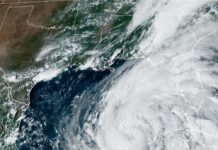
According to the US-based National Hurricane Center the system was a subtropical storm that formed off the northeastern coast of the US in mid-January and therefore posed no threat to the Cayman Islands.
Because the system did not strengthen into a tropical storm, the NHC did not use one of the 21 approved names for the upcoming season.
“This subtropical storm is being numbered as the first cyclone of 2023 in the Atlantic basin and will be given AL012023 as its system ID,” wrote the NHC in a statement which was published on its website Thursday, 11 May.
The NHC added, “As a result, the next system that forms in 2023 in the Atlantic basin will be designated as AL022023, and advisories will be issued… If the system begins as a tropical depression, then it would be given the designation ‘TROPICAL DEPRESSION TWO’, and if it becomes a tropical storm, it would be given the name ‘ARLENE’.”
At the time the statement was issued, no details were given about the January storm’s history or its impact. Instead, the NHC said it would provide an in-depth report in the coming months.
The annual hurricane season runs from 1 June to 30 Nov. and, while pre-season storm activity is normally limited to April and May, on extremely rare instances there have been storms recorded in January.
In total, the NHC has recorded six previous instances that storms formed during January in the Atlantic hurricane basin.
In 2021, there were several calls for the National Oceanic and Atmospheric Administration to move up the start of the hurricane season to 15 May each year. However, NOAA opted instead to begin issuing its daily and weekly predictions as of that date.
Outlook for 2023
NOAA, which oversees the NHC, is expected to issue its 2023 hurricane forecast on 25 May during a televised press conference.
Each year, the Cayman Islands National Weather Service considers the forecasts of both NOAA and the Colorado State University Tropical Meteorological Project before issuing its formal prediction.
Although NOAA’s forecast is still outstanding, Colorado State University is calling for a below-average season.
In a forecast issued on Thursday, 13 April, CSU called for 13 named storms and six hurricanes, two of which are likely to become major storms of Category 3 or higher.
According to the 30-year climatological mean, which runs from 1991 to 2020, an average Atlantic hurricane season consists of 14 named storms, seven hurricanes and three major hurricanes.
Related Videos