In Florida, there are reports of world record sea-surface temperatures equivalent to those normally found in a hot tub.
In Cayman, it’s more like a tepid bath, but still warm enough to break seasonal records and spark fears of a major coral-bleaching event this summer.
Disaster-management experts are also taking note of the early spike in temperatures, fearing warm seas could raise the threat level in what was otherwise anticipated to be a slow hurricane season.
Data from the National Oceanic and Atmospheric Administration’s satellite system shows the sea-surface temperature around Cayman hit 31.14 degrees Celsius (88 degrees Fahrenheit) earlier this week – a record for July.
That’s especially concerning as August and September are statistically the hottest months in Cayman. The highest recorded temperature since records began in Cayman, was 31.24 degrees C (88.2 degrees F) in September 2005.
At the Department of Environment, Deputy Director Tim Austin is worried.
“We are already over the threshold for coral bleaching and we still have the hottest months of the year ahead,” he said.
The longer coral is exposed to heat stress, the greater the extent of the damage and the greater the potential for large-scale morbidity. Three months of elevated temperatures could be ruinous for Cayman’s reefs
Coming on the heels of the stony coral tissue loss disease outbreak which killed off hard corals at sites around Grand Cayman, a major bleaching outbreak would be particularly hard to take.
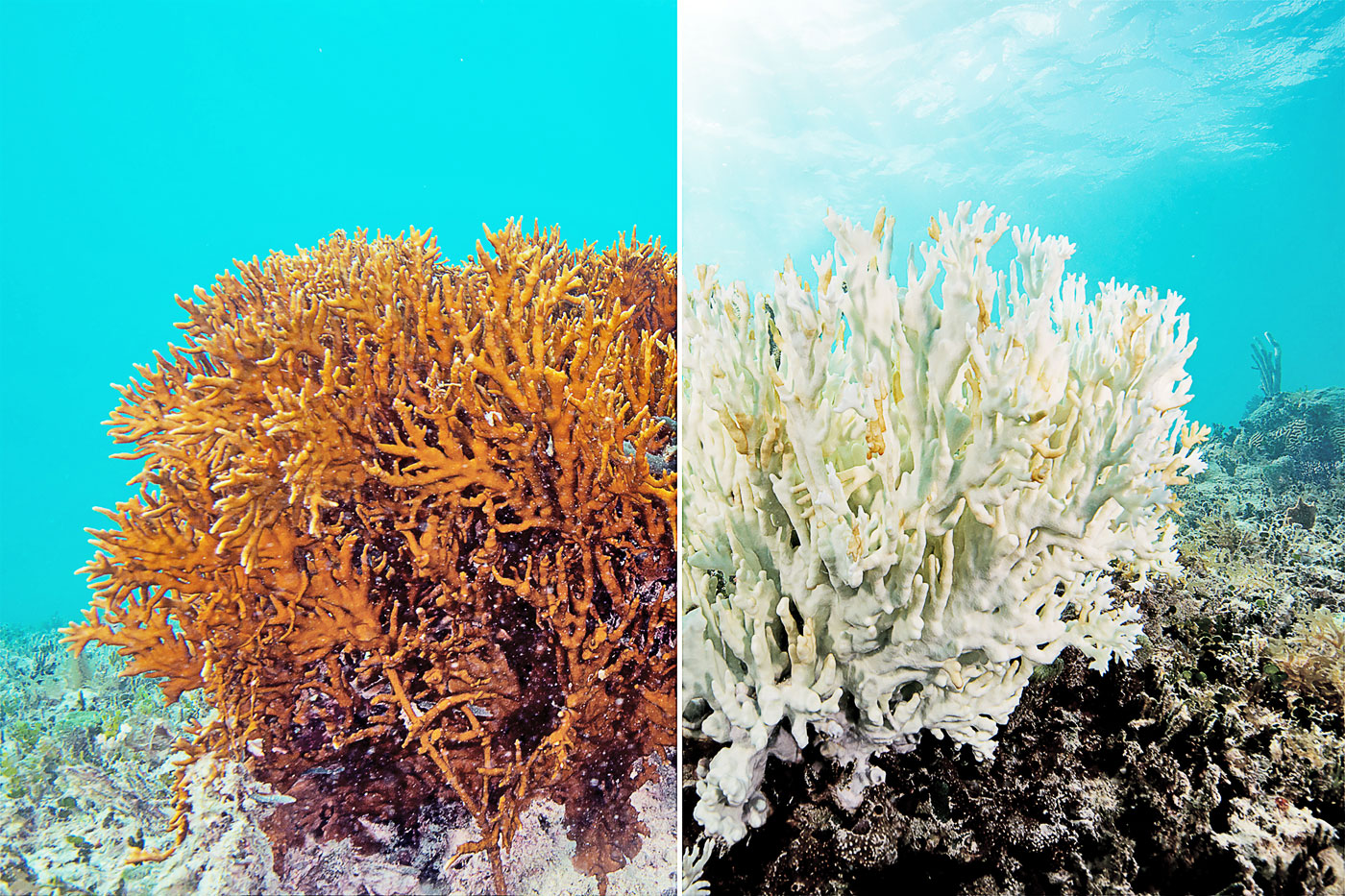
Bleaching occurs when stressed corals expel the symbiotic algae living in their tissues, turning completely white. In 2005, parts of the Caribbean lost half of their coral reefs in one year due to a major bleaching event across the region. Cayman was less widely impacted than others during that heatwave.
Such a drastic loss would have implications for Cayman’s fishing and diving industries as well as for the ecosystem.
The DoE’s dive team is currently seeing patches of paler coral – meaning they are under stress but not yet critically impacted – and NOAA has issued a ‘bleaching warning’. The threat level will be stepped up further, the longer temperatures stay beyond their current threshold.
Long-term trend
Equally troubling is the thought that recent sea temperature spikes – fuelled by unseasonably hot weather – could become a regular occurrence as the climate changes. That could mean prolonged exposure to thermal stress, threatening the existence of tropical coral reefs over the longer term.

“Every year the ocean temperature is increasing and the long-term outlook for reefs is fairly bleak,” said Austin, noting glimmers of hope in research around the resilience of certain corals to temperature changes.
The impact of warmer ocean temperatures has consequences for fish reproduction and migration patterns. Separate research by the Department of Environment hints at the ‘vertical migration’ of certain species, particularly sharks, to seek cooler water at greater depth.
There is little that anyone in Cayman can do to control ocean temperatures and Austin cautions the best approach is to protect corals from other stresses, such as overfishing and pollution, and to continue with its enforcement and monitoring of the island’s extensive marine protected areas.
Research, including recent studies from the Central Caribbean Marine Institute in Little Cayman, show healthier corals are better able to withstand heat stress.
Hurricane threat
Of more immediate concern is the possibility for the elevated ocean temperatures to inject fresh energy in what was initially forecast to be a relatively benign hurricane season.
A complex variety of meteorological factors influence the frequency and power of tropical storms.
“Deep, warm water is a necessary ingredient for tropical cyclone development,” says Simon Boxall, of Hazard Management Cayman Islands.

“Higher water temperatures have often been associated with rapid intensification of cyclones.”
Other factors are working in Cayman’s favour, though, including Saharan dust clouds that have been sweeping across the region, impeding storm development.
Equally, El Niño is bringing upper level wind shear in this region, helping to break up nascent cyclones.
Those are variable phenomenon, however, and Boxall cautions against complacency – especially with sea-surface temperatures already 2 degrees Fahrenheit higher than average for July and likely to increase further through August, September and into October – the most critical months for hurricane threats in Cayman.
Related Videos