

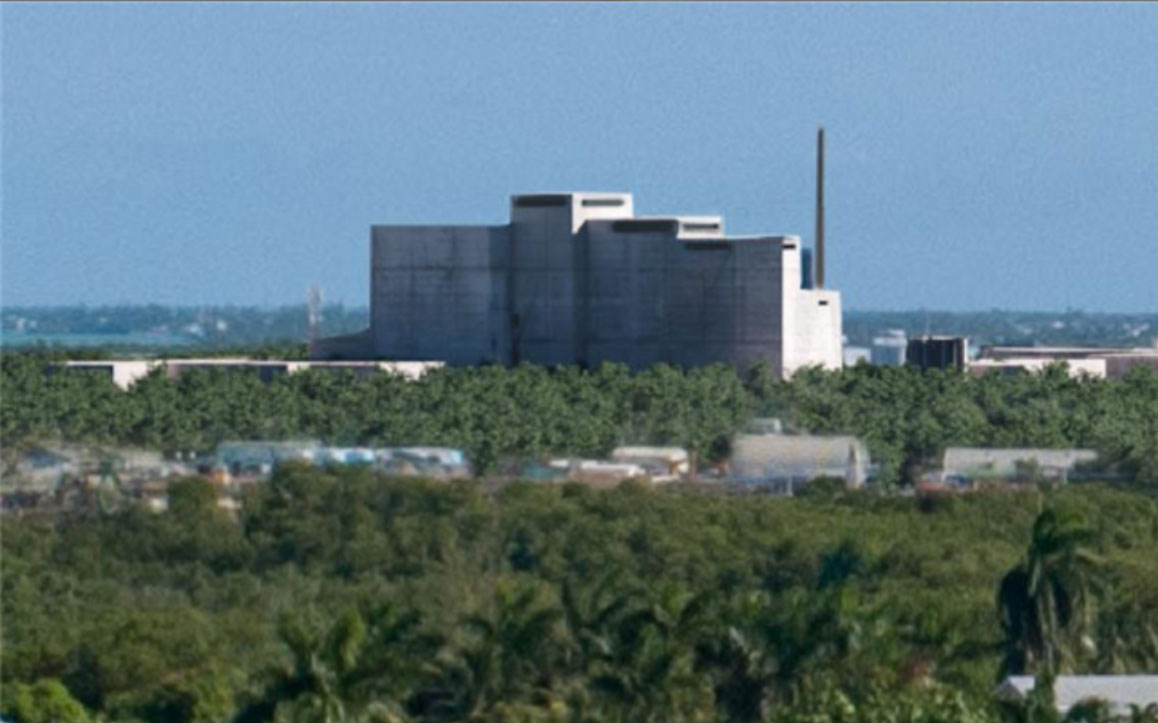
An environmental impact assessment of the proposed ReGen waste-to-energy and recycling project, which would replace the George Town landfill, has found that the anticipated effects of the new facilities on the surrounding areas would be an improvement on the existing dump.
The ReGen system was drawn up as an alternative to the landfills on all three islands, in recognition that, the report states, the “existing solid waste management regime is not sustainable, poses a potential threat to the environment, and does not make best use of potential resources that could benefit the Cayman Islands”.
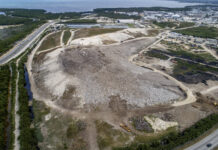
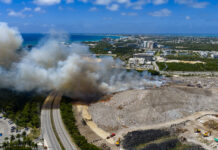
The suite of facilities drawn up to replace the unsightly landfill won’t completely erase the visual impact of the infamous ‘Mount Trashmore’. It will include a waste-to energy plant featuring a towering 158-foot high ventilation stack – roughly the size of a ten-storey building – as well as a boiler house and waste bunker.
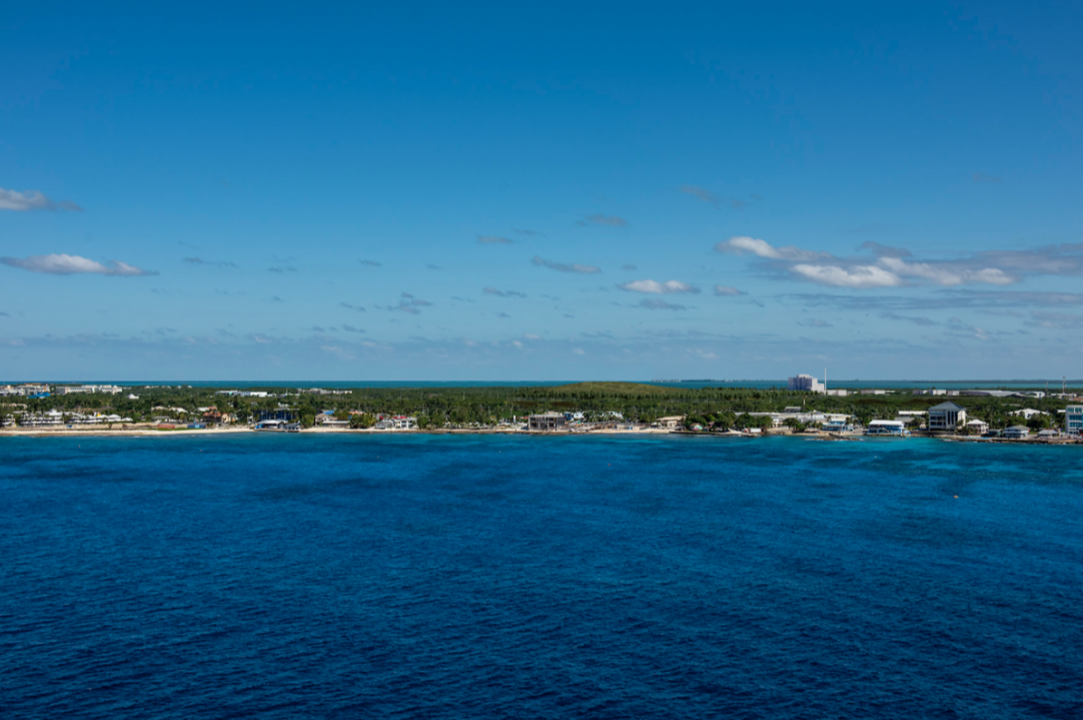
The report indicates that the industrial plant will be visible from the North Sound and from visiting cruise lines moored in George Town Harbour. It is still expected to be a significant improvement on the current landfill which will be closed and capped as part of the project.
The report forms part of a draft environmental statement, which is currently open to public consultation. Once feedback from members of the public has been gathered, a final version of the environmental statement will be issued.
After that, a final environmental management plan will be drawn up and the Environmental Assessment Board will make its recommendations to Cabinet, which will decide if the project, with a price tag estimated at over $1billion over 25 years, will go ahead.
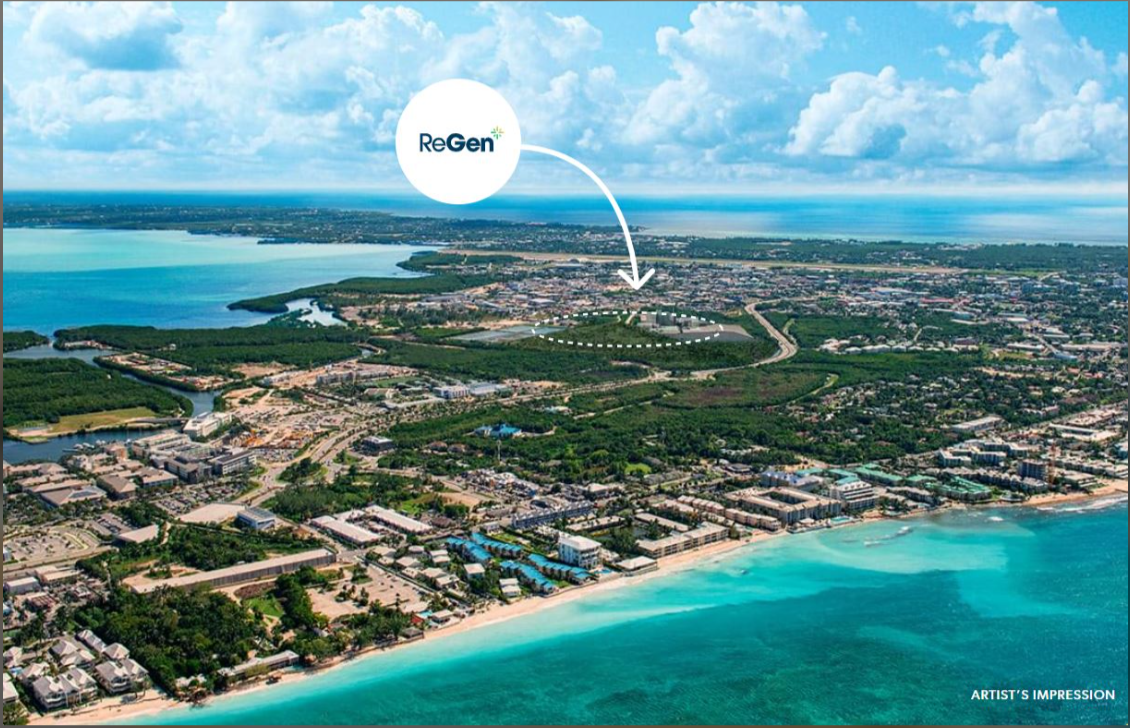
The draft environmental statement notes, “The proposal involves diverting waste away from landfills and to better reuse and recycle the items that waste producers currently throw away, the ReGen project proposes closing the George Town Landfill site and building state-of-the-art infrastructure immediately southwest of the existing landfill.
“When finished, this infrastructure will improve recycling and turn materials that aren’t recycled into electricity to power homes and businesses.”
Consultancy company GHD reviewed the potential impacts of the project, which is a public-private partnership between government and a Dart-led consortium.
The consultants assessed the potential impacts the facility will have on the North Sound and the marine ecology, the terrestrial ecology, hydrology and hydrogeology, land quality, landscape and visual elements, air quality and greenhouse gases emissions, noise and vibration, traffic and transport. They also examined socio-economic impacts.
Marine ecology
The consultants studied the North Sound and wider coastal waters, extending from the coastline to 12 nautical miles out, and found that, because it was unlikely there would be any direct discharge into the sea from the site, there are “no anticipated impacts to the surrounding marine environment”.
However, the consultants wrote that, as the facility design is not yet finalised, “there is a possibility (although unlikely) of direct marine discharge of cooling water to the North Sound, if the anticipated discharge alternatives prove to be infeasible”. But mitigation measures in place should ensure no impacts, the consultants noted.
They added that there were also no significant impacts anticipated while importing waste from the Sister Islands to Grand Cayman.
During both the construction and operation periods, monitoring would be in place for erosion and sediment control, the consultants wrote in the report.
Terrestrial ecology
The assessment of the potential impact on the surrounding land covered areas within 1.2 miles of the site.
The consultants pointed out that the proposed development would result in the removal of 33 acres of terrestrial habitat and 1.7 acres of inland mangroves. They said, since the site is “sparsely populated, it is not considered suitable for species to live in due to ongoing activities”, but that some fauna species may be eliminated due to construction during site preparation.
“Associated residual effects include vegetation loss, soil erosion, dust, noise and vibration, and spills,” the report noted.
It stated that there may be protected species in some parts of the site – mainly birds and bats in the mangrove areas – and that recommended mitigation measures should be carried out throughout construction and operation.
Hydrology and hydrogeology
The consultants carried out studies of the potential impact of water movement on the proposed facility within 1.2 miles of the site.
In the report, mitigation measures are recommended for “potentially significant impacts associated with the construction, operation and decommissioning” of the ReGen plant, including management plans for surface runoff, wastewater and sewage, as well as the use of an appropriate grade of concrete in the plant’s design that prevents sulphate attack and degradation of the infrastructure under its surface, in the event of groundwater contamination.
The report also called for the design and environmental management plan of the facility to take potential flooding into account when planning floor levels; ensuring that equipment is raised above anticipated flood water levels; and that a hazard management plan is used in response to government-issued warnings.
“With these mitigation measures adopted,” the consultants wrote, “the significance of these potential impacts are considered to be minor, except for the residual risk of tidal flooding and extreme weather and climate change-induced flooding, which can cause lasting effects to site infrastructure and risk life.”
“Due to the current unsustainable design and practices at the George Town Landfill and resulting impacts to groundwater quality, the construction of the [project] will likely result in net environmental benefits due to improved waste management practices and facilities.”

Land quality
The consultants explored the potential impact of wind-blown dust and land contamination on the health of staff at the ReGen facility, or living or working within approximately 250 yards of the site.
The areas they considered were the existing George Town landfill, parts of the land owned by the Cayman Water Authority to the east, with four former wastewater treatment lagoons (now used for sludge) and a current wastewater treatment plant; the mangrove to the south, along with a concrete batching plant and a concrete block and paving stone manufacturer; and the Esterley Tibbetts Highway and parts of the Lakeside development to the west.
The consultants noted that the Department of Environmental Health gathered leachate sampling data to the west of the main landfill from 2016 to 2020, and found that arsenic and chromium values analysed in 2020 were “substantially higher than corresponding data for ground and surface water samples”.
They found that because the existing landfill is unlined, underground movement of landfill gases and vapours poses a potential risk to the ReGen site, but given the distance between the active area of the landfill and ReGen facilities, as well as the existing and planned active gas management system at the landfill’s north mound, “it’s likely any meaningful gas movement from the George Town Landfill to the (ReGen) facilities is minimal”.
GHD stated that, as the current landfill operates on outdated waste management principles and lacks most environmental mitigations commonly applied to modern facilities, local regulators had identified leachate emissions “as one of the main sources of contamination to the North Sound”.
The consultants added, “The National Solid Waste Management Strategy for the Cayman Islands anticipates that the landfill will be closed, but is expected to continue to operate while the new (ReGen) is developed and implemented. Remediation and restoration work options are proposed, including landfill mining and capping.”
The EIA also examined the possible health effects the new facility could have on the construction workers building the site, as well as staff and visitors, through exposure, and potential spread, of contaminated soils and release of runoff, dusts, gases and vapours within the old scrap and tyre stockpile area.
They looked at the potential health effects of surrounding land users from failure of the landfill cap, for example, due to flawed engineering, extreme weather events or sea level rise.
The report noted, “It is likely that any pre-existing wastes that are present will not result in unacceptable levels of contamination.”
It added, “Established procedures should ensure that filling materials during construction do not contain hazardous materials which can pose a risk to workers. Construction and operation of the (site) is expected to result in net, long-term environmental benefits compared to the unsustainable design and impacts to soil and groundwater quality of the current George Town landfill.”
Visual impact
The most jarring visual impact of the new facility will be the towering 158-foot-high ventilation stack – the highest point of the project – and the plumes of white steam and gas emitting from it during operation. The facility will also consist of a 124-foot-high boiler house and 110-foot-high waste bunker.
The site will be most visible from the nearby United Pentecostal Church, from tall residential properties on Seven Mile Beach, from cruise liners anchored off Seven Mile Beach, and from the North Sound Lagoon, the consultants found. The report includes an artist’s rendering of what the site will look like from those various locations.

“Users of the church and residents on Woodlake Drive, residents on Seven Mile Beach, tourists and staff of the cruise liners off Seven Mile Beach and users of the North Sound Lagoon are all assessed to have a high sensitivity to the change in viewpoints, with prolonged and permanently altered views where the Project is located,” the consultants wrote.
From other nearby vantage points, like Lakeside Villas, while the project’s industrial buildings and ventilation stack will be visible, they will be partly obscured behind the existing vegetation and tree line, according to the report.
Air quality
The consultants said the potential impacts of the facility on local air quality were found to be “within acceptable standards”.
The assessment indicated there would be “increased contaminant concentrations due to the additional emissions from the project”, with the most significant increase being from heavy metals, but that the cumulative impacts would not exceed air quality standards.
Those potential impacts were assessed by modelling the estimated maximum emissions of each contaminant to determine the maximum potential concentration of each that could occur off-site.
“By applying the proposed mitigation measures, the results of the air quality and greenhouse gases assessment indicate that there are no significant impacts to human health, quality of life or ecological receptors (plants and animals, habitats or ecosystems) anticipated,” the report noted.
Socio-economics
It also noted that, during the construction phase, there would be procurement opportunities for businesses to supply goods and services, and a minor increase in revenue for local businesses due to construction workers purchasing meals and other services.
Potential temporary negative impacts that may occur during construction may include a “reduced sense of desirability or pleasantness (amenity) for some residents, businesses and community facilities in close proximity to construction activities, and “minor” traffic disruptions, the report stated.
During operation of the site, the consultants stated, the key socio-economic upsides would be mostly related to the “regional economic benefits associated with the development of a new, technologically advanced method of dealing with solid waste, industry and the diversification of the economy”.
They said, in particular, the project would have the potential for capacity building and upskilling of the existing workforce and provide opportunities for new business generation to support its operations in Cayman as energy recovery facilities technology is a new industry for the region.
“Additionally, due to the nature of the Facility, involving the production of green energy, the recovery and reusing of materials and the overall improvements to current waste management practices in Cayman, residents may experience a sense of community pride associated with the contribution to the circular economy. This may in turn support the tourism industry to achieve its aspirations for sustainable and eco-tourism practices as a large waste contributor on the Island,” they noted.
They added that the key negative socio-economic impacts during operation are related to the perception of health and safety risk associated with the operation of the project and changes in air quality, noise and visual amenity for people living near the site.
How to find out more
The 1,764-page draft environmental statement details the findings of the environmental impact assessment of the ReGen project, previously called the Integrated Solid Waste Management System, or ISWMS. A shorter non-technical report on the findings is also available.
The next step in the process is a public consultation on the draft report.
Comments and feedback from members of the public will be collated by the Environmental Assessment Board, which will be reviewed by the board and the Dart consortium and considered in the finalisation of the environmental statement.
Cabinet will ultimately make the final decision on the project.
Public town hall meetings will be held from 6-9pm at the following locations and dates:
- Monday, 28 Aug., Harquail Theatre, George Town.
- Tuesday, 29 Aug., John Gray Memorial Church Hall, West Bay.
- Wednesday, 30 Aug., Mary Miller Hall, Red Bay.
The deadline for the close of public consultation input is midnight, 7 Sept.
For more information, visit regen.ky.
Related Videos









It is about time, The government has been talking about doing something with all the waste generated by everyday living. This is a positive step forward
A new issue will be how to dispose of the highly toxic ash left from the burning including ash scrubbers on the chimneys.
Not really, look up FGT and electrostatic precipitators, they have been around a long time.
Can we attempt to make the most visible object on our beautiful island…..not ugly?
How about a worldwide design challenge and the winning design wins $100,000? Given the budget for this project and the fact we will all look at this for most of our lives this seems like a small price for a large community value – I doubt the winning design will be one we are looking at here.