For the latest information on storm activity in the Cayman Islands, as well as information on how to prepare for hurricane season, visit Storm Centre.
As the Atlantic hurricane season officially enters its second half, storm activity is beginning to live up to predictions after a slow start.
As of 31 Aug., the Atlantic hurricane basin had recorded 11 named storms, with three becoming hurricanes, of which two turned into major Category 4 systems.
Predictions vs storm activity
In May, when forecasters at the US-based National Hurricane Center released their initial predictions, they called for a ‘near normal’ season of between 12 and 17 named storms with winds of 39 miles per hour or higher.
Of those, five to nine were expected to become hurricanes with winds of at least 74 mph, and one to four of those possibly Category 3 to 5 hurricanes with winds of at least 111 mph.
Last month, the forecast was revised upwards, with predictions of an ‘above average’ season.
The new prediction, which obtains through the end of hurricane season on 30 Nov., now calls for between 14 and 21 named storms, with six to 11 hurricanes – of which two to six are expected to become major storms.
To date, the Atlantic hurricane basin has recorded 11 named storms.
Ironically, the first named storm of the 2023 hurricane season was actually called an ‘unnamed storm’ which formed in January. Storms Arlene, Bret, Cindy, Don, Emily, Franklin, Gert, Harold, Idalia and Jose have all formed after the official 1 June start.
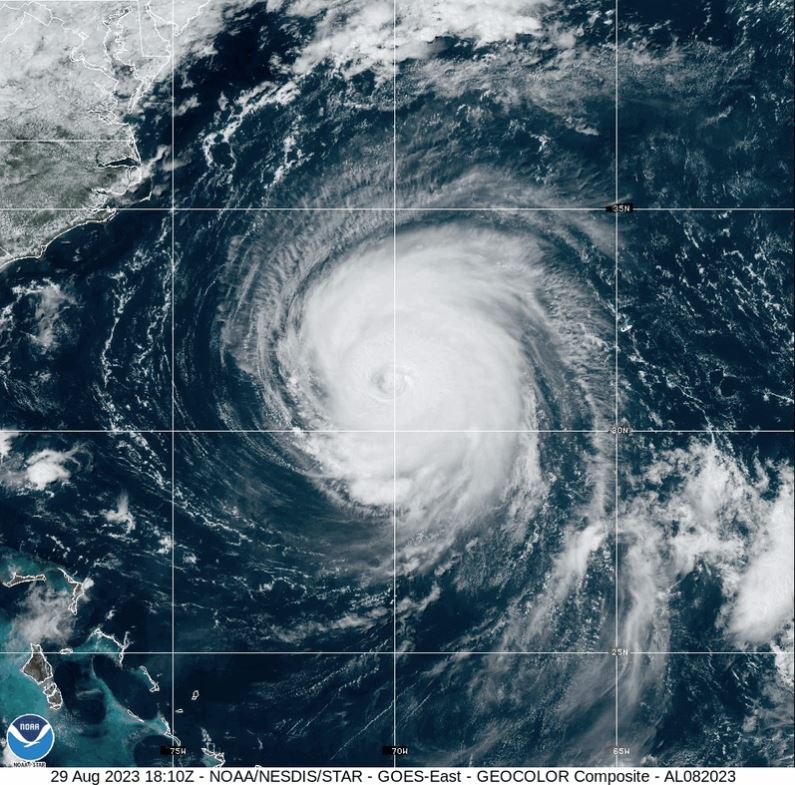
Don, which formed on 14 July, was the first storm to achieve hurricane status, peaking at Category 1 strength and eventually dissipating into tropical remnants 24 July. Largely a fish storm, Don churned in the Atlantic Ocean without any major impacts to nearby land.
Hurricane Franklin was the first major system of the season, peaking as a Category 4 storm with maximum sustained winds in excess of 90 mph. As of 1 Sept., Franklin had been downgraded to a Category 3 hurricane with maximum sustained winds of 85 mph days after travelling directly over Hispaniola, and up across the southern Bahamas, before finally impacting Bermuda.
Hurricane Idalia formed next. Though not as long-lasting as Franklin, Idalia also peaked as Category 4 system before making landfall in Florida.
Idalia has since weakened as it continues to move further north.
Cayman’s storm activity
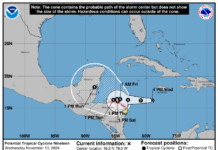
Of the 11 systems, Idalia came the closest to Cayman. On Friday, 25 Aug., then Tropical Storm Idalia passed several hundred miles to the west of Cayman before heading northeast and hitting Florida as a Category 3 hurricane.
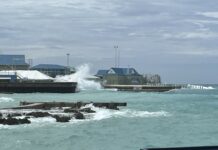
Though its impacts were minimal locally, Idalia left in its wake rough seas which dumped mounds of marine algae along Grand Cayman’s Seven Mile Beach.
However, Caymanians living in Florida found themselves hunkering down as the major hurricane slammed into the Florida Panhandle.
Related Videos