For the latest information on storm activity in the Cayman Islands, as well as information on how to prepare for hurricane season, visit Storm Centre.
As the 2023 Atlantic hurricane season nears the halfway point, forecasters have increased their predictions in response to record-warm sea surface temperatures, that they say are likely to generate more storms.
In their annual mid-season prediction, forecasters at the US-based National Oceanic and Atmospheric Administration increased storm ranges for all categories as part of a revised forecast, which now calls for an ‘above average’ season.
“Forecasters believe that current ocean and atmospheric conditions, such as record-warm Atlantic sea surface temperatures, are likely to counterbalance the usually limiting atmospheric conditions associated with the ongoing El Niño event,” said NOAA in a statement released on its website on 10 Aug.
In May, when NOAA issued its initial annual forecast, it predicted between 12 and 17 named storms with winds of 39 miles per hour or higher.
Of those, NOAA expected five to nine to become hurricanes with winds of at least 74mph, and one to four of those to strengthen to Category 3 or higher, becoming major hurricanes with winds of at least 111mph.
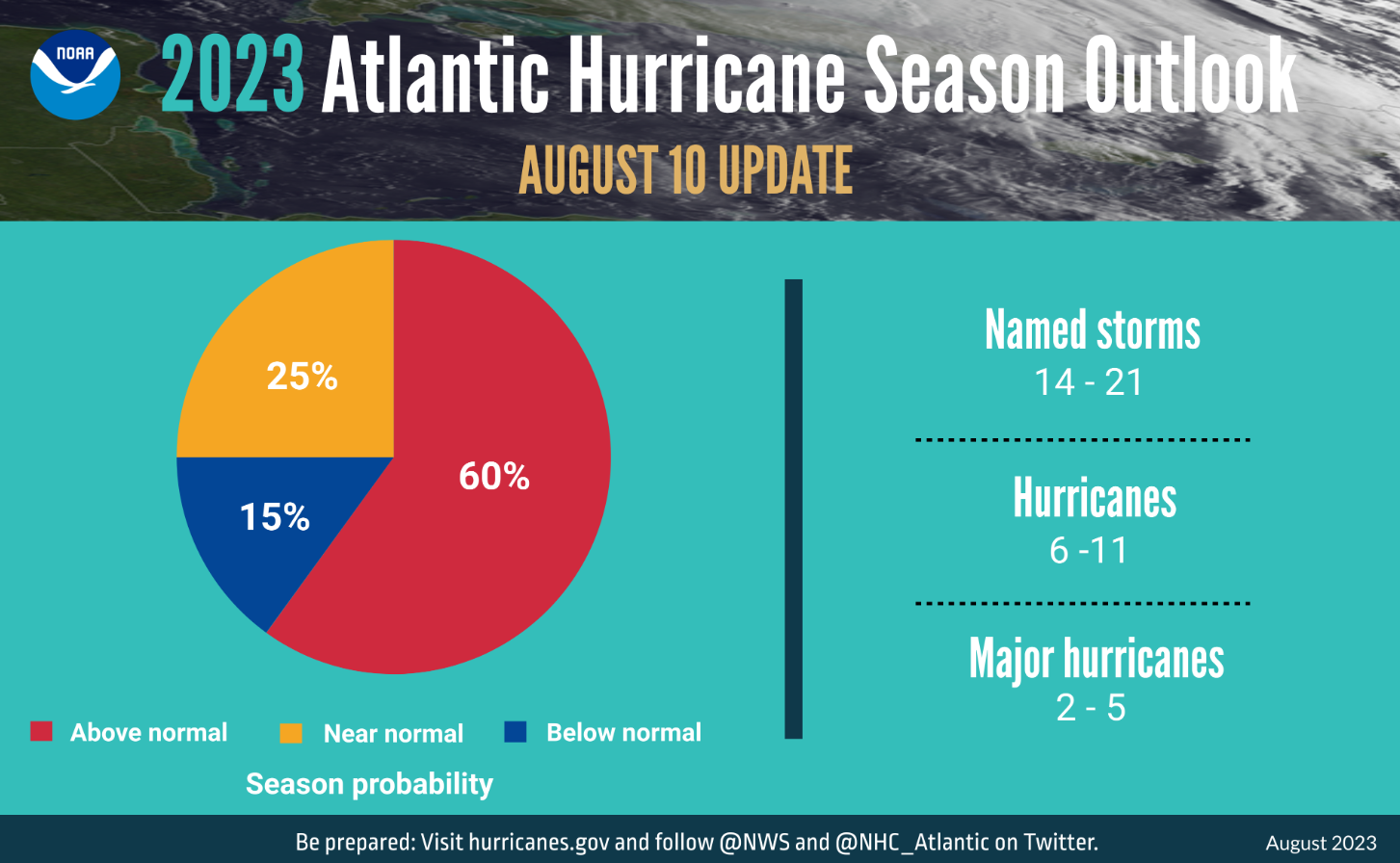
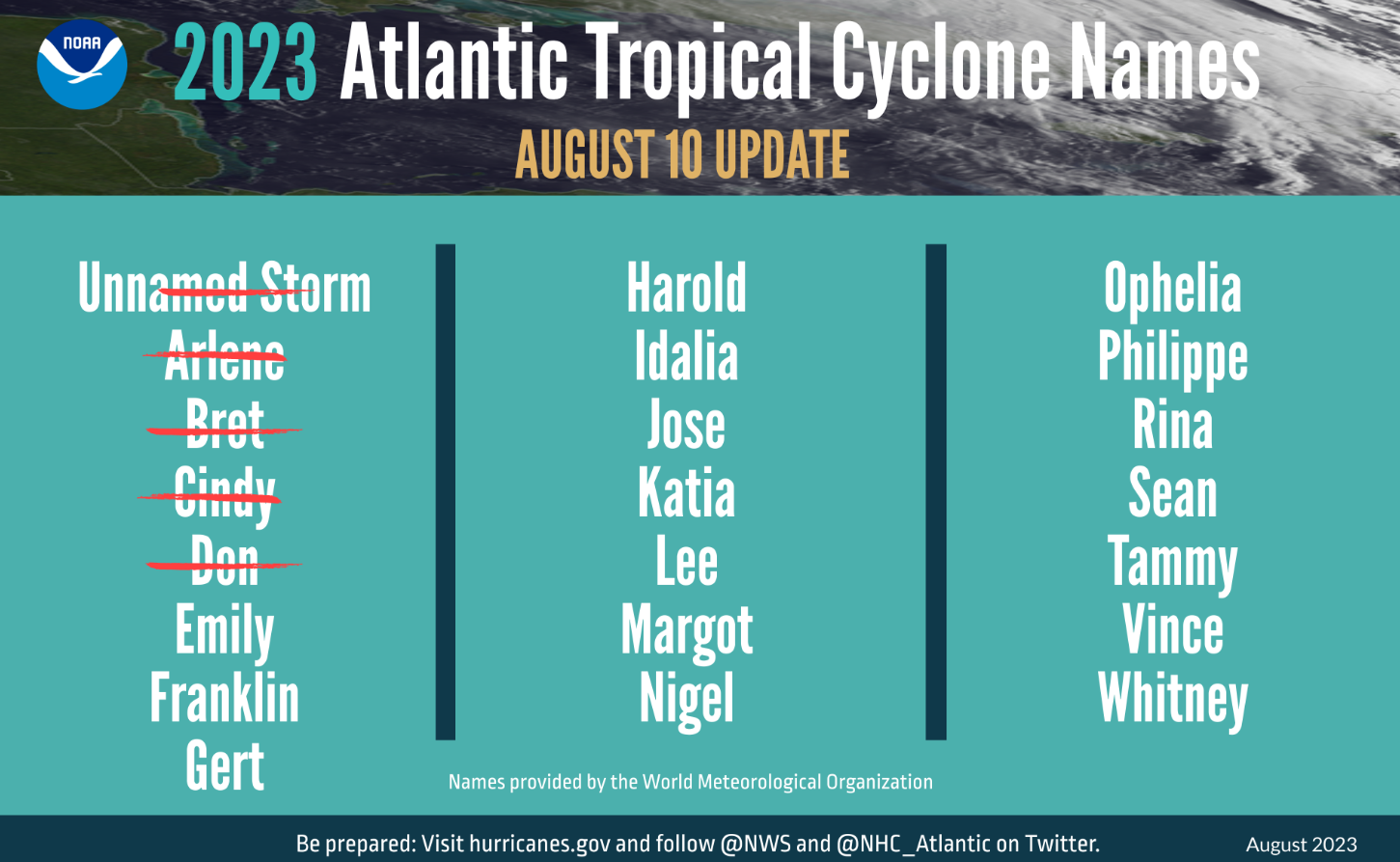
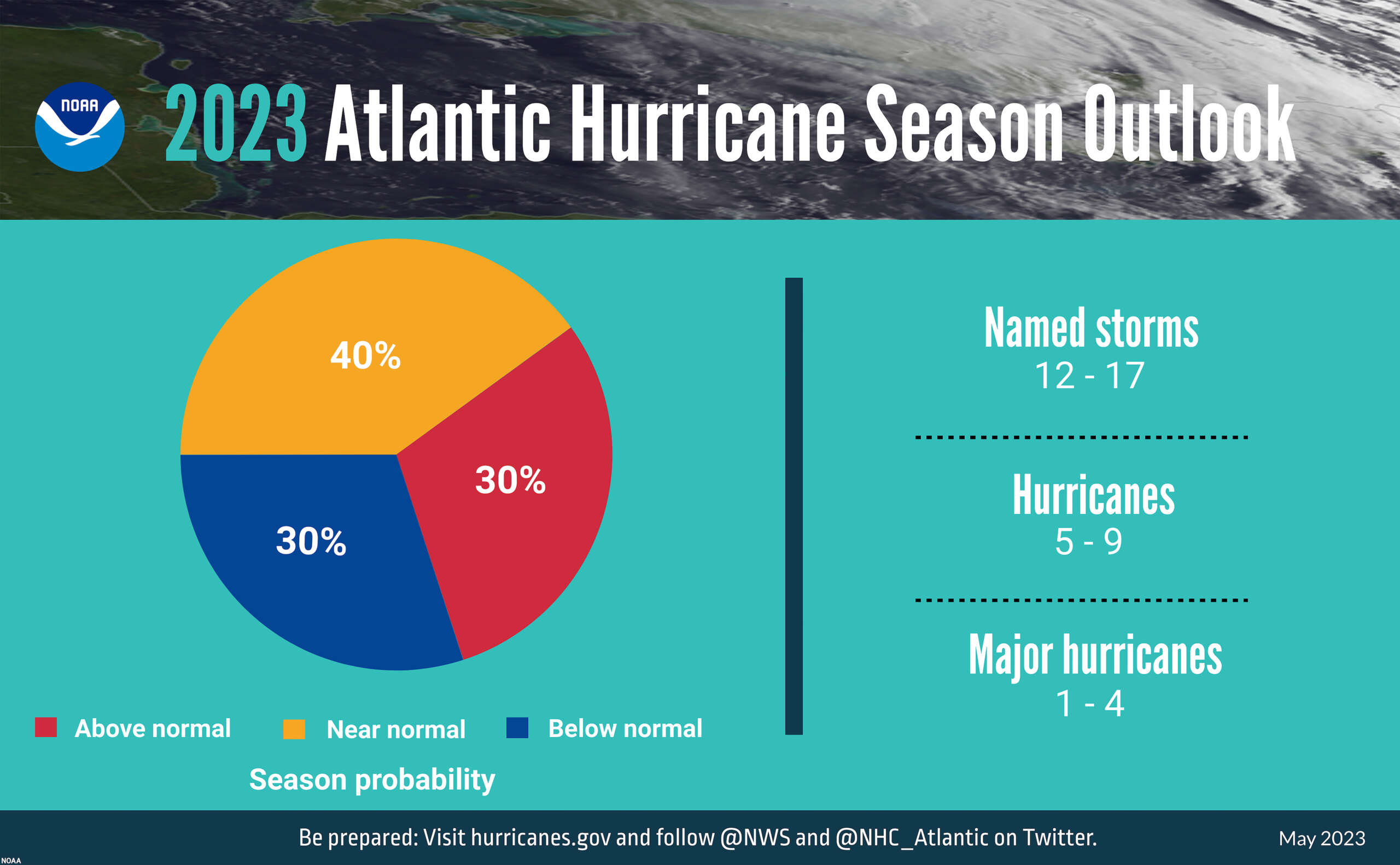
The new prediction, which is valid through to the end of hurricane season on 30 Nov., now calls for between 14 and 21 named storms, with six to 11 hurricanes – of which two to six are expected to become major storms.
To date, the Atlantic hurricane basin has recorded five named storms. Ironically, the first named storm of the 2023 hurricane season was actually called an ‘unnamed storm’ which formed in January. Storms Arlene, Bret, Cindy and Don all formed after the official 1 June start – with Don becoming the first, and only, hurricane of the season.
Although the new predictions estimate an above-average season, in reality it now straddles NOAA’s current ‘average season’ forecast of 14 named storms, of which seven hurricanes are expected to form, with three of those major hurricanes – which is based on the 30-year, 1991 to 2020, climatological model.
“The main climate factors expected to influence the 2023 Atlantic hurricane activity are the ongoing El Niño and the warm phase of the Atlantic Multi-Decadal Oscillation, including record-warm Atlantic sea surface temperatures,” said Matthew Rosencrans, lead hurricane season forecaster with NOAA’s Climate Prediction Center. “Considering those factors, the updated outlook calls for more activity, so we urge everyone to prepare now for the continuing season.”
Other factors that NOAA says are affecting the Atlantic hurricane season include a below-normal wind shear forecast, slightly below-normal Atlantic trade winds and a near- or above-normal West African monsoon.
Related Videos