


Cayman’s private bus service should be scrapped and replaced with a modern government-run public bus network, a newly published transport report suggests.
Auditing company Deloitte, commissioned a year ago to offer solutions to the islands’ transport woes, has said the move will help to reduce cars on the road by 20%.
An overhaul of the service is likely cost at least $25-30 million, the report says, with the potential for costs to escalate further, according to a breakdown of possible options.
The 154-page document, titled ‘Assessment of a Public Transport Strategy and published online on 8 Nov., details several possibilities for the future of Cayman’s bus network.
They include the introduction of smaller district bus depots, which would act as park-and-ride centres, feeding into the main national bus system.
The report also suggests more than 30 practical ways that the bus system could be improved and modernised.
Among them are larger electric buses with free WiFi, access for people with disabilities, automatic payment facilities, stopping alert systems and more natural light.
It also recommends additional bus stops with surveillance cameras for safety, the introduction of bus lanes, more routes, and longer operational hours.
These enhancements, if implemented, would improve the passenger experience and encourage more people to use the buses, Deloitte writes.
They would also help in “pulling existing residents out of private motor vehicles onto the public buses and provide visitors with an enhanced island experience”, it adds.
In September 2022, the Ministry of Tourism and Transport awarded the Cayman consultancy firm a $199,600 contract to look into the islands’ public transport system, with a focus on buses.
Deloitte examined data, an analysis of public bus systems across other jurisdictions, and stakeholder consultation responses in order to construct its report.
The paper was completed earlier this year, and after receiving the necessary government approvals, it has now been released to the public.
System boosts
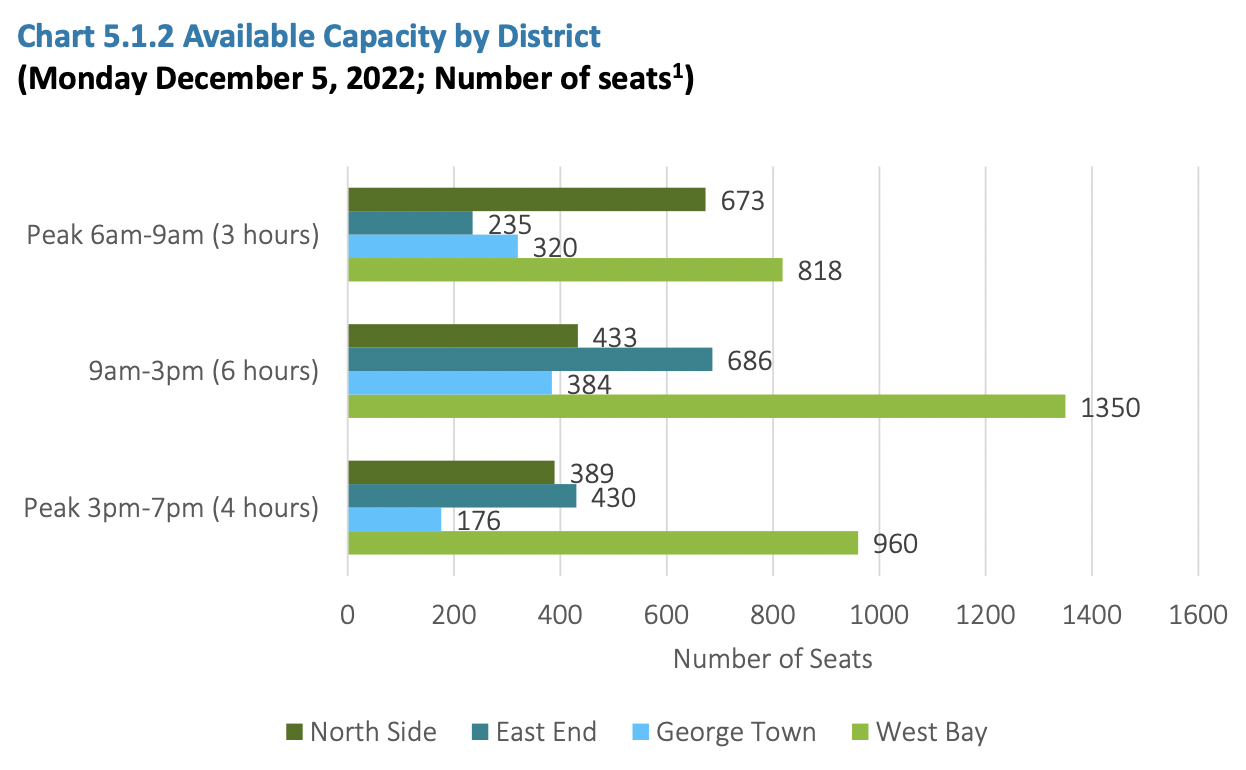
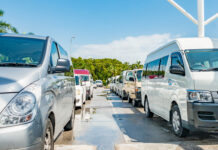
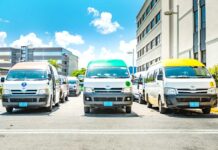
Cayman’s privately-run bus system consists of 13 routes in Grand Cayman, starting and ending at the Edward Street bus terminal in George Town, and three in Cayman Brac.
Grand Cayman buses service George Town, West Bay, Bodden Town, East End and North Side – with the majority driving between George Town and West Bay.
There are some bus stops along the routes, but very few are indented, meaning buses just pull over by the side of the road in most cases.
Fares start at $2 and increase to $5 for longer journeys. Buses run from 6am to 7pm from Monday to Saturday, but there are no timetables.
The public bus system is currently used predominantly by people employed in George Town and West Bay.
“There is a demand for an effective public bus system by the total population residing in the Cayman Islands as well as visitors,” the report says.
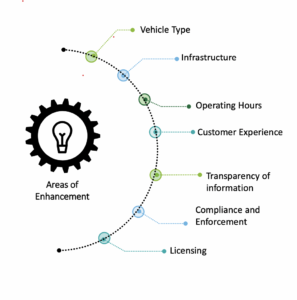
Deloitte lists seven areas for improvement.
They are vehicle type, infrastructure, operating hours, customer experience, transparency of information, compliance and enforcement, and licensing.
Larger buses recommended
Deloitte recommended larger buses with space for personal belongings, on-board WiFi, facilities for disabled people, and automatic payment facilities.
It also suggested more natural light, a built-in stop alert system for customers, and a generally consistent standard of quality.
Bus lanes and bus stops
The report suggests creation of bus lanes, more official bus stops with WiFi, and possibly district depots – with shelter, information, surveillance cameras, lighting and security.
The report recommends buses could run longer operational hours across all routes to help travellers throughout the week and at unsociable hours.
Customer experience
Deloitte said drivers should demonstrate high levels of customer service, and should consistently allow customers with physical disabilities to enter their vehicles.
Customers should not have to pay for additional seating for their personal belongings, and customer service employees and information could be at bus stops and depots.
Convenient payment facilities should be provided online or in advance, and bus operators should display consistent levels of reliability by arriving at pre-defined times.
Consistent enforcement could be implemented to ensure bus operators adhere to laws and routes, and a hop-on-hop-off service for visitors could be created, the report says.
Transparency
The report suggested buses should be equipped with devices to allow for live route tracking, information about arrival times and seat availability, and service alerts
Bus routes and timetables should also be available to the public, and bus fares should be published, the report added.
New routes needed
The report suggests bus routes specifying designated bus stops, which allow for passengers to be dropped off within 10 minutes from their doorstep or place of work.
Routes should allow for more demand around central hubs during peak hours, Deloitte says, and should provide access to key areas, sub-divisions and residential areas.
Compliance and licensing
The report says technology should be used to enhance the effectiveness of compliance functions, and fines or legal consequences be introduced for non-compliance.
Bus licence plates should consistently reflect the correct vehicle type and there should be faster renewal approvals, it adds.
Operational frameworks
In its report, Deloitte offers two options that the government could choose for its new public bus network in Grand Cayman.
The first option would see all but a few bus routes originating from a single central bus depot, and would include an enhanced community bus service for the immediate area.
Other communities would have their own designated “bus loading locations” where further limited community routing could originate, the report says.
The second option is for a network that includes a central bus depot and several “strategically placed” bus sub-depots across Grand Cayman.

The functionality of each sub-depot would be developed in phases, the report says, and would first start as a community park and ride terminal.
Passengers would drive their cars to the sub-depot to take a semi-express bus into a centrally located bus depot to then be able to catch a connector bus to their destination.
The report suggests that either option can only happen if there is a comprehensive and persistent effort by a qualified team of professionals.
Deloitte also said that to allow for a conversion from the current privately-run service, the government would need certain elements in place.
They include clear and well-defined outcomes, a detailed and robust transition plan, organisational capacity to deliver change, and a comprehensive communication strategy.
Baseline case
The report details a realistic “midway” priced option for the new government-run bus service, which is neither too costly nor using low-quality buses or reduced services.
It will feature a long-haul bus route to reduce the number of cars travelling to and from George Town during rush hour peak hours.
It will do this by implementing a new electric bus transportation system, running one route north and two going east, the report says.
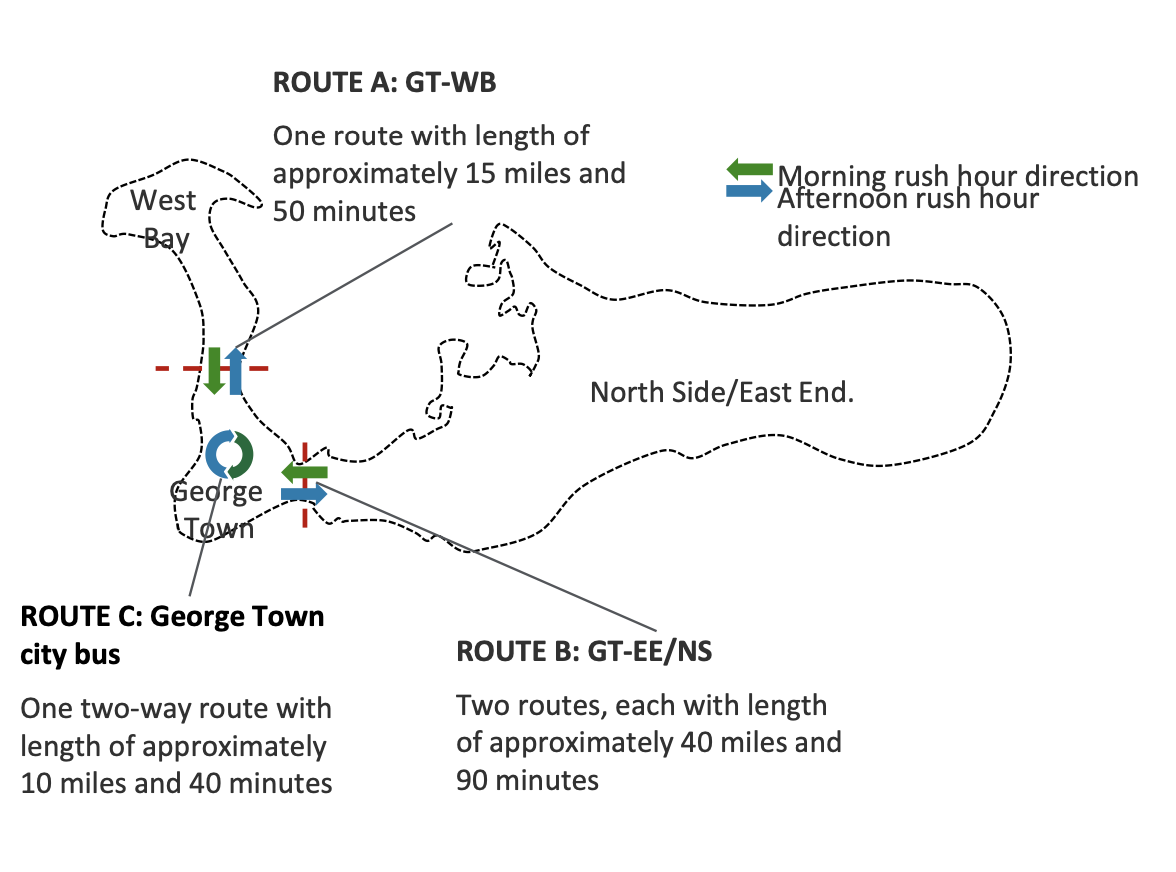
This involves setting up enough departures and 40-foot buses to be able to reduce cars by 20%. This service will run 23 trips per hour, serving about 1,370 people in that time.
The second major part of the planned service will include a central George Town electric 26 foot mini-bus route to reduce traffic inside the town centre.
The service will then run 12 trips per hour, at 80% capacity. This will serve about 300 people per hour if all seats are used.
Based on the desired effects, the necessary fleet size is estimated to be 26 large buses and 10 mini-buses, the report says.
“Timeline, quality and cost of the implementation are dependent on choices related to ambition levels, in terms of reduced congestion, environmental effects and approach to implementation,” it adds.
Deloitte explains that buses and bus depots are the two most significant cost components in this case.
Road improvements constitute a major cost risk factor but can be mitigated or reduced by doing proper analyses prior to deciding on bus types and depot specifications, it says.
Costs expected to be $25-$30 million
The preliminary assessment of costs performed for the chosen baseline case indicate that a realistic mid-way approach would be about $25-30 million, the report says.
“Having a clear ambition for a future public transport system is essential because it provides a clear and consistent direction for planning and implementation,” it adds.
“Without a clear vision or set of goals, public transport systems may be developed in a piecemeal or ad-hoc manner, leading to inefficiencies, inconsistencies and missed opportunities.”
Critical success factors
There are several specific things that will determine whether shifting to a government-led public bus system will succeed or fail, the report explains.
This includes the restructuring of the Public Transport Unit – which the report goes into in detail.
The prices set need be more affordable than owning a private vehicle and possibly free initially in order to encourage use and inspire changed behaviour, the report reads.
Operating times need to be extended to meet the needs of passengers, and travel times need to be faster than driving private vehicles between the districts and George Town.
The location of district park and ride sub-depots need to be easily accessible, and all routes should be sufficiently serviced from the George Town depot and the district sub-depots.
Bus stops, bus depots and the buses themselves need to be safe and reliable to ensure initial uptake, the report says.
The buses need to be comfortable, safe, clean and quiet in order to pull drivers out of their vehicles.
And finally, buses and bus stops need to have a high level of comfort to entice passengers out of their private motor vehicles, Deloitte explains.
The report also details the benefits of zero-emission buses and key considerations for their successful implementation.
Related Videos









I wonder how many people will actually use this system? And how efficient it will be?
Will the extra vehicles just add to the traffic jams?
And will the schedules allow for now carless users to make trips outwith rush hours to eg go shopping, run errands or collect children from schools?
Seems a challenging venture.