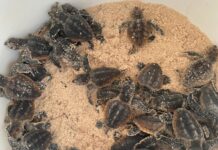
Cayman’s turtle nesting season has broken yet another record, with the number of nests passing the 1,000 mark, a first since the Department of Environment stared monitoring nests in 1998.
DoE Sea Turtle Programme manager and research officer Jane Harwick said the turtle team was “very pleased” to see the latest numbers.
“We have now reached 1,003 nests and are still finding some unrecorded ‘surprise’ nests after they have hatched, and so our final count may increase in the next few weeks,” she told the Cayman Compass recently.
Reflecting on the milestone, Hardwick said, 25 years ago, the nesting populations of sea turtles were facing local extinction as there was so little nesting activity.
“So, we are all really thrilled to reach 1,000 nests for the first time since monitoring began. The predominant species that nest in the Cayman Islands are green and loggerhead turtles, and a few hawksbill nests are also recorded each year,” she said.
Hitting this milestone comes against the backdrop of serious challenges for the sea turtles.
“Sea turtles face increased threats from coastal development and climate change, as well as having a naturally low survival rate of around 1 in 1,000 or less. It’s also important to remember that 1,000 nests does not mean 1,000 nesting turtles, as each nesting female lays 2-8 nests per season,” she said.
It is because of this, Hardwick said, the ongoing research and monitoring is critical to “ensure that the populations continue to recover and exist in the future”.
Everyone has a part to play in securing the future of the local turtle population, especially those who live in properties along the coastline.
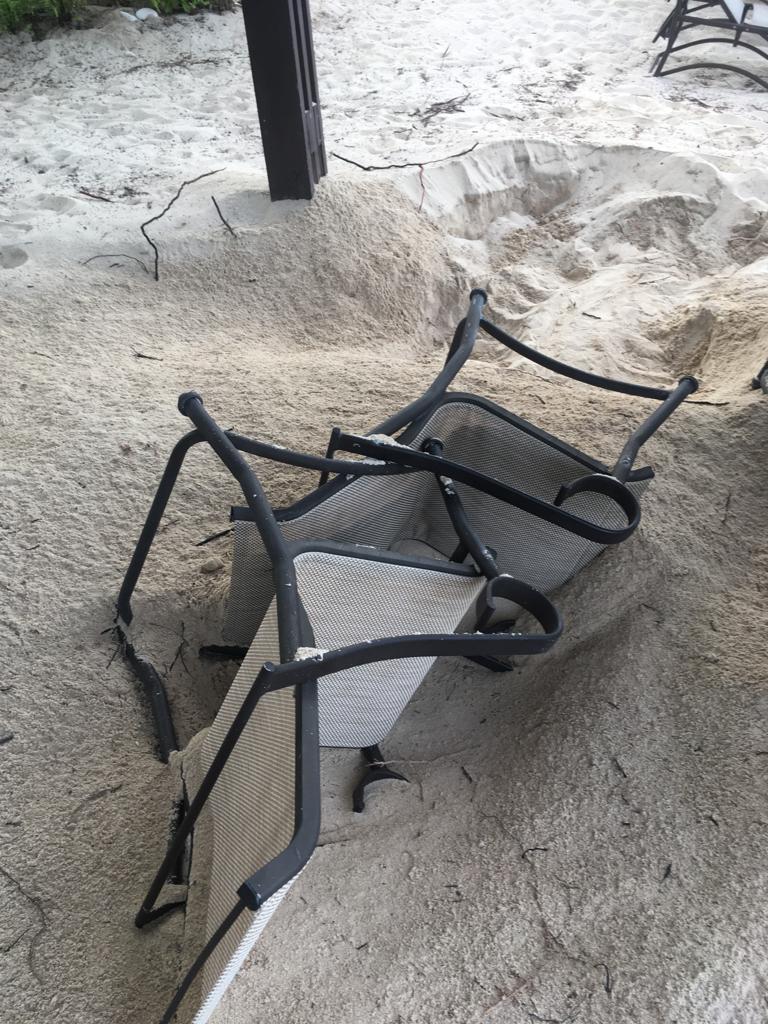
“The DoE would like to remind beachfront property owners and developers that preserving sea turtle nesting habitat and ensuring it is safe for nesting turtles is crucial to the survival of future sea turtle populations in the Cayman Islands,” she said.
Best practices, Hardwick reminded, include installing turtle-friendly lighting so that hatchlings are not misdirected away from the sea.
“Removing beach furniture at the end of the day, so that nesting female turtles do not get tangled in them, and preserving natural beachside vegetation, which will encourage nesting and allow the nesting turtles to feel safe when they crawl out of the water and up the beach to nest,” she added.
Hardwick added that shaded nests are also more likely to produce more balanced sex ratios of hatchlings because of the cooler sand. The temperature of the sand in which the eggs are laid determines the gender of baby turtles.
The DoE is currently engaged in a research project that is taking a closer look at the nesting season and the impact of climate change on the hatchlings that emerge.
The findings of the research is expected to be released shortly.
Related Videos