Sometimes Duane Cranston wonders if he would be better off back in prison.
“Three meals a day, sleep as long as you like, sometimes I think so, man,” he laughs.
It’s a decade since the 61-year-old was released after a 20-year stretch at HMP Northward.
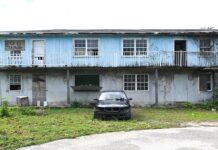
And when he surveys his surroundings – the blackened fire-damaged walls, salvaged beach chairs for furniture, a haphazard network of power cords running through the roof space – it’s hard to believe he didn’t have it better inside.
He bathes with buckets from the cistern and begs a little money for food on the road.
“I’m hungry, yeah, all the time,” he acknowledges.
He’s happy enough, however, in the ramshackle home on the back streets of George Town.
“I want to grow old here,” he says, perching in the frame of an empty window space.
“I’m a humble guy, I don’t need much. If I get my food and my water, I alright.”
Cranston considers himself fortunate enough to be able to extend a helping hand to those in a worse place.
His house, despite its limitations, has four walls and a roof that has provided shelter to friends and friends of friends who found themselves with nowhere to go.
“If they have it worse than me, I make them come sleep up here. I tell them how it is and it is up to them,” he said.
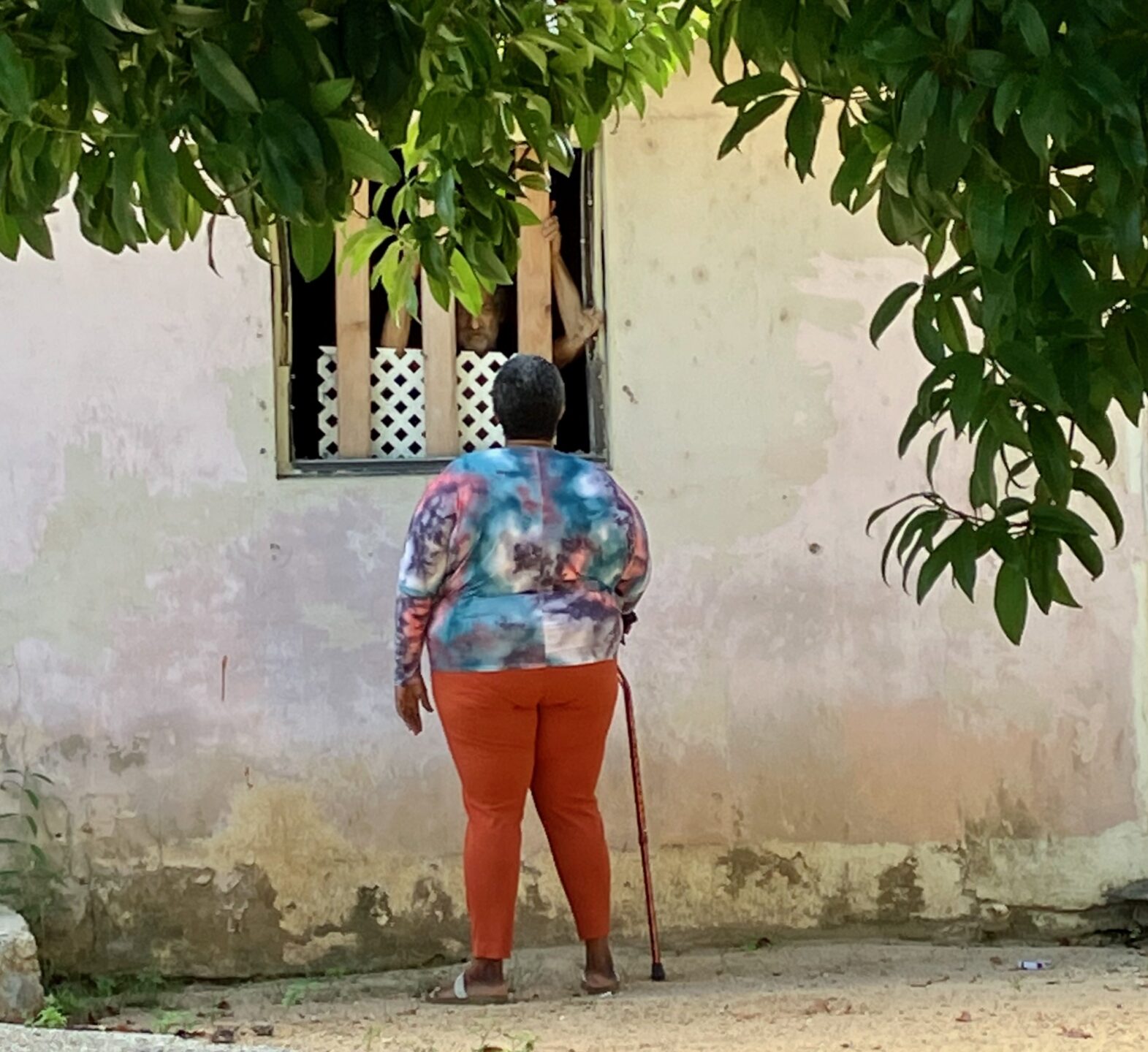
In that way, his home has become an informal hostel, over the years, filling a much needed gap in this corner of George Town for a service that is glaringly absent throughout Cayman.
Nowhere to go
There are no official statistics on how many people are homeless in the Cayman Islands.
The Department of Community Rehabilitation is aware of 14 people with no address on its roster of around 900 people that are under the supervision of the courts.
There’s a wider, unquantified group of homeless people, who are not currently under the auspices of the criminal justice system.
There are limited services islandwide for people without a roof. Most critically, there is no homeless shelter where anyone living rough can go, as a last resort, for a bed and a meal.
The Needs Assessment Unit – currently in the midst of system-wide reform – provides temporary rental assistance to those that qualify.
But charity workers warn that some are ‘lost’ on Cayman’s streets, beyond the reach of the NAU, lacking the organisational skills or even the basic photo identification required to access help.
Meanwhile, landlords increasingly refuse to rent to NAU-funded tenants.
The end result is a small but growing cohort of people suffering various forms of crisis – from drug addiction and mental health challenges to trauma, ill-health and abandonment issues – sleeping in derelict buildings, on beaches or in vehicles.
The prison, too, has become a shelter of last resort. Officials tell of paroled convicts asking to be returned to Northward or, in rare cases, committing petty crimes to get back inside.
A separate but related crisis is building for prisoners with mental health challenges. Some inmates have been kept locked up for over a year – in one case for more than six years – without ever answering charges, because there is nowhere else to hold them. The Compass will report in detail on this later in this series.
An invisible problem?
Cayman’s homeless concerns may be less visible than in major American cities, where it is common to come across people sleeping in doorways or begging from visitors, but that doesn’t mean it’s not there.
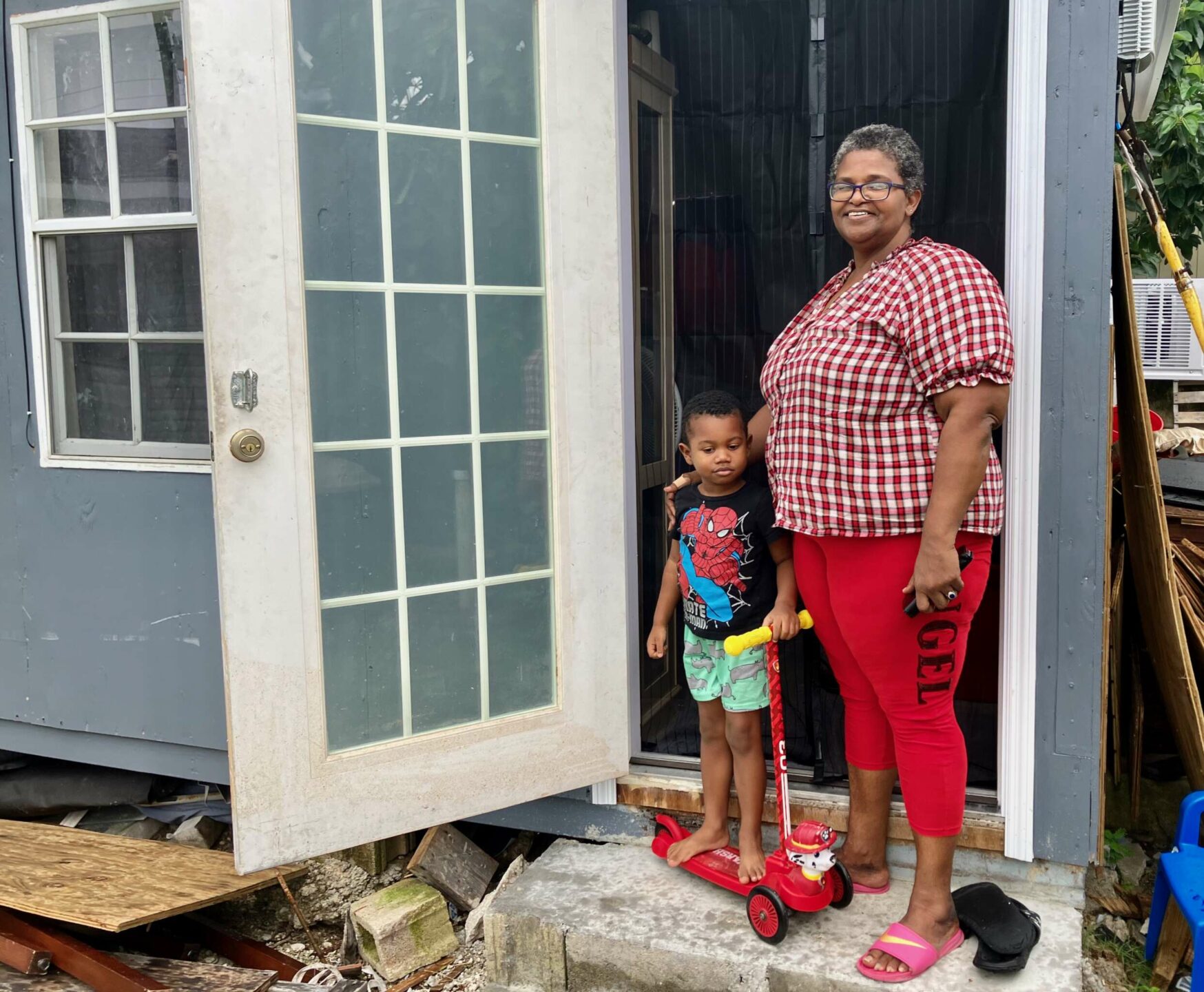
“The government has to step in. They’re saying there’s no poor people there, no homeless people. But I’m here to show you that there are homeless people and they are poor people because I’m one of them,” says Suzette Nelson, a fast-talking 53-year-old with a bright sunny smile that belies some of the troubles she has suffered in her life.
Nelson is one of those who got herself out. With the help of her MP Kenneth Bryan and, later, from charity Acts of Random Kindness, she was able to get off the streets and into accommodation. She now shares a small flat, renovated by ARK, with her young grandson and receives support from the NAU.
But it’s been a struggle to get to this point and she feels there is a thin line between the relative security she now enjoys and the nightmare she still sees others living daily in Cayman.
Homeless for a stretch of years after losing her job and suffering health problems that left her with bills she could not afford to pay, she found shelter with a group of others in the abandoned Cable and Wireless building in George Town.
When they were moved on from there, they built their own shelter on the beach near the cemetery – using a couple of robust cardboard boxes – and scavenging food thrown out by restaurants, usually KFC.
At one point, she says, she was sexually assaulted.
It was this ever-present danger – more than hunger or lack of shelter – that made her afraid to continue to live rough.
Breaking down
She says she sought help at the Needs Assessment Unit, breaking down in the offices in George Town and telling the duty manager, “I need shelter and I need food, and if you can’t help, the only thing left for me to do is to kill myself.”
That outburst, led to a 911 call and a mental health assessment. But there was nothing psychologically wrong with her and she says she was released from hospital with nowhere to go.
She started sleeping by the morgue, a place that felt safer and closer to help if something went wrong. That’s when she ran into an old friend.
“Duane found me up there and took me to come stay up by his place,” she recalls.
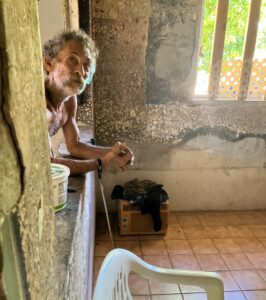
From there she was able to stabilise and find a nearby apartment that NAU would pay for. Despite some struggles, moving from place to place and finding landlords that would take NAU clients, she has had a roof over her head ever since.
Now, she wants people to be aware of her story and that there are others out there, hiding in plain sight, unable to get the support they need.
“The majority of those guys out there are my friends. And I know what they are going through because I’ve been there. They need somebody to help them the way I got help.
“People are homeless, they have medical issues, they need help. They need to build places for people like us.”
‘I don’t know who to trust’
Barricaded inside a deserted stall at an abandoned site, we find Shirley Christian, sheltering amid her few possessions, including the wooden dolls she likes to make, and once sold to tourists.
“My sister is lost,” Nelson warns as we approach, “She’s been out in the world too long.”
It takes a while to coax Christian into a conversation.
“I don’t know who to trust,” she says bluntly, at her sister’s insistence that she has brought people – ourselves and workers from the charity ARK – who wish to help.
At her request, we take her through the drive-through Burger King. And she opens up a little as she bites into a burger, savouring the sweet sugary taste of the barbecue sauce.
“I don’t know who to trust,” she says again.
“I just want someone to love and someone to love me.”
Her voice is fragile, on the point of breaking.
But she is eloquent when she talks about the issues she and others are facing.
“Everybody has a story to tell. And I think people out there needs to hear the real story of people that live on the street.
“You don’t know what a person goes through unless you’ve experienced it yourself. And it’s not a pretty life.
“I feel Father God put me here to help me understand the troubles of my people.”
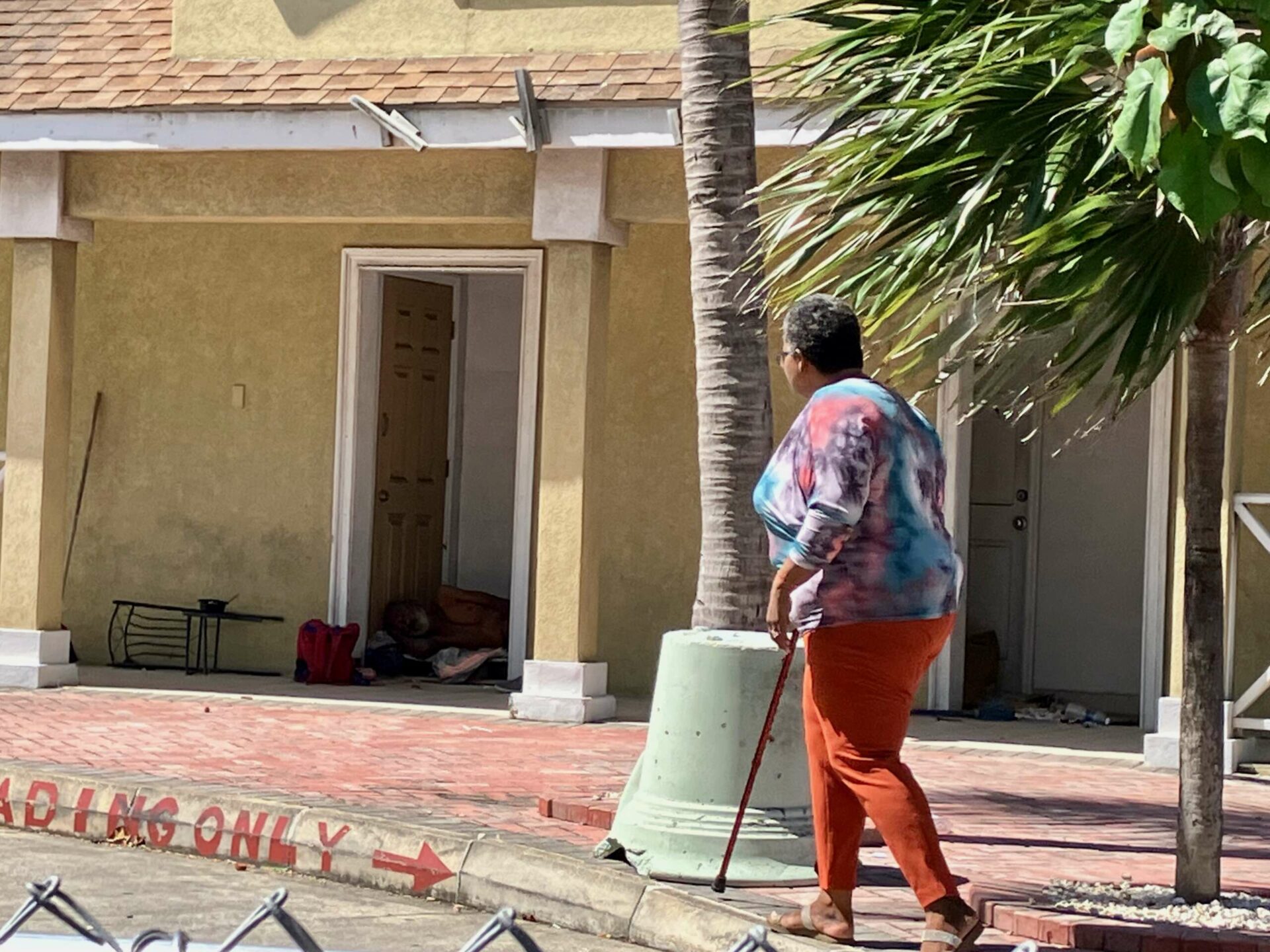
Christian has been homeless, on and off, for several years. She was staying on a friend’s sofa in Scranton when the house was ‘licked down’ to make way for a park. All her belongings were still inside, she says.
Now, she sleeps in doorways or abandoned buildings. She washes from a pipe behind a church and relies on handouts for food.
Safety the biggest concern
But it is safety, not hunger or hygiene, that worries her most. She says she woke up one night with a man crouching over her, just staring at her.
“It’s hell, just hell,” she says in a whisper.
“It’s like going asleep in the night and don’t know if you are going to wake up the next morning, or if you do wake up the next morning, you don’t know where you are going to eat or take a bath.
“For some people, hunger doesn’t matter – they take their last dollar and spend it on alcohol instead of food, but there is the insecurity of not knowing what to expect one day to the next or even one second to the next.”
The stress of constant vigilance shows in her hunched shoulders.
When she starts to relax and smile, she becomes a different person.
She offers me a piece of her Hershey cake. “Now you’ve got me trusting you,” she laughs.
“You can’t have a solution ’til you understand the problem. Everyone says drugs, drugs, drugs. But what is the cause of the drug problem?”
The way she describes it, drugs are the band aid solution – the medication people pick for themselves when there are no other options.
Missing pieces
Tackling the root causes of homelessness in Cayman is not an easy matter, says Tara Nielsen, of charity Acts of Random Kindness. Now that she is aware of Christian’s situation, there is still no obvious fix.
There are no properties available to rent to her through the NAU, no homeless shelter or transitional living centre to refer her to.
ARK can check on her and provide support for food and other necessities, but the glaring absence in Cayman’s support structure of a roof and a meal for those in the most desperate situations is still there.
“It’s a very complicated problem. Because part of it is mental health, part of it is drugs, part of it is broken families, toxic relationships, a sense of loneliness and abandonment,” says Nielsen.
She welcomes the reform of the NAU and the ‘welfare to work’ approach adopted, alongside other measures, to make it easier to get access to help.
But she cautions that there are echelons of people out there who need support they can’t get.
These include people who don’t have passports or identification; people who don’t know how to fill in a form to access support; or who may be bad candidates for housing in an increasingly tight open rental market.
The needs of, and the solutions for, this group of people are diverse and complex, but Nielsen believes a transitional living centre where people can find somewhere to sleep, get a meal and access to caring staff who can help them, would be a very good start.
ARK is in the planning phase of a project to create the first shelter in Cayman.
It’s early days, and donors are still being sought, but Nielsen is confident the project will come to fruition.
In the meantime, for people like Shirley, the struggle continues.
“I just feel abandoned by the whole community,” she said.
To assist ARK help Cayman’s homeless population, you can visit www.arkcayman.org.
Complex problems
The Ministry of Social Development, led by Deputy Premier André Ebanks, is pursuing solutions through a number of policy initiatives.
“At present, a key focus involves the identification of unused crown property, with the intention of repurposing some land for socially beneficial housing projects,” a spokesperson for the ministry told the Compass in an email, highlighting the possibility of revitalising disused buildings for new projects or developing new ‘tiny homes’.
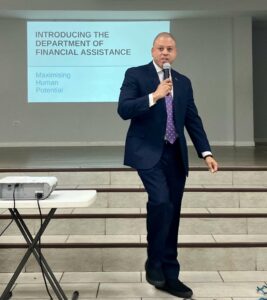
The ministry is also reforming the Needs Assessment Unit, through the new Financial Assistance Act.
New measures include one month of emergency support funding for people in crisis who meet specific criteria. The new financial assistance department is also committed to making faster decisions, paying one-time rental deposits and working to pay landlords on time in an effort to increase housing options for its clients.
The spokesperson said the introduction of electronic IDs should also make it easier for people without paperwork to access support.
She said the ministry was seeking to collaborate with community organisations and other ministries and departments to address the “multifaceted challenges” for the “most vulnerable” in the community.
“While progress is being made, it’s essential to understand that tackling housing challenges and social issues are complex endeavours involving coordination across various sectors,” she said.
“We invite continued dialogue and collaboration with the community, recognising that the journey toward a more inclusive and connected society requires collective effort and understanding.”
- This is part one of a three-part series looking at homelessness and people in crisis in Cayman. Send your feedback or thoughts on solutions to [email protected].
Related Videos