


Cayman’s economy is almost totally reliant on its financial services industry, which dwarfs tourism and construction as the principal breadwinner for the jurisdiction, according to a new analysis.
The level of reliance on the sector is a key vulnerability for the islands’ financial future, which is highlighted in a detailed assessment by Caribbean economist Marla Dukharan.
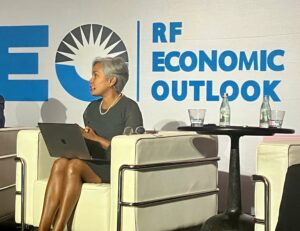
In her report, she argues for a concentrated focus on education and training alongside a skills-gap assessment to ensure Caymanians can play a bigger role in the “knowledge-based economy” of the future.
And she questions the wisdom of investing further in tourism and construction – industries which she argues rely heavily on imported labour and materials. She also argues for greater focus on protecting the environment, as an economic resource for Cayman.
The report – Unleashing Cayman’s Potential: A Journey Towards Prosperity And Unity – challenges the “widely held belief” that tourism and construction are essential drivers of growth in Cayman.
She suggests there are diminishing returns to focusing on these sectors.
“Not all growth is equal,” Dukharan writes.
“The current growth patterns in Cayman have painted a dual narrative – a remarkable tale of economic development on one hand, and on the other, a growing set of social challenges.
“The rhythm of Cayman’s physical development, if left unchecked, threatens to amplify the social and environmental outcomes that Caymanians seek to avoid.
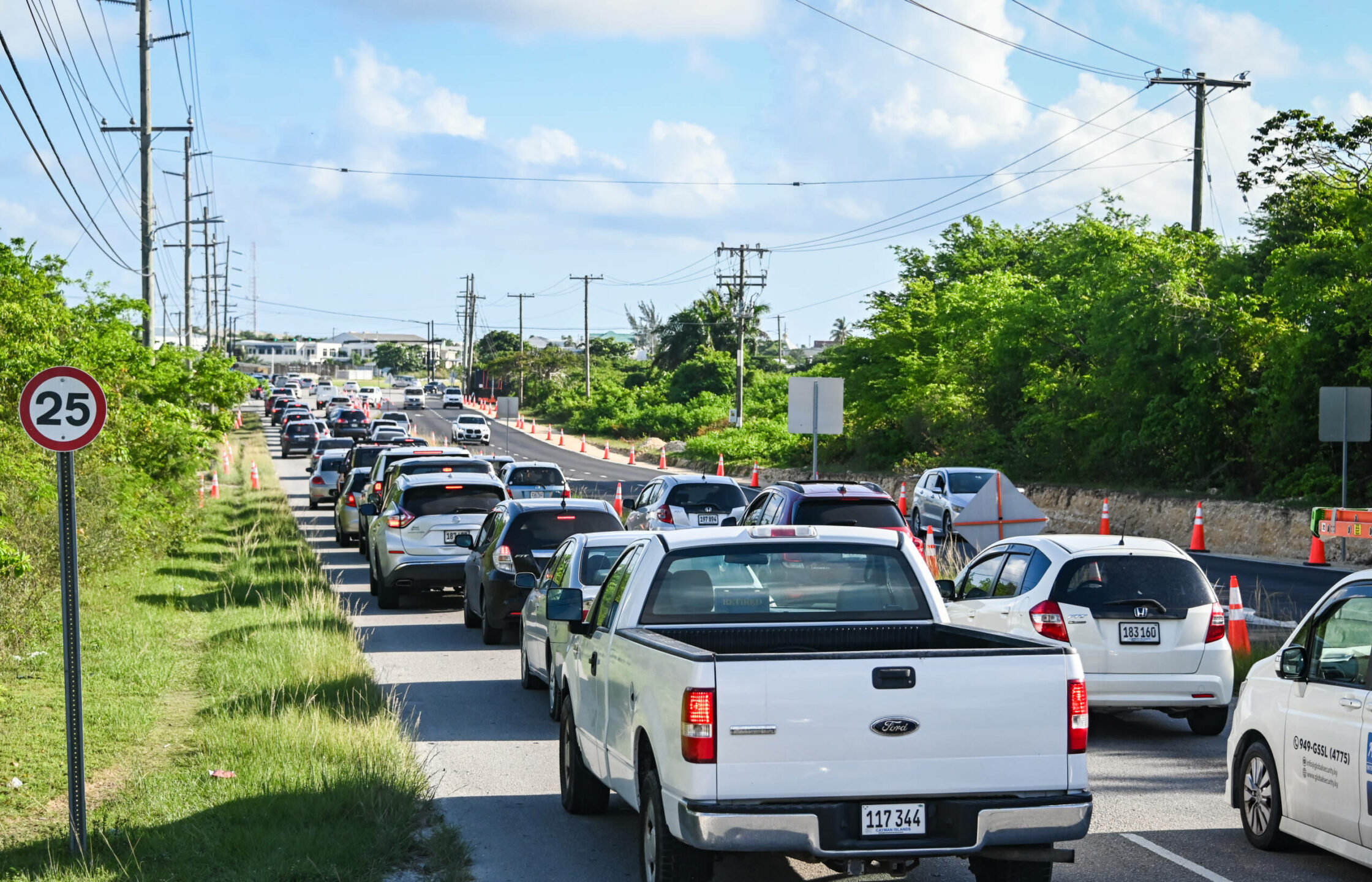
“Social deterioration as evidenced by rising crime, traffic jams, and pollution for example, can undermine the very economic progress Caymanians have worked so hard to secure.”
She suggests slowing the pace of physical development and being “more deliberate” about the location, sustainability and resilience of such development.
“Cayman must grow, but she must grow more carefully and more equitably to create a future where no Caymanian is left behind,” she concludes.
Here we look at some of the key conclusions from her report.
Unemployment is not the problem
While political rhetoric often focuses on job creation, the report emphasises that this is not a major issue for Cayman.
The unemployment rate among local people is among the lowest in the world and any new project that promises job growth will inevitably require imported labour.
“The labour force participation rate in Cayman is probably the highest in the region, which means there is less idleness and less informality in the economy – all of which is positive,” the report states.
“Cayman is the only country in the region where unemployment is not a problem. Cayman imports most of its labour – from janitors to judges – and the unemployment rate in Cayman is usually the lowest in the Caribbean.”
Quality of jobs is a much bigger issue
Caymanians are, however, under-represented in higher paying jobs, Dukharan argues.
She attributes this to education and training attainment, pointing out that the academic record of Cayman’s public education system is at odds with the level of investment going into it.
Citing reports that only 27% of primary school students and 37.5% of secondary school students achieve expected standards, she warns that this is contributing to Cayman out-sourcing its highest paid and highest sought jobs.
“Caymanians mostly occupy the middle-to-low-wage jobs, rather than the higher-wage positions. From what I am able to discern by talking to employers – and the education data supports this – there is simply a shortage of appropriately skilled Caymanians to fill the high-skilled, higher-wage posts.”
Skills, training and education focus needed
While investment does not seem to be the issue, Dukharan believes more focus is needed to establish the causes and reverse the trend of poor academic outcomes in government schools.
“Unless this problem is addressed meaningfully and with urgency, we may see the job positions held and wages earned by Caymanians suffer over time,” she says.
Arguing that Cayman’s best economic growth potential is in “knowledge-based” sectors that bring higher paying jobs, she suggests this will become more of an imperative over time.
“What Cayman needs now is to deliberately accelerate the shift towards more highly educated and, therefore, more highly paid Caymanians.”
Technical and vocational education is a key part of this, she suggests, pointing out the high proportion of work permits in well-paid trades.
Rising inequality
Dukharan cites concerns that Cayman’s economic success is not being shared by everyone.
“The inequality and poverty level in Cayman manifest anecdotally in many ways – the apparent rise in crime, the uproar about the rising cost of living, the limited availability of affordable housing for Caymanians, the massive social impact that rising interest rates have had on the lives of Caymanians, for example…”
One area where she argues the divide is most stark is home ownership.
Citing pension raids and Christmas bonuses for civil servants as examples of unsustainable one-off windfalls that do little to address the core issue, she argues that not enough attention has been paid to policy interventions.
“It is imperative to make a deliberate effort to measure Cayman’s inequality and poverty and to implement solutions to ensure that the growth everyone prizes so dearly is more widely and more evenly distributed among Caymanians.”
Tourism may not be key pillar it once was
Any analysis of Cayman’s economy has typically considered two pillars – financial services and tourism – with construction a supplementary third sector.
But Dukharan argues that with almost 10,000 work permits in the restaurant, accommodation, wholesale and retail sectors and a heavy reliance on imports, Cayman’s tourism industry is sending as much cash overseas as it is bringing into the island.
While the islands do net hundreds of millions of dollars in annual income from tourism, she argues that this is spent on salaries for an imported workforce (that is often sent off-island via remittances) and on imported food and materials to overseas suppliers to provide the infrastructure.

The locally supplied ‘product’ she suggests, is the beaches and island environment that attracts those visitors.
“But if Cayman continues growing the tourism sector, which requires more and more physical space, more hotels, bringing in more and more people, and generating more and more waste and pollution, we risk jeopardizing the very culture and natural environment which are the only major domestic input into the tourism sector.”
In that context, she suggests tourism is bringing as many negative impacts as positive and that government should “avoid further subsidising the sector” until it can definitely determine that is not a “net fiscal and foreign exchange drain”.
Cayman needs to rethink its ‘construction addiction’
Construction has often been cited as a possible third pillar of the Cayman economy, with the obvious caveat that it is intrinsically linked to the other two.
Building hotels, homes and offices can only be a driver of jobs and economic growth if there are tourists and white-collar workers to fill them.
While acknowledging the enduring positive influence of the construction sector across Cayman, she questions if it is focused on the right areas and if it is a sustainable driver of growth over the longer term.
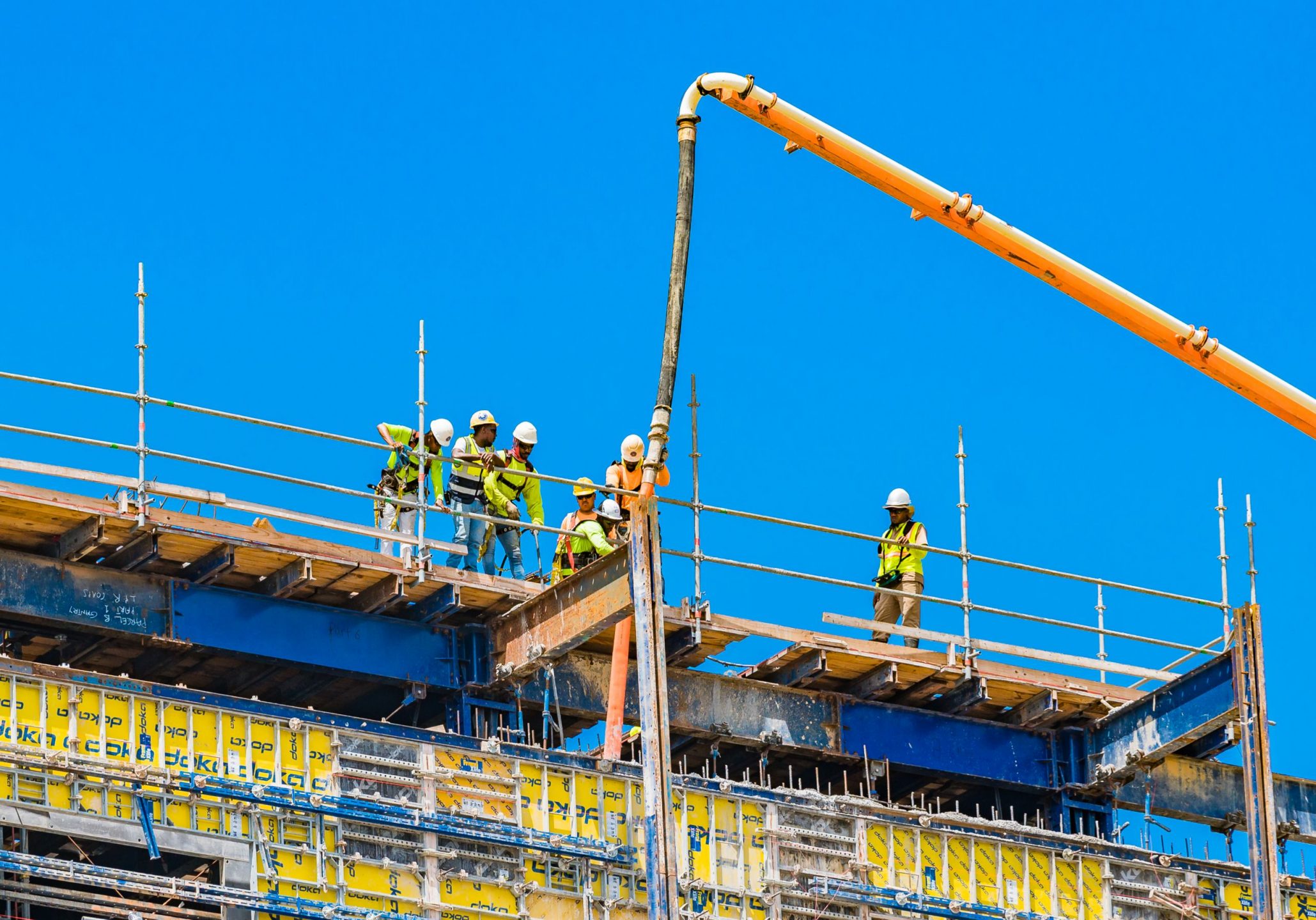
Unless Cayman’s leaders make a conscious decision to become the Caribbean’s Manhattan or Singapore, she suggests development will have to become more considered and strategic.
“There are limits to the positive impact that construction can have on the economy. When Mount Trashmore is the highest point on Grand Cayman, and when on this tiny island we can spend an hour in traffic, and when there is little space left to construct affordable housing, and when so much airtime and attention is devoted to the unaffordable cost of living, we know Cayman has reached the point of diminishing returns to ‘growth’ via more and more construction to serve more and more tourists and an exploding population.”
Reliance on financial services leaves Cayman vulnerable
Financial services and linked professional services, including accounting and legal professions, account for a third of the island’s GDP and a third of government spending.
But the sector is facing “ever increasing” threats from a host of international bodies that have targeted the island on a variety of watchlists. While she describes this process as “biased and unjustified”, Dukharan praises government’s approach to defending Cayman’s reputation internationally.
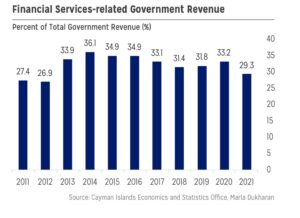
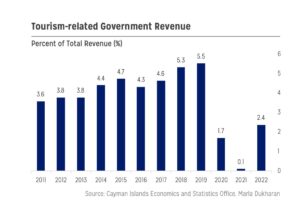
“Without the license fees paid by the financial services sector, the Government will generate a fiscal deficit every year, and will have to borrow to pay its bills. The financial services sector therefore, in effect, subsidizes everything else in the economy – including tourism,” she wrote.
This strength is also a weakness, however, leaving Cayman’s entire economic well-being at risk if something goes wrong in that sector.
“Tourism isn’t quite the goose laying the golden egg that many believe it is, and I think it is safe to say that while financial services is producing a bounty of golden eggs, these are really the only solid eggs in Cayman’s basket. And this makes Cayman fiscally and economically vulnerable.”
Knowledge is power (and wealth)
If construction and tourism are unsustainable and financial services is under threat, where does that leave Cayman?
Dukharan advises fiscal prudence on the part of government to provide leeway for any shocks in its own budget.
And she suggests room for growth in “knowledge-based sectors” which take “less space and ecological impact and can generate more desirable job opportunities for Caymanians compared to tourism.”
Because of its “gold standard” financial services sector, she says Cayman has a head start in this area and can expand further into intellectual property and technology.
But she emphasises the island needs to transform its education outcomes to ensure no one is left behind .
“It would be easier to diversify more deeply into knowledge-based sectors in Cayman, which have lower physical and ecological footprints and higher wages – and the key to this is education.
“What Cayman needs now is to deliberately accelerate the shift towards more highly educated and, therefore, more highly paid Caymanians.”
Related Videos













An unvarnished assessment of Cayman Islands current and future economic situation.
Take heed.
This is the most intelligent article I have read on this subject: ever. Ms. Dukharan should be the minister of economy, if not premiere. All I can say is “Hear, hear, Ms. Dukharan!!”
Well financial services isn’t being treated as a key pillar either. So where does that leave us?
Interesting take. Here’s a different view:
While the analysis provided by Marla Dukharan presents compelling arguments about the challenges and vulnerabilities facing the Cayman Islands, it’s important to consider the broader economic landscape to draw a comprehensive conclusion about the significance of tourism.
Dukharan’s report highlights the dominance of the financial services industry in Cayman’s economy, emphasizing its pivotal role as the primary breadwinner for the jurisdiction. However, this does not necessarily negate the importance of tourism as a significant economic driver.
Firstly, tourism contributes substantially to the Cayman Islands’ GDP through spending in various sectors, including restaurants, accommodation, retail, and entertainment. With almost 10,000 work permits in sectors such as restaurants, accommodation, wholesale, and retail, tourism is undeniably a major employer in the islands, providing jobs for both Caymanians and expatriates.
Moreover, the influx of tourist dollars supports local businesses and drives economic growth. Visitors spend money on a wide range of goods and services, from dining at local restaurants to purchasing souvenirs and participating in recreational activities. This spending ripples through the economy, benefiting not only businesses directly involved in tourism but also suppliers, vendors, and service providers across different sectors.
Additionally, tourism plays a crucial role in promoting cultural exchange and preserving the natural environment—the very assets that attract visitors to the Cayman Islands. Investments in tourism infrastructure, including hotels, resorts, and attractions, not only create jobs during construction but also contribute to the overall attractiveness of the destination, attracting more visitors in the long run.
Furthermore, while Dukharan raises concerns about the reliance on imported labor and materials in the tourism sector, it’s essential to recognize that tourism can also create opportunities for local entrepreneurship and innovation. Caymanians involved in the hospitality industry, whether as hoteliers, restaurateurs, or tour operators, contribute to the diversity and vibrancy of the tourism experience, showcasing the unique culture and heritage of the islands.
In conclusion, while the financial services industry may dominate Cayman’s economy, tourism remains a vital and multifaceted economic driver that significantly contributes to employment, GDP, and overall prosperity. By leveraging its natural assets and promoting sustainable tourism practices, the Cayman Islands can continue to benefit from the economic opportunities presented by the tourism sector while addressing the challenges highlighted by Dukharan’s analysis.
Tourism has been a key contributor to the economy of the Cayman Islands 🇰🇾 since the late 1980’s.
People that claim other factors are more important than tourism show be able to provide figures and statistics that can be analyzed and proven. Otherwise, it is just pure conjectures that are not factual.