


Lawyers acting for the owners of the Laguna del Mar complex raised the threat of legal action against the government over its perceived failure to allow a new protective seawall to be built.
Laguna del Mar applied to build a 360-foot concrete seawall last year to replace a previous wall, which was damaged during Hurricane Ian in 2022, but has yet to receive the necessary planning permission.
While the wall is to be built in the same place as the damaged wall, beach erosion since then means that the wall would extend out to around 37 feet from the high water mark. Planning regulations say that all structures should be at least 130 feet from the high water mark.
Concerns have also been raised about blocking public access along the beach.
Members of the Central Planning Authority were told on Wednesday that delays in granting planning permission for the seawall to protect the condominiums at the Seven Mile Beach complex has “compromised our ability to conserve much which has been lost”, and that the multi-million dollar compensation cost if buildings are destroyed will be born by the taxpayer if it was found that “agents of government or the government itself is responsible”.
The meeting heard that there was an imminent threat of erosion, which could lead to complete structural damage to the property.
“We have been waiting too long for this situation to be resolved,” said attorney Samuel Jackson. “People deserve the right to be able to protect their buildings.”
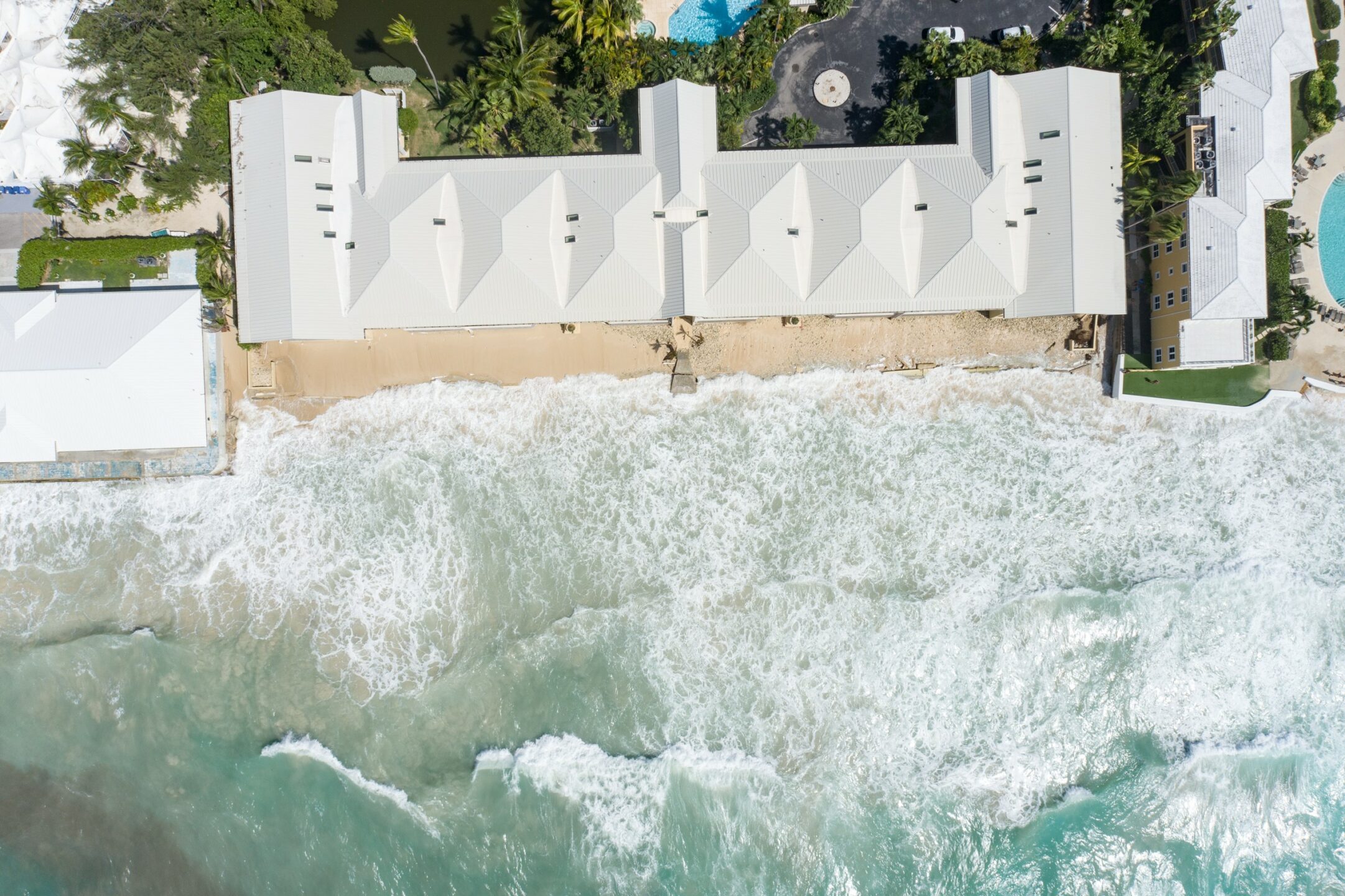
Denis Murphy, senior chartered engineer at APEC Consulting Engineers, told the meeting that there was no sign yet of structural distress but that with no seawall, waves were breaking directly onto people’s homes and holiday apartments, a problem made worse by recent hurricane activity. Steel shutters have been installed on the lower floor to prevent water from entering the patios of the sea-facing units.
The southern end of Seven Mile Beach, where Laguna del Mar is located, is particularly vulnerable to erosion and the effects of climate change have worsened the situation, making it harder for the beach to recover.
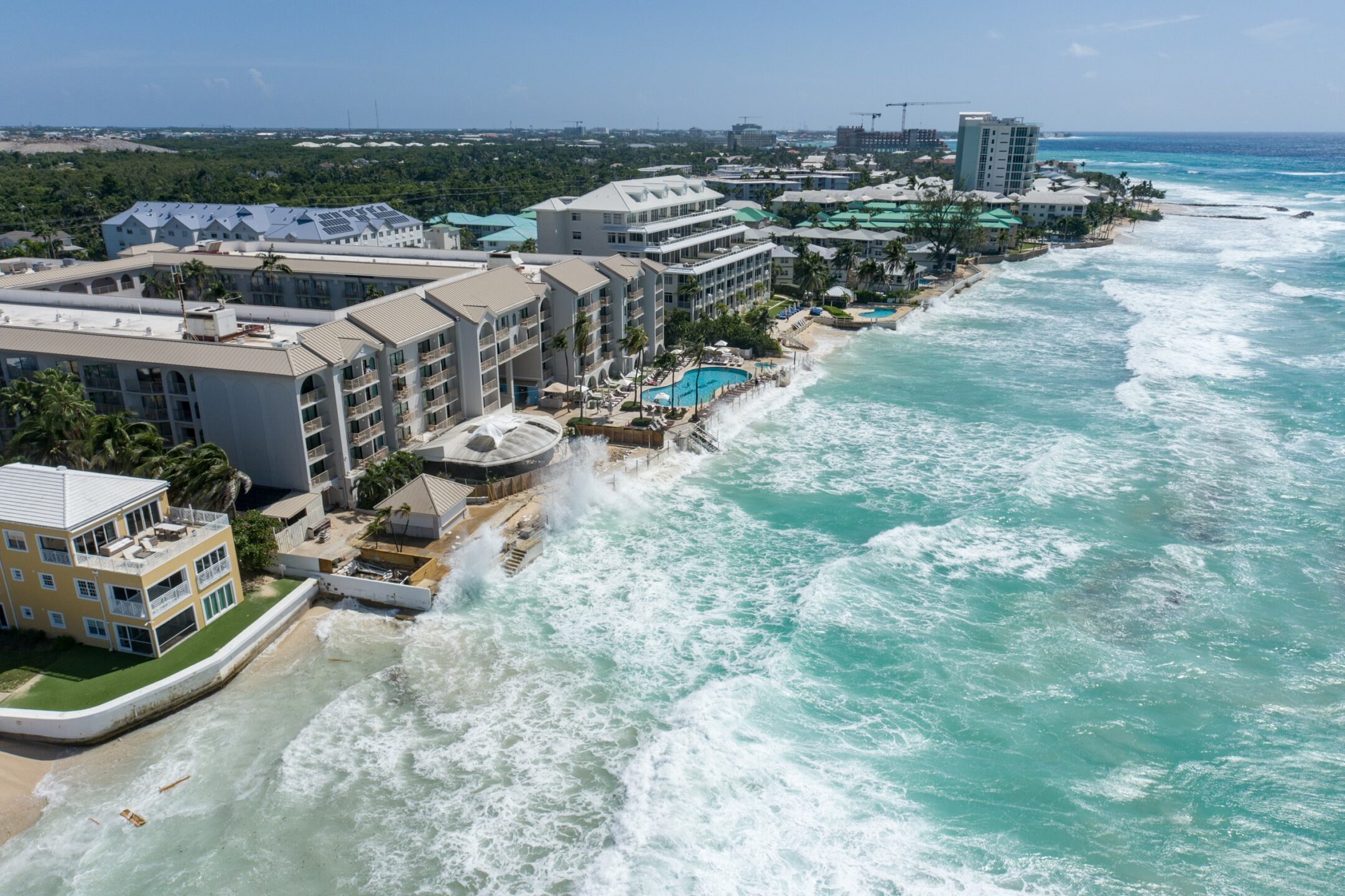
One of the complications for Laguna del Mar, built in 1989, is that Regal Beach Club, located just south of the property, obtained approval for a seawall in January 2021 following Hurricane Delta. However, according to the Department of Environment, its construction “caused unacceptable negative impacts to the Marine Protected Area”, despite attempts to minimise the damage.
Last year, the DoE advised that the Laguna del Mar project should not be sanctioned, saying that building seawalls too close to the water can cause permanent erosion of the beach as well as harm to marine life.
Regarding the environmental impact of constructing the wall, Murphy told the assembled committee that there were several options that would reduce any impact on marine life.
The CPA will report its conclusions later this month.
Related Videos











We the people will sue the owners and developers of Leguna Del Mar if you sue us, the tax payers. You decided to buy on sand and no matter how strong or tall your wall will be, every future storm will destroy your wall. Now is the time to retreat luckily you have the space. Crazy you want to take our access rights and sue us at the same time.
We have a wall in Galveston that has been standing for over 100 years. In all seriousness though, if the problem is not resolved there will be no beach and therefore no access. I understand the concern regarding a property building a wall into the beach, but action needs to be taken to replenish the beach for both the property owners and the public. The economic damage from this will be severe as has been stated by multiple professional reports, including one published in this paper. It’s incredibly sad to see what was one of the very best beaches in the world get destroyed with no action being taken.
Another reason the government should act sooner rather than later to fix SMB
We’ve had Norwesters in my time that brought more wave-action to SMB than the last 3 passing hurricanes. The “seawalls” are all old. They were all there 30 years ago. If we build a seawall along west bay road today and the ocean slowly creeps up to it, is the seawall really the problem? Something is clearly different in that either there is more water in the ocean causing more erosion, or there is less sand being chucked back onto our beach because of rising water temperatures and a change in the ecosystem that nourished our beaches for the last few hundred years. Whatever the cause, it’s bigger than Cayman. We can’t get China and India to stop emitting CO2 and raising global water temperatures. We can’t stop glaciers from melting. What we can do is make a practical decision. Do we protect the development along our western facing beaches or do we let the buildings fall into the sea and let it take more and more? That’s sort of the decision. Wringing your hands about seawalls and imported sand is just an allegory for defeat. If the environmentalists in this Country want to diddle and watch this part of SMB melt into the sea to prove they were right and that none of us should be here in the first place, then that’s all well and good, but who is going to convince the next investors to build beautiful infrastructure to invest here and to support the Caymanians of the future? This is one of those times we need courage and leadership from our Government. We need to put our big boy pants on and let people self repair. In a Country of 80,000 people less than a mile across there is really no “Managed retreat” from the beach. There is only “build a seawall” or “retreat to another island”.
I’ve been a frequent visitor to the island for a long time and have a deep love for Cayman. I’ve been watching this problem grow for some time, and find it incredible that nothing has been done. I couldn’t agree more with the recent assessment of the economic damage this problem has and will cause. I just looked at a property listing at the complex mentioned above, and it is clear the owners are bailing out. This problem is not that hard to solve, and multiple engineering studies have already been done with viable solutions presented. Simply put, it’s either build jetties or do sand replenishment. I live near Galveston Island and they have struggled with sand loss for years, but have effectively managed it with both rock jetties and occasional sand replenishment. It’s completely unacceptable to allow citizen’s properties and the tourism industry in the area to be destroyed when solutions are readily available, and funds had already been budgeted! I’d be wearing out my government representative if this were happening to my property.