

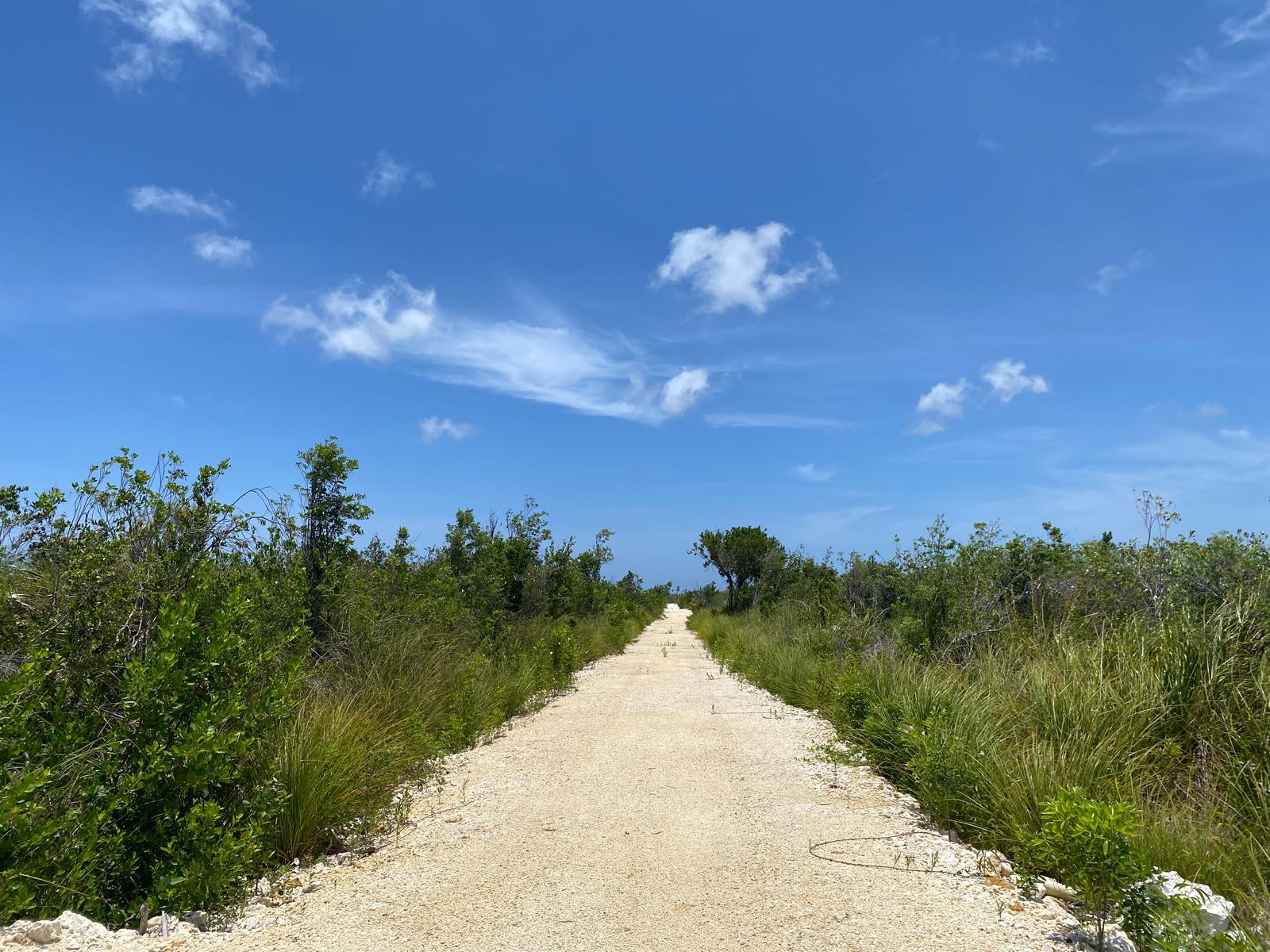
Lawyer and landowner James Bergstrom is asking Cabinet to reverse a decision from the National Conservation Council to designate his land as critical habitat for the endangered blue iguana.
He is also appealing a court decision to fine him $40,000 for removing buttonwood mangroves from the East End property during the construction of an unpermitted access road.
Bergstrom was back before the Central Planning Authority last week seeking retrospective approval for the controversial road. It is the latest chapter in an ongoing saga that has involved hearings before the Summary Court, the Grand Court and the Central Planning Authority.
The dispute touches on wider issues of how private property rights interact with legal protections for critical species and habitats.
Bergstrom’s land is zoned for low-density residential development and agriculture – a designation which would theoretically allow for up to one home per acre on the 300 acre site.
However, it sits directly between the Salinas and Colliers reserves, owned by the National Trust, and a key habitat for blue iguanas – a touchstone species only found in Grand Cayman. In 2023, the National Conservation Council approved an interim directive for the protection of blue iguanas that included Bergstrom’s land as critical habitat, meaning the council has a greater say in the approvals process for any development at the site – including the road and any future projects.
Bergstrom told the Planning Authority Wednesday that he has appealed that decision to Cabinet and is hopeful that the new government will deal with it in short order.
The directive was the basis for a court decision affirming that planning officials must refer the decision to approve the road project to the National Conservation Council. In one aspect, the exercise is academic. The road was already substantially complete when it came to the attention of Department of Environment officials.
But Bergstrom has sought retrospective planning approval and permission to finish the project – which he says is designed to allow access to agricultural land on the site.
This was initially granted by the planning board, but that decision was quashed by the Grand Court, which ruled the application would need the green light from the Conservation Council.
The issue was back on the agenda of the Central Planning Authority Wednesday but was adjourned, board members indicated, because the council – through the Department of Environment – has not yet provided its advice.
The Department of Environment disputes survey data provided by Bergstrom’s company about the size of the site impacted by the road and has provided drone survey footage to suggest an area nearly two times larger was impacted.
Bergstrom has submitted contrary data from his surveyors.
Gina Ebanks-Petrie, the director of the Department of Environment, told the Compass that the department typically provides its advice within three weeks. However, she said on this occasion it wanted clarity on significant discrepancies over the size of the area impacted before proceeding.
Bergstrom also indicated at Wednesday’s hearing that he would like the matter adjourned until Cabinet has reviewed the interim directive. That’s significant because if the executive decides to uphold that appeal, the need for the planning board to consult the Conservation Council would again be in question.
Cars and dogs biggest threat to blue iguanas
Ebanks-Petrie said the property was situated in a key area for blue iguanas, and if it is to be developed the council needs flexibility to mandate conditions, such as traffic calming measures and restrictions on pets.
“Road kill and stray dogs and cats and pets that are off leash were the main threats that drove the blue iguanas to the brink of extinction in the first place,” she said.
She said the Department of Environment believes the interim directive should remain in place until a proper conservation plan has been formulated and approved. Work is ongoing along with the National Trust on tracking data that could underpin that plan.
The National Conservation Act empowers the council to make interim directives where they are “urgently required for the immediate protection of that species” and indicates that the directive ceases to have effect once Cabinet approves a proper conservation plan for the species.
Meanwhile Bergstrom and his attorneys believe they are being denied the process of consultation and collaboration outlined in the law for such plans. The interim directive, lawyer Cline Glidden – who has represented Bergstrom and owns an adjoining property – has claimed, hands power of refusal on development to environment officials, without going through the proper process.
“All James Bergstrom wants to do is a put a trail on his property,” he told the Compass last year. “If you can’t do that, then you can’t do anything else. You are basically saying he can’t use his 300 acres for anything except preserving iguanas.”
In a separate case, Bergstrom’s company, Bon Crepe, was fined $40,000 in the summary court for removing mangroves from the property. He said he is appealing that ruling as well.
Related Videos







In Florida, for example, contractors get routinely arrested for conducting work without the necessary licenses or permits. This is considered a serious offense in Florida, punishable by misdemeanor or felony charges, depending on the circumstances.
What disciplinary actions were taken against a person(s) who actually constructed the access road?
Construction projects requiring a permit are overseen by authorities that are responsible for ensuring compliance with laws and regulations, building codes and environmental regulations.
What disciplinary actions were taken against a person(s) who neglected to stop construction of an unpermitted access road?
Certainly blue iguanas should be protected. But should the cost fall on the shoulders of private landowners?
The National Conservation Council should buy this land if they need it for blue iguanas.
And the reason so many stray dogs and cats are eating the blue iquanas is because the “Capture and Release” spaying programme was cancelled by the government. So what do you expect the dogs to do? They’re going to eat anything they can catch. They don’t care if it’s endangered.